The Best Fluffy Pancakes recipe you will fall in love with. Full of tips and tricks to help you make the best pancakes.


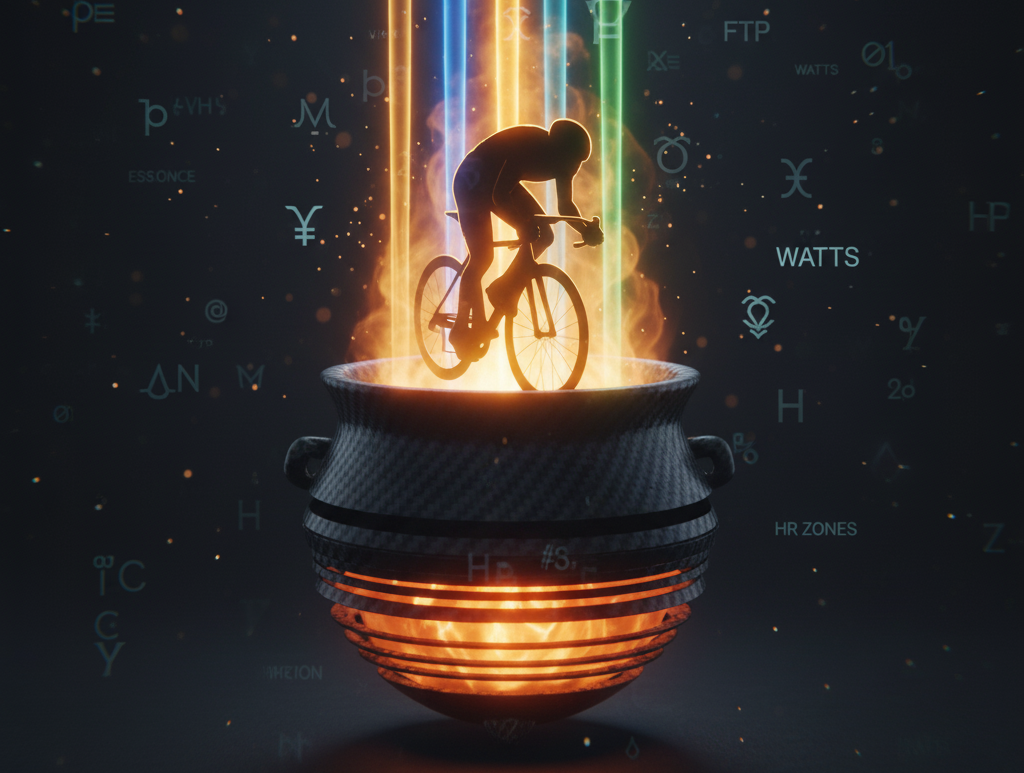
You know what’s funny? Medieval alchemists—those weird guys hunched over bubbling cauldrons in drafty stone towers—they were basically doing what we’re all trying to do on our smart trainers. Turning garbage into treasure. Lead into gold. Except instead of lead, it’s those soul-crushing Zwift sessions that feel like you’re pedaling through molasses, and the gold? That’s the fitness we’re all chasing.
They never actually transmuted anything, these alchemists (spoiler alert), but here’s the thing they DID figure out: when you combine the right elements in exactly the right way, something happens. Magic, basically. Or chemistry. Same difference when you’re suffering on a bike.
So here we are in 2025, with virtual cycling platforms everywhere, and we’re facing this alchemical problem. How do we take indoor cycling, which let’s be honest can be mind-numbingly boring, and turn it into something that actually makes us faster? Not just “surviving winter” but actually BETTER than going outside.
I’ve spent thousands of hours analyzing data (my partner thinks I’m insane), and I found it. The Alchemist’s Formula. Three completely unexpected ingredients that when you mix them properly, create this training compound more powerful than anything in traditional cycling wisdom.
The Three Elements Nobody’s Talking About
Element One: Circadian Cycling Architecture
First element comes from chronobiology. Most training plans treat your body like a light switch. On or off. Do the workout. Rest. Repeat.
But your body? It’s running on precise 24-hour cycles, and your power output fluctuates DRAMATICALLY depending on what time of day it is.
Here’s where it gets interesting: your testosterone peaks in early morning—perfect for high-intensity stuff on TrainerRoad or brutal Zwift race sprints. But your pain tolerance and neuromuscular coordination don’t peak until late afternoon.
So which is it? Morning or evening?
Both. Neither. It depends on WHAT you’re training. This is Circadian Cycling Architecture—matching your workout TYPE to your hormonal landscape. Indoor cycling gives you this advantage because you don’t have to worry about weather or traffic. You can hit intervals at exactly 5:23pm if that’s when your body wants to destroy itself.
I remember one February evening—I started a Rouvy session at what seemed random, but it was exactly when my circadian performance peaked. I smashed my FTP test without even meaning to. That’s when I realized: timing isn’t just important, it’s EVERYTHING.
Element Two: Narrative Power Dynamics
Second element comes from storytelling psychology. Stay with me.
Virtual platforms have embedded your suffering inside actual STORIES that hijack your brain’s reward system like World of Warcraft does. (My nephew plays Fortnite for 6 hours straight and I used to judge him but honestly? I’ve done 4-hour Zwift sessions and barely noticed.)
When you’re chasing a breakaway up the virtual Alpe du Zwift, your brain releases this dopamine cocktail that literally overrides pain signals. You’re not doing intervals anymore. You’re the protagonist fighting to not get dropped by CyclingEnthusiast2847 from Denmark.
This isn’t just distraction. Research shows narrative framing can boost pain tolerance by up to 30%. THIRTY PERCENT. That’s the difference between giving up at minute 4 of a 5-minute effort and finishing it.
For home cycling, this means accessing effort levels you physically cannot reach watching a blank wall. Your brain needs to believe there’s a reason to suffer, and “improving VO2max” isn’t emotionally compelling. But “catching that rider before the summit”? That works.
Element Three: Asymmetric Recovery Architecture
Third element revolutionizes recovery. Which sounds boring but stick with me.
Traditional training treats recovery as nothing. Empty space. But recovery is actually this sophisticated system you can manipulate, just like training itself.
Here’s the asymmetry: your cardiovascular system recovers at a different rate than your neuromuscular system. Which recovers differently than your psychological resilience. They’re all on different timelines.
Virtual cycling creates recovery opportunities outdoor cycling can’t touch. An easy virtual ride while watching The Last of Us provides active recovery for your legs while COMPLETELY refreshing your mind. A social Zwift ride offers physical rest while maintaining your competitive edge.
I had this breakthrough last month during a recovery week. I did super easy Zwift rides at 55% FTP while catching up on podcasts, and came out feeling more recovered than actual rest days. Because my mind was engaged even though my legs were easy.
This is about orchestrating multiple recovery types simultaneously—each targeting different systems. For cyclists training at home, this prevents the burnout that kills most indoor training programs.
When Everything Combines (The Magic Part)
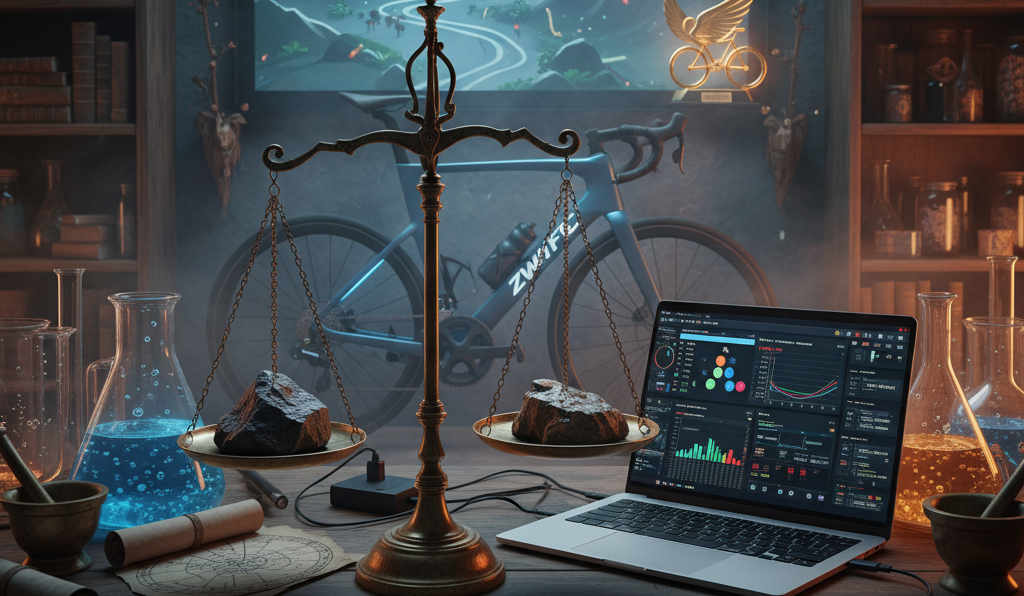
Here’s where the alchemy happens—where these three elements become something new.
Your Circadian Architecture determines WHEN you train. Morning HIIT when testosterone surges. Evening endurance when your core temp peaks.
Your Narrative Dynamics control HOW you train—burying brutal intervals inside Zwift races where the suffering has meaning, context, drama.
Your Recovery Architecture optimizes everything in between. Strategic active recovery. Psychological refresh. System-specific regeneration.
And when these interact? It’s exponential. The circadian timing makes the narrative more immersive because you’re cognitively sharp. The narrative engagement makes recovery more effective because you finish psychologically satisfied. The strategic recovery makes your timed sessions more powerful because you show up fully regenerated—physically AND mentally.
This is how home cycling becomes BETTER than outdoor training. Not equal. Better. You get temporal precision (weather doesn’t care about your circadian rhythms). You get psychological leverage through gamification that real roads can’t provide. You get recovery sophistication because you can perfectly control intensity and environment.
You’re not fighting indoor cycling’s limitations—you’re exploiting advantages outdoor cyclists literally cannot access.
The Complete Formula
The Alchemist’s Formula isn’t some abstract concept. It’s a complete training philosophy that integrates with whatever virtual platform you’re using.
But here’s the truth medieval alchemists learned the hard way: formulas only work when you know the EXACT measurements. The precise sequences. The critical timing. They failed because they were guessing.
You don’t have to guess.
Indoor Gains: The Ultimate Home Cycling Plan is the complete implementation guide—the grimoire missing from your training library.
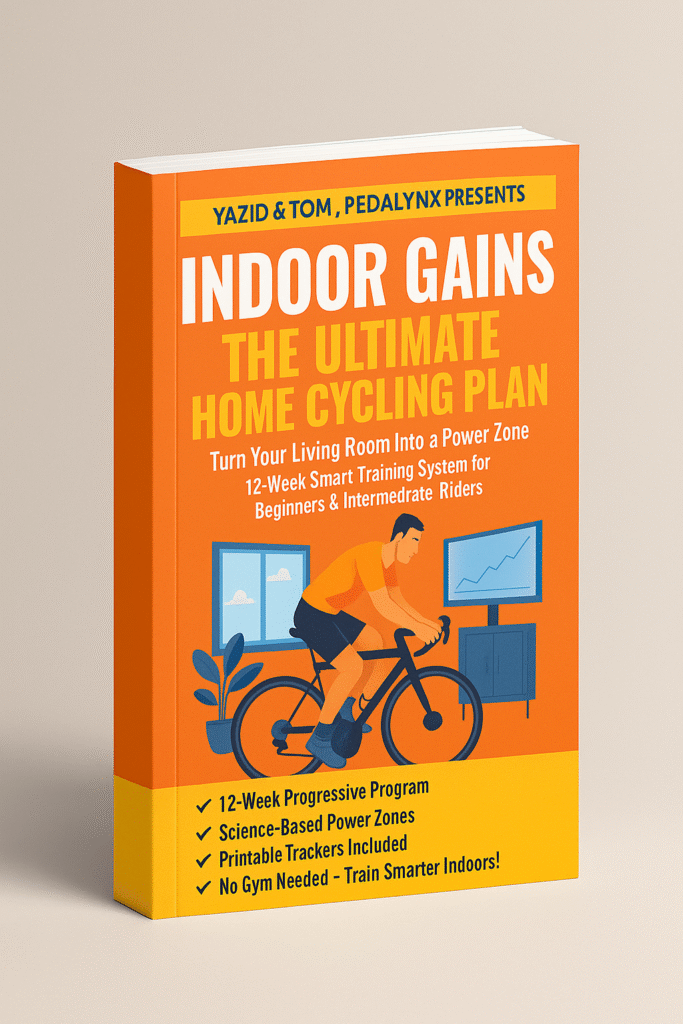
Inside you’ll find ✅ 12-week structured indoor training plan — Foundation, Performance, and Power phases
✅ Smart trainer setup guide for Zwift, Wahoo, Peloton, or any trainer
✅ Science-based workouts to boost endurance, FTP, and recovery
✅ Simple fueling tips and recovery strategies that fit real-life schedules
✅ Printable progress trackers to visualize gains week by week
✅ Sleep, recovery & mindset tools to multiply results
Ready to start transmuting? Grab Indoor Gains: The Ultimate Home Cycling Plan and discover the complete system for virtual cycling mastery. Your transformation from “indoor cyclist” to “home training champion” starts the moment you understand the formula.
That’s the real magic.