The Best Fluffy Pancakes recipe you will fall in love with. Full of tips and tricks to help you make the best pancakes.


Look, I’m gonna be straight with you—the future of indoor cycling isn’t coming, it’s already sitting in your living room judging your FTP. Smart trainers that shift resistance like they’re reading your mind, apps that dissect your power output with surgical precision, AI coaches promising to turn you into… well, into whatever the cycling equivalent of a superhero is.
But here’s the thing nobody wants to talk about: with all this incredible tech comes an equally incredible opportunity to completely wreck yourself.
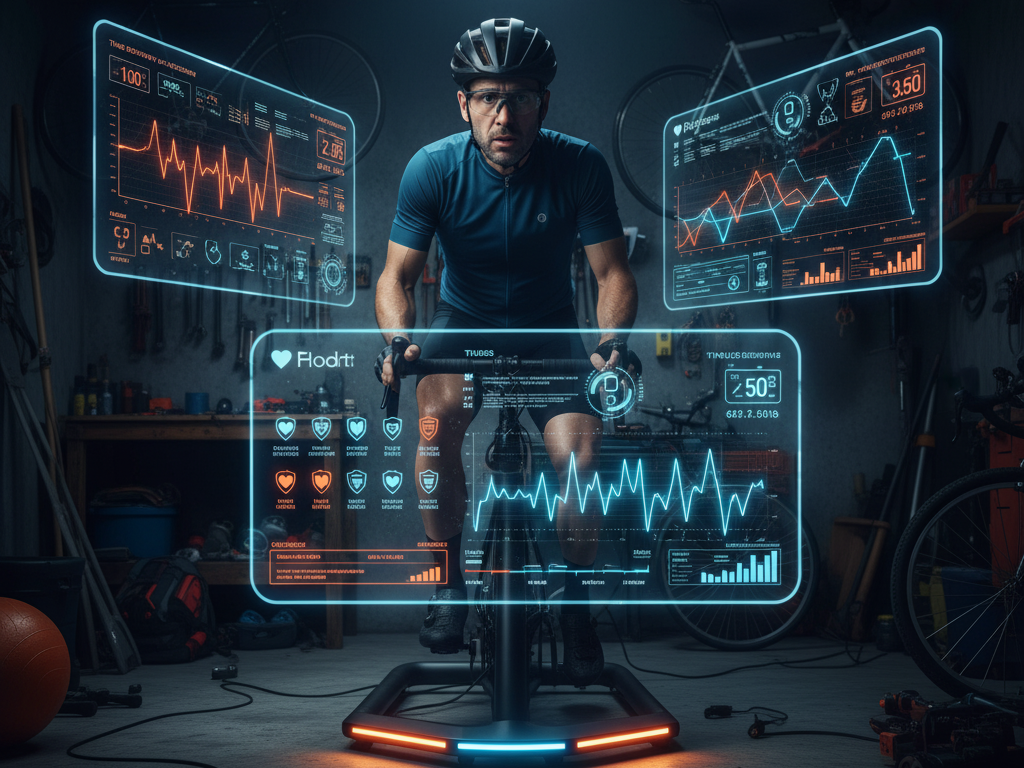
Everyone’s racing toward the newest AI toy—but hardly anyone’s discussing the absolute trainwrecks waiting to happen. Knowing what not to do might be more valuable than all the optimization algorithms combined, because you wouldn’t give your house keys to a really smart toaster, would you?
The fundamentals in “Indoor Gains: The Ultimate Home Cycling Plan” have helped thousands of cyclists build actual, real foundations. As we barrel headfirst into this AI-everything future though, these basics become even MORE critical. Technology’s like an amplifier, right? It makes your good choices better and your terrible decisions… catastrophic.
Let’s dive into three absolutely massive mistakes that could transform your AI training dreams into cautionary tales.
Mistake #1: Handing Your Brain Over to the Algorithm Gods
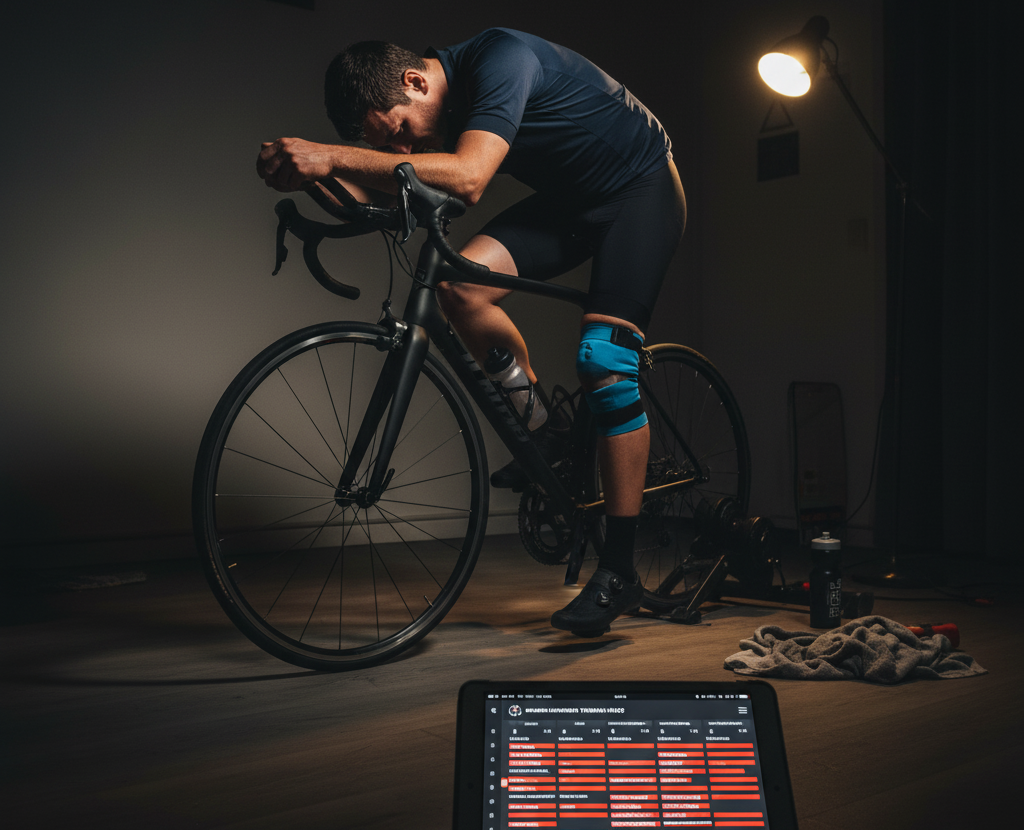
Picture Dave. Super enthusiastic amateur cyclist, discovers this AI training app that literally promises to “think for you.” Dave’s thrilled—no more decision fatigue, no more wondering if he’s doing enough or too much.
So when the AI cheerfully suggests eight high-intensity sessions in nine days, Dave doesn’t even blink. When it prescribes brutal hill repeats the day after a three-hour grind, Dave’s like “the AI knows best.”
Three weeks later? Dave’s knees sound like someone’s crushing bubble wrap. His resting heart rate’s gone from 52 to 68. The sight of his bike—which he used to love, genuinely love—now fills him with dread.
What happened is Dave forgot something crucial. AI’s only as smart as the information it’s getting, and it doesn’t know squat about your actual life. It doesn’t understand that your neighbor’s car alarm turned Tuesday night into a 3 AM nightmare. It has no clue you’re stressed about work, or that your IT band’s been tight since Sunday but you’ve been pretending it’s fine because cyclists are stubborn like that.
What goes wrong: Overtraining syndrome. Injuries. Burnout. Your training plan looks amazing in spreadsheet form while simultaneously destroying everything you’ve worked for.
The better way: Think of AI as your incredibly knowledgeable training buddy who doesn’t quite grasp that yes, you REALLY are exhausted today. “Indoor Gains” emphasizes listening to your body, understanding training stress, balancing hard efforts with actual recovery. These principles become your override button when the algorithm gets overzealous. The future belongs to cyclists who can look at an AI recommendation and adjust accordingly.
Mistake #2: Death by Data Overload
Sarah went all-in on sensors. Every possible metric tracker, every AI analysis tool. Her dashboard displays 47 different metrics. FTP, normalized power, training stress score, fatigue resistance, pedal smoothness, left-right balance, cadence optimization, VO2max estimates, and coefficients she can’t even pronounce.
She spends more time staring at graphs than actually pedaling.
One random Wednesday Sarah notices her “anaerobic capacity trending coefficient” drops by 0.3%. Panic mode—complete training restructure. Next week her “metabolic efficiency index” looks funky, so she changes everything AGAIN. Within a month Sarah doesn’t have a training plan, she’s got this Frankenstein’s monster stitched together with anxiety.
Her actual fitness? Completely flat. Going nowhere because she’s been chasing ghosts in the algorithm.
The damage: Analysis paralysis becomes your permanent state. You can’t maintain consistent training because you’re constantly micro-adjusting based on noise—not signal. When everything’s equally important nothing actually matters. Your body never adapts because the stimulus keeps changing before adaptation can happen.
The smarter path: Focus on what ACTUALLY moves the needle. “Indoor Gains” teaches cyclists to nail down foundational metrics first—power output, heart rate, how you actually feel, consistency week-to-week. Before you worry about exotic measurements that might be meaningless. Pick three to five key indicators, track them consistently, let AI help identify meaningful patterns over weeks and months. Not daily variations that signify nothing. The cyclist of tomorrow isn’t the one drowning in data—it’s the one who knows which numbers matter and ignores the shiny distractions.
Mistake #3: AI Can’t Teach You How to Hurt Productively
Uncomfortable truth: AI can prescribe the mathematically perfect interval workout, but it absolutely cannot teach you to embrace the kind of suffering that actually makes you faster.
Technology can tell you “hold 350 watts for four minutes” but it can’t instill the mental toughness to keep pushing when your legs are screaming and your lungs feel like they’re filled with broken glass.
Marcus switched completely to AI-guided training but started backing off intervals the second they got genuinely uncomfortable. Not dangerous uncomfortable, just hard. The AI dutifully recorded his “completed” workouts: 320 watts instead of the prescribed 350, rest intervals stretched from 90 seconds to three minutes.
Marcus felt pretty good about his “smart, sustainable” approach. Six months later he’s fitter than when he started but nowhere near his actual potential. He’d essentially taught the AI to enable his quitting habit—to meet him where he was comfortable instead of pushing him toward capability.
The consequences: A training plan perfectly optimized for mediocrity. Most AI systems adapt to what you DO, not what you’re capable of achieving. If you consistently underperform, it concludes that’s your limit. You’ve engineered a comfort zone using cutting-edge technology, which is darkly hilarious when you think about it.
The actual solution: Use AI to structure suffering that’s productive—there’s a difference between good pain and bad pain—but cultivate the mental resilience to execute it properly. “Indoor Gains” emphasizes understanding when to push through discomfort versus when backing off is actually intelligent. AI should help you identify where productive training crosses into counterproductive overtraining. But hitting those targets consistently? That requires human grit. The most successful cyclists in this AI era will be the ones using technology to eliminate guesswork while maintaining that warrior mentality. Technology can’t make you tough. Toughness is still on you.
The Smart Way Forward
Start with the boring fundamentals that nobody wants to hear about because they’re not sexy: consistent training, progressive overload that actually progresses, recovery that’s real recovery not just “I sat on the couch for twenty minutes,” body awareness. These principles from “Indoor Gains: The Ultimate Home Cycling Plan”—they’re your foundation, your scaffolding, the framework (whatever metaphor works for you) within which AI can actually do its thing safely. Without wrecking you.
Before you hand over the keys to the algorithms—because it’s tempting, I get it, I really do—ask yourself something. Be brutally honest: am I using AI to actually become better? Like genuinely faster, stronger, more resilient? Or am I using it to avoid the hard work? The thinking part, the analyzing part, the part where you push beyond what’s comfortable into that zone that’s… uncomfortable but necessary? The thinking, the analyzing, the pushing beyond comfortable limits?
That distinction matters more than any metric.