The Best Fluffy Pancakes recipe you will fall in love with. Full of tips and tricks to help you make the best pancakes.


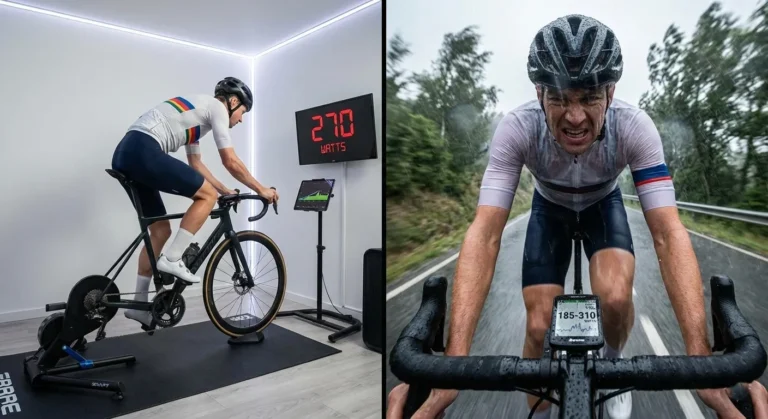
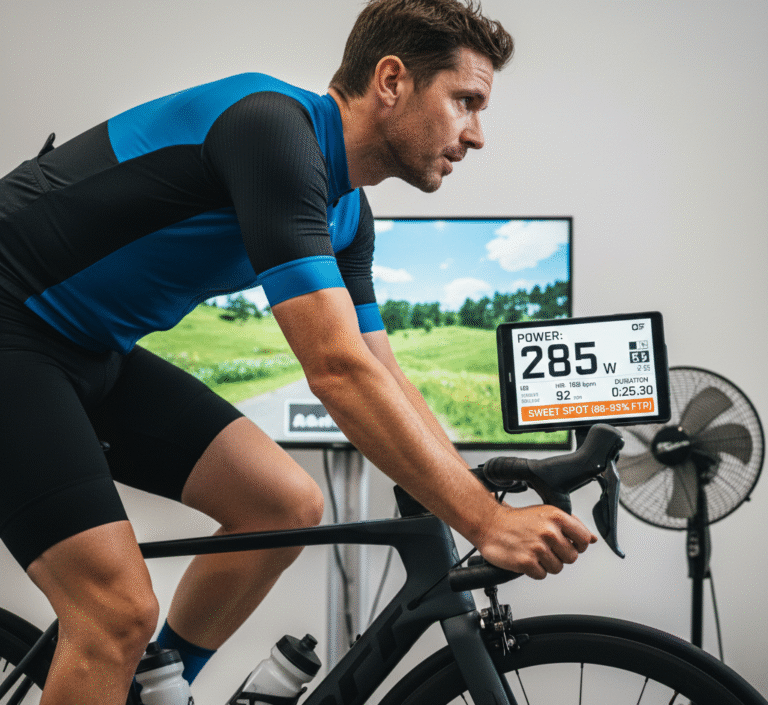
Look—everyone’s arguing about whether AI can replace your cycling coach, right? Watts per kilo this, FTP zones that. But here’s what’s wild: while we’re all obsessing over these metrics, AI road cycling platforms are quietly fixing something way bigger. Something that’s been stealing 15-30% of your potential gains this whole time and nobody—not your coach, not your training partners, definitely not that guy who always drops you on climbs—is talking about it.
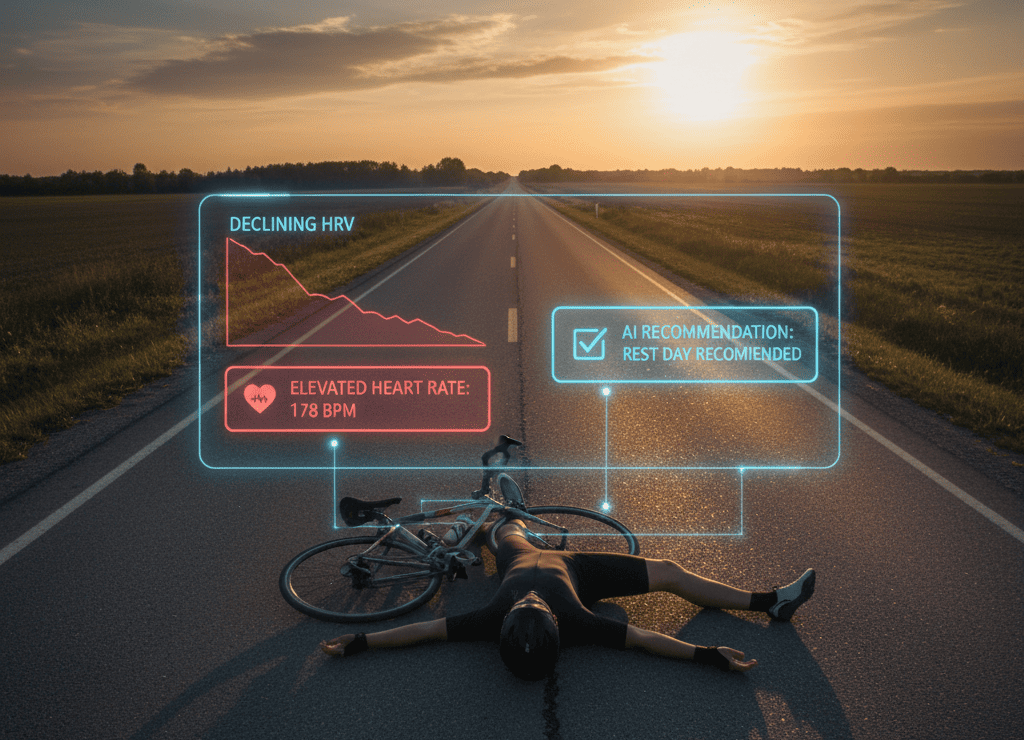
Micro-recovery precision.
Sounds boring, I know. Stay with me though because this changes everything about how you should be thinking about training. It’s basically the ability to know—like actually KNOW, not guess—whether your body’s ready to crush intervals or needs to spin easy. And we’re talking hour-by-hour adjustments here, not some weekly check-in where you tell your coach “yeah I’m feeling pretty good I guess?”
Should you switch to an AI cycling coach? Honestly… it depends on whether you can handle what the data’s going to tell you about yourself (spoiler: you probably won’t like it at first).
Why AI Cycling Coaches Adapts Better Than Traditional Training Plans
Traditional cycling coaches build these beautiful periodized plans. Week 1 is base, week 4 brings threshold work, week 8 you’re supposedly race-ready. Clean. Linear. Makes perfect sense on paper, which is exactly the problem.
Because here’s what actually happens: your body doesn’t follow schedules. There’s this research from the Journal of Applied Physiology—and I’m not making this up—showing that if you take identical training loads and apply them to different athletes? The response varies by up to 500%. Five. Hundred. Percent. That’s not a typo, that’s your Tuesday being someone else’s complete rest day in terms of what your physiology can actually handle.
I remember this ride last month where my Garmin was basically screaming at me to take it easy (HRV in the toilet, resting heart rate up 8bpm) but the plan said threshold intervals so… I did them anyway. Felt like absolute garbage, couldn’t hit the numbers, spent three days recovering. Classic.
Why nobody talks about this: Human coaches—even phenomenal ones—can’t track 47+ biomarkers that shift constantly. Sleep quality (not just duration, but actual architecture), HRV trends, muscle glycogen status, cortisol patterns doing their weird daily dance, your immune system quietly freaking out about that cold you don’t have yet, real-time power degradation… it’s impossible. They work with weekly conversations and you saying stuff like “I dunno, legs felt heavy?” Super scientific.
AI cycling platforms? They’re processing this stuff continuously. Every. Single. Hour.
How you actually use this:
- Get an AI road cycling platform that talks to your wearables—Whoop, Garmin, Oura, whatever you’ve got
- Turn on automatic workout adjustments (yes, even when you don’t want to)
- Here’s the hard part: when AI says downgrade the workout, you actually have to listen instead of being like “nah I feel fine”
- Track it for 8 weeks minimum—write down when you followed AI vs when you went rogue with your old rigid plan
- Be honest about outcomes: are you actually setting new PRs more often or just suffering more?
The real question isn’t whether AI understands your training better than you (it does). It’s whether you can handle resting when the algorithm says rest, especially when your ego’s screaming to go hammer with the group ride.
How AI Road Cycling Platforms Eliminate Coaching Bias
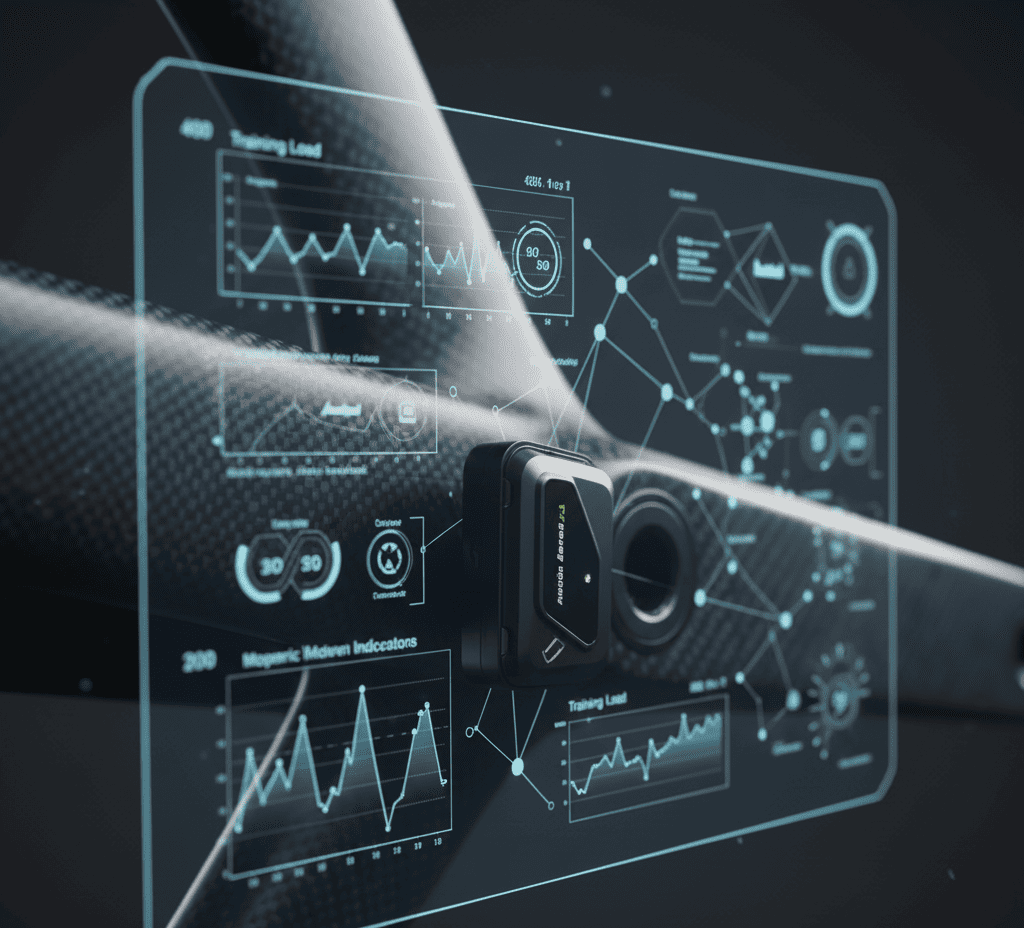
Every single cycling coach—seriously, every one—has confirmation bias baked in. They see what worked for their star athlete and boom, that becomes the template. Sweetspot intervals crushed it for Rider A who won some regional race? Guess what you’re doing now. It’s completely unconscious but it happens, because human brains love patterns and stories.
AI cycling systems though… they’re analyzing millions of training sessions across riders who are nothing like each other. Different genetics, different limiters, different response patterns. And they’re identifying what actually predicts performance gains for YOUR specific physiology, not what made for a good Instagram post about someone else’s training.
Studies in Sports Medicine—and this one kind of blew my mind—show that those generic population-level training recommendations? They fail 40-60% of the time because individual responses are that different. Forty to sixty percent! That’s worse than a coin flip.
Why this flies under the radar: Because humans love narratives. We want to hear how Pogačar trained for the Tour, what intervals Vingegaard did before crushing Ventoux. The story matters to us. AI doesn’t care about the story—it only cares about statistical correlation between training stimulus and measurable adaptation in your legs, your heart, your specific biochemistry.
Implementation (the messy reality):
- Audit your training honestly: why do you do threshold intervals on Wednesdays? Because they work or because everyone does them?
- Use AI platforms that explain their reasoning (not just “do this workout” but WHY)
- Run an experiment—follow AI recommendations for one block, compare to your traditional approach
- Test both with controlled benchmarks: 20-min FTP test, 5-min power, whatever metric you trust
- Accept that AI might prescribe weird stuff (polarized training when you’re used to threshold-heavy, or vice versa)
Are you training the way you train because it actually works… or because it’s comfortable and familiar?
AI Cycling Coach Technology: Predicting Overtraining Before Traditional Methods
This is the big one, honestly—the most valuable piece of this whole thing.
AI road cycling platforms can detect overtraining signatures 7-14 days before you subjectively feel anything wrong. They’re analyzing power output degradation patterns (tiny drops you’d dismiss as “off days”), HRV suppression trajectories, training load ratios, all these invisible signals accumulating. By the time you notice you’re cooked, you’ve already dug yourself into a hole that takes weeks to climb out of.
European Journal of Sport Science found that 37% of endurance athletes hit overtraining syndrome every year. Every. Year. And recovery timelines? Six to sixteen weeks of basically wasted training time. Traditional coaching catches this when you finally admit you feel “flat” or your legs are “heavy”—which means you’re already deep in the red.
AI catches it when you need 2-3 easy days instead of a month off the bike.
Why everyone misses this: Athletes and coaches both rationalize small performance drops. You did 240 watts instead of 250 on your intervals—whatever, bad day right? But AI sees that as a 4.2% decline that, when you combine it with elevated resting HR and suppressed HRV, screams Stage 2 overreaching. We make excuses (didn’t sleep great, stress at work, whatever). Algorithms just quantify reality.
How to actually implement:
- Turn on performance prediction models—the ones that forecast fitness 2-4 weeks ahead
- Set alerts for negative divergence (when training load goes up but performance gains don’t)
- When AI recommends unscheduled rest weeks DO IT IMMEDIATELY (hardest part by far)
- Keep a journal: log your subjective feelings next to AI readiness scores, see how accurate the predictions are over time
- Review 90-day training stress balance monthly to spot chronic accumulation you’re missing
What if—and just think about this—what if your breakthrough performance isn’t hiding in one more interval session but in the recovery day you keep skipping because it feels like quitting?
Should You Switch to an AI Cycling Coach?
Switching to an AI cycling coach requires surrendering control, and that feels terrible at first. You have to trust data over your gut feeling. You need to accept that your “feel” might be biochemically compromised by stress hormones masking real fatigue (cortisol is sneaky like that). You’ve got to be willing to ride easy when your friends go hard.
And honestly? That last one might be the hardest thing for most riders to actually do.
AI road cycling isn’t about replacing human expertise completely—that’s not the point and anyone selling it that way is lying. It’s about augmenting decision-making with computational power no human brain can match. Best approach is probably hybrid: AI handles daily optimization and those micro-adjustments, human coaches provide motivation, race strategy, technique refinement (because algorithms can’t tell you your pedal stroke looks weird).
Testing AI Road Cycling Training
Stop debating it. Just test it.
Commit to 30 days of AI-directed training. Pick a platform—TrainerRoad, Wahoo SYSTM, Join, Humango, whatever speaks to you. Sync all your devices (even the ones you forget about). Follow every single recommendation even when—especially when—it contradicts what you think you should do.
Track three things: weekly TSS, breakthrough performances (new PRs, segment times, whatever), subjective wellbeing scores (just rate yourself 1-10 daily).
After 30 days you’ll know. Most riders discover they’ve been going 20% too hard on easy days and 15% too easy on hard days, which is… yeah, that’s the exact recipe for going nowhere fast.
The peloton isn’t waiting around. Every week you spend debating this, there’s riders extracting marginal gains from algorithmic precision while you’re leaving them on the table. The secret isn’t that AI cycling coaches are perfect (they’re not)—it’s that they’re demonstrably better at managing human performance variability than our pattern-seeking, ego-driven, story-loving brains.
Should you switch? Only if you’re actually serious about results over rituals and traditions and doing things the way they’ve always been done.
Real question: What’s your FTP worth to you? And are you willing to let objective data prove whether your current approach is earning gains or costing them?
Start today. Sync your power meter. Trust the algorithm (at least for 30 days). Ride smarter, not just harder.
Because here’s the thing—and I mean this—training hard is easy. Training smart is uncomfortable.
You can check our Road Cycling Guide for more tips and info !




[…] from ones that just slap a generic 12-week plan in a fancy interface. That breakdown lives in our AI coaches for road cycling guide — it’s worth reading before committing to a […]