The Best Fluffy Pancakes recipe you will fall in love with. Full of tips and tricks to help you make the best pancakes.


Mindset is everything. No, seriously—before you even touch a bike, before you’ve picked a trail or argued with yourself about whether you’re “too old” or honestly whether your knees can handle it, your beliefs are already steering. And most people’s beliefs about the best age to start mountain biking are quietly, stubbornly wrong. Not wrong in a devastating way. Just… limiting. Like wearing shoes two sizes too small and wondering why the hike hurts.
Here’s what I’ve seen, and what the data keeps confirming: the riders who thrive—at 5, at 45, at 67—aren’t the most athletic. They’re the ones who made specific mental shifts. Three of them, actually. Let’s get into it.
Shift #1: Ditch the “Perfect Age” Fantasy
Old thinking: There’s a window. I missed it. Kids start young, pros peak early, I’m behind.
This is the mental trap that keeps more people off trails than any physical limitation ever could. And it’s just—wrong. Factually, demonstrably, frustratingly wrong.
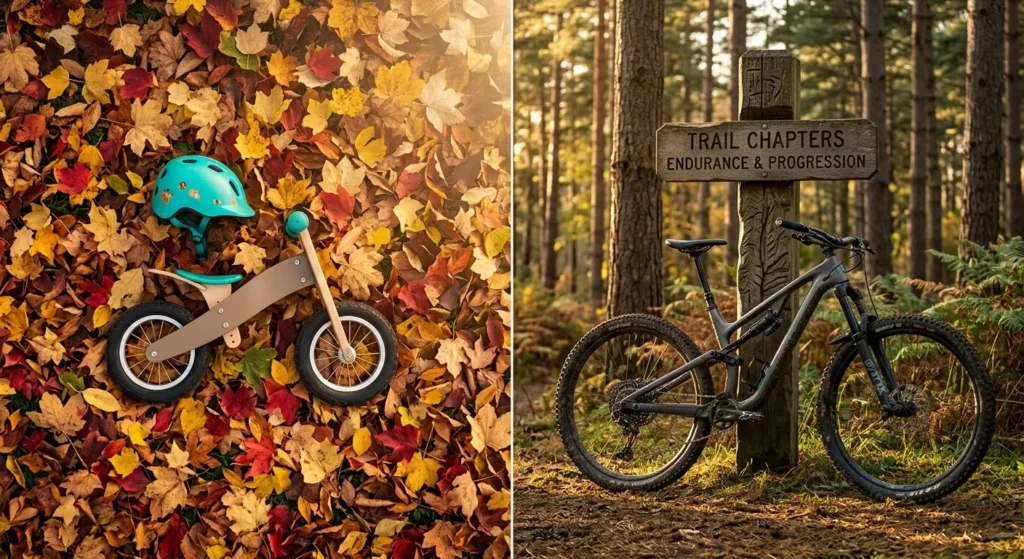
Here’s the actual picture across age groups:
- Ages 3–5: Balance bikes. Seriously, a 3-year-old on a Strider is building motor patterns that will stick for life. Gross motor skills absorbed before age 6 are neurologically cemented in ways adult learning simply can’t replicate. It’s wild, actually.
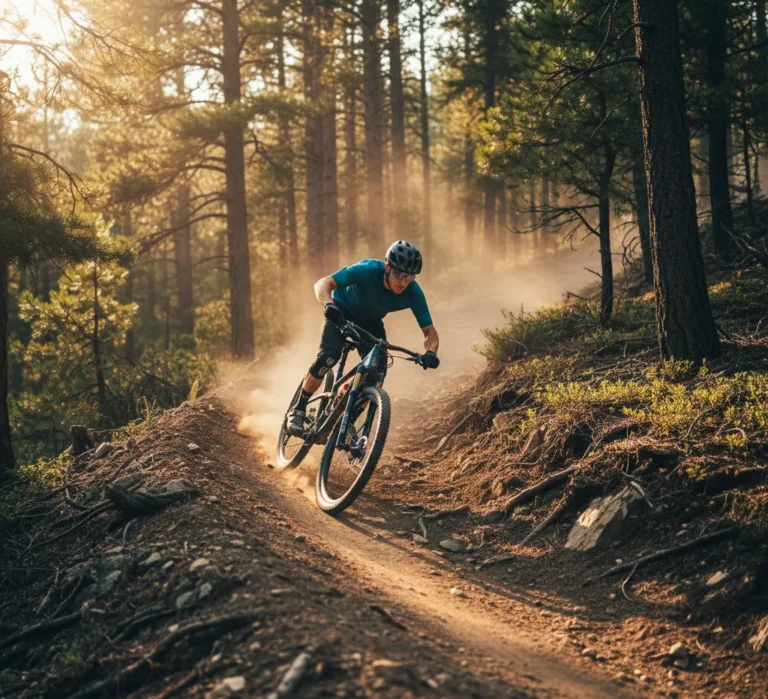
- Ages 6–12: Peak neuroplasticity. This is—okay, if there is a golden window for skill acquisition, this is probably it. Technique sticks faster here than at any other point. Many elite XC riders started in this range. Kate Courtney, for example, picked up serious riding in her early teens and went on to win a World Championship.
- Ages 13–17: Teens bring something adults quietly envy—fearlessness, peer motivation, explosive strength. Don’t underestimate this stage.
- Ages 18–40: Better judgment (finally), disposable income for decent gear, and the discipline to actually train consistently. Honestly? Adult starters often progress faster in technical skills because they think before they send it.
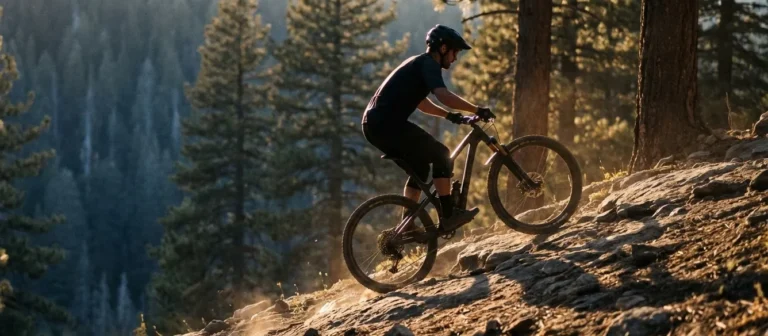
- Ages 40–60+: The masters MTB category is one of the fastest-growing demographics globally right now. Patience on technical terrain. Intrinsic motivation. Fewer ego-driven decisions. These riders are often safer and more deliberate than their younger counterparts.
Ned Overend won a masters world championship at 50. Fifty. He didn’t start at the perfect age—he just kept going past the age when most people have already talked themselves out of starting.
Stop doing math on your age. Start doing research on your nearest trail.
Shift #2: Safety Isn’t a Cage—It’s the Key
Old thinking: All that protective gear is for nervous beginners or helicopter parents. Real riders just ride.
Ugh. This one frustrates me because it’s so backwards—and it genuinely keeps people hurt, and more importantly, it keeps people quitting after one bad crash.
The reframe here is simple but kind of profound: safety infrastructure is what lets you ride longer. More years, more trails, more joy. That’s it.
For kids ages 3–10—helmets that fit (two finger-widths above the eyebrow, no exceptions), flat terrain first, and bikes sized so feet rest flat on the ground when seated. An oversized bike on a kid is basically a crash machine. Introduce berms or small drops only after 6 to 12 months of confident flat riding. Patience here is not timidity. It’s strategy.
For teens and adults? MIPS helmet technology, knee pads, elbow pads. Studies suggest proper protective gear reduces injury severity by up to 56%. That’s not a small number. And—this matters—a single one-day skills clinic will compress what would otherwise be months of painful trial and error into one weekend. Book it. Seriously.
For riders 40 and older: bone density shifts, recovery slows, and that’s just biology, not failure. Gear up more aggressively as you age, not less. And—don’t roll your eyes—e-MTBs are legitimate tools here. Electric mountain bikes extend ride time, open steeper terrain, and help riders with joint issues stay in the sport. They’re not cheating. They’re smart.
Steve Peat raced downhill competitively until 38 with full protective gear every single time. His career length wasn’t despite the protection. It was because of it.
Shift #3: You Don’t Get Fit to Ride. You Ride to Get Fit.
Old thinking: I’ll start when I’m in better shape. When I lose the weight. When work calms down.
Oh, I know this one. I’ve lived this one. It’s the most seductive lie in the whole self-improvement universe—the idea that you need to be ready before you begin. Mountain biking demolishes this myth almost immediately upon contact with an actual trail.
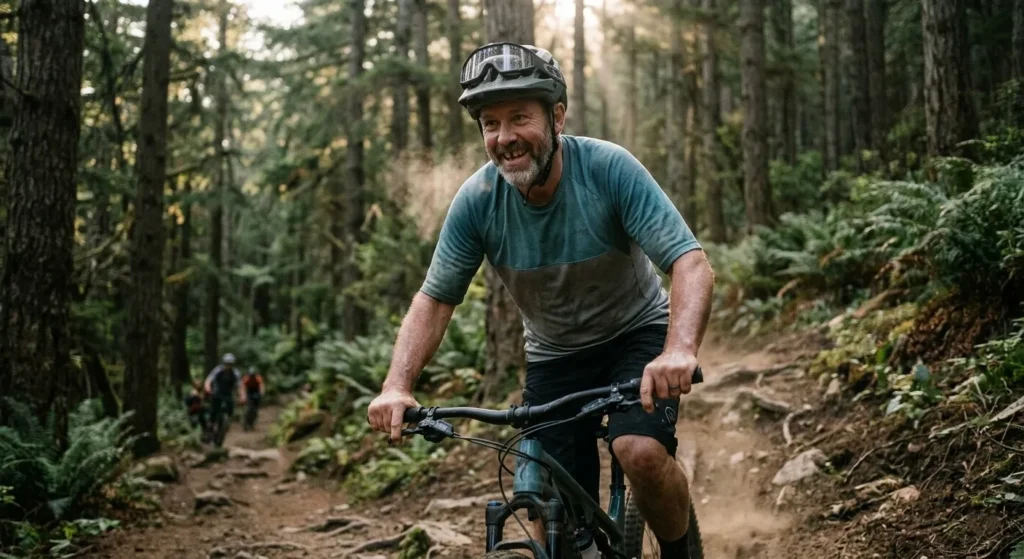
The benefits hit across every age group differently but consistently:
- Kids: Coordination, spatial awareness, cardiovascular health—and weirdly, studies show improved academic focus in children who ride regularly. Something about the problem-solving nature of navigating terrain.
- Adults 20–40: 45 to 60 minutes of trail riding burns 400–600 calories and engages your core, legs, and upper body in ways that a treadmill simply cannot replicate. It also doesn’t feel like exercise. That’s the sneaky part.
- Adults 40+: Lower impact than running—significantly. Cycling has been linked to up to a 46% reduction in cardiovascular disease risk for middle-aged adults. Your joints will thank you for choosing this over pavement pounding.
- All ages: Cortisol drops. Anxiety eases. There’s a reason mountain biking communities are—I don’t want to over-romanticize this, but—genuinely some of the most positive sport cultures around.
Riders across forums like Pinkbike document starting overweight, undertrained, sometimes terrified—at 50, 55, 60—and riding 2 to 3 times per week for 12 months and completely transforming their health. Not as a side effect. As the direct result of just… going.
You don’t need to be ready. Riding is how you get ready.
So. Are You Going to Ride or Not?
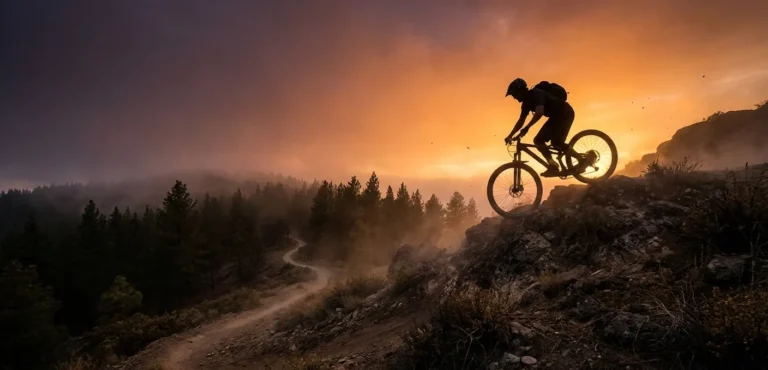
The best age to start mountain biking is—honestly, it’s right now. Whatever age you currently are. Not because that’s motivational poster language (though okay, maybe it is a little), but because every life stage has real, specific, documented advantages that make this sport worth entering.
The trail doesn’t audit your birthdate. It just asks if you showed up.
Find a beginner trail on TrailForks or MTB Project. Book a skills clinic. Order a helmet that fits. Do it this week, not next month, not “when things settle down.”
The only gap between you and the ride of your life is the decision—right now, today—to actually go.