The Best Fluffy Pancakes recipe you will fall in love with. Full of tips and tricks to help you make the best pancakes.


Okay so—choosing a bicycle when you’re past retirement age shouldn’t feel like you’re trying to decode some NASA manual, right? But here’s what actually happens: you spend weeks (maybe months if we’re being honest) scrolling through websites at 2am, reading contradictory reviews, watching YouTube videos about senior bikes and that somehow make everything MORE confusing… and you still don’t have a bike.
I watched my uncle Jerry do this exact dance for literally three months last summer. Three. Months. The guy printed out spreadsheets—SPREADSHEETS!—comparing frame geometries and gear ratios while his doctor kept telling him he needed more exercise. By the time he finally bought something, he’d missed the entire riding season and his motivation had pretty much evaporated like morning dew on hot pavement.
The truth is, the traditional way of bike shopping is designed to waste your time. Not intentionally (well, maybe sometimes intentionally because confused customers buy more accessories?) but it’s set up all wrong from the start. You’re bombarded with features you don’t need, steered toward bikes that look good in showrooms but feel terrible after twenty minutes of actual riding, and nobody—I mean NOBODY—is straight with you about what actually matters when your knees aren’t what they used to be and balance is… let’s call it a legitimate concern.
What gets lost in all this noise? The actual riding. The wind in your face, that little bit of freedom, the cardiovascular benefits that are legitimately life-changing for people our age. And yeah, the simple joy of not being stuck indoors all day.
So let’s do something different—let’s strip away the nonsense and get you on a bike that actually works for YOUR body, YOUR neighborhood, YOUR goals. Fast.
Best Bikes for Seniors Strategy #1: Match Your Physical Needs First (Not Bike Categories)

Here’s where everyone screws up (and I did this too, so no judgment).
The slow way: You google “best bikes for seniors” and start looking at whatever pops up, maybe click through to “comfort bikes” or “cruiser bikes” and hope something magical happens.
The actually smart way: You spend maybe fifteen, twenty minutes—tops—really thinking about what your body is telling you these days. And I mean REALLY thinking, not the version where you pretend you’re still 45.
Look, I get it. Nobody wants to admit that getting on and off a bike isn’t as automatic as it used to be, or that your wrists start complaining after gripping handlebars for a while. But here’s the thing—acknowledging this stuff isn’t defeat, it’s the secret to finding a bike you’ll actually use instead of one that sits in your garage collecting dust and guilt.
Make yourself a little list (mental is fine, paper is better because—let’s be real—we forget stuff):
- Where does your body hurt or feel stiff? Hands, knees, hips, lower back, shoulders?
- How’s your balance on a scale of “rock solid” to “maybe I should hold onto something”?
- Any vision stuff that makes you nervous about riding near traffic?
- Medications that make you dizzy or affect coordination? (This one’s huge and people skip it.)
- Bone density concerns—osteoporosis makes falling a WAY bigger deal
Once you’ve got this, you’re not shopping for “a bike”—you’re shopping for YOUR bike. The difference is massive.
My neighbor Patricia (who’s like 67? 68?) spent forever looking at bikes online before her daughter asked one simple question: “Mom, you’ve got arthritis in both hands, why are you looking at bikes with thin racing handlebars?” Boom. Game changed. She immediately switched to looking for ergonomic grips and swept-back handlebars, found her perfect bike in less than a week instead of the month she’d already wasted.
Real talk application: If you’ve got knee issues, you need a bike where your leg never fully extends—that’s non-negotiable. This one thing eliminates like 60% of bikes immediately. See? Your physical truth isn’t limiting you, it’s FOCUSING you. That’s powerful.
Adult Tricycles vs Two-Wheel Bikes for Seniors: Make This Decision First
Okay this one’s going to sound too simple but stick with me—
Old, slow way: You kind of meander through different bike types over weeks, test riding a regular bike here, maybe looking at a trike there, never really committing to either direction…
The way that actually gets you riding: Decide RIGHT NOW—two wheels or three wheels. Today. This afternoon. Before dinner.
I know, I know—some of you just bristled at the trike suggestion. There’s still this weird stigma, like admitting you want three wheels means you’re “giving up” or something. But here’s what I learned working part-time at a bike shop last year (post-retirement gig, keeps me busy): the seniors who are happiest, who ride the most, who actually stuck with it? Half of them are on trikes and they don’t care one bit what anyone thinks because they’re OUT THERE RIDING while other people are still debating.
Here’s your accelerated assessment, and be honest because nobody’s grading this:
Do you have ANY—and I mean even occasional—balance wobbles? Does your doctor have you on blood pressure meds or anything that causes lightheadedness? When you stand on one foot can you hold it steady or do you immediately need to put it down? Are you frankly just nervous about the whole two-wheel stability thing?
If you answered yes to any of that—ANY of it—go look at adult tricycles and don’t feel bad about it for even one second.
The 2025-2026 trikes from Schwinn (the Meridian is super popular), Raleigh’s Tristar, and some of these new eWheels models… they’re not your grandmother’s tricycle anymore. Sleek, efficient, some of them have electric assist, storage baskets that actually make sense. You can carry groceries! Try doing that on a regular bike without looking like you’re training for Cirque du Soleil.
On the flip side—if your balance is genuinely solid and you want that traditional bike feeling, the maneuverability in tight spaces, the lighter weight—then focus ONLY on two-wheel comfort bikes with step-through frames. Do not torture yourself trying to compare apples and oranges.
This single decision—literally this one thing—cuts your research time in half. Maybe more than half. And you know what? You can always change your mind later, but at least you’re moving forward instead of spinning in circles.
Real story: My buddy Robert (71, plays golf twice a week, seems pretty fit) spent SIX WEEKS going back and forth. His daughter finally just asked him straight up: “Dad, are you confident with your balance or not?” He paused for like thirty seconds and said “…not really, if I’m being honest.” Once he admitted that? Switched to researching trikes exclusively, bought one within a week, and now he rides almost every day. Every. Day. That’s six weeks of his life he’ll never get back because he couldn’t make this one decision.
How to Test Ride Bikes for Seniors: The 3-Bike Rule That Saves Time
This strategy saved me so much frustration I almost can’t believe I used to do it the other way.
The exhausting old way: You visit multiple bike shops (which, let’s be real, there probably aren’t that many near you anyway), test ride everything they’ll let you, leave feeling more confused than when you arrived, go home and Google more, repeat the cycle…
The way that respects your time: Use the internet for what it’s actually good at—research. Narrow down to three specific models based on real owner reviews (not the marketing copy, the REAL reviews from people our age), then do ONE focused test-ride session where you actually learn something.
Look—the internet changed everything about bike shopping but most people still shop like it’s 1995. You don’t need to physically sit on thirty bikes anymore. You can read detailed specs, watch video reviews, see actual owners talking about what works and what doesn’t. Use this!
Spend a couple hours—maybe while you’re having your morning coffee or whatever—reading verified reviews. And I mean VERIFIED, like actual purchasers on sites that confirm someone bought the thing. Pay specific attention to complaints because that’s where the truth lives. If five people over 65 say the seat is uncomfortable after 20 minutes, that’s not a coincidence, that’s a warning.
Look for patterns in reviews from your age group:
- Assembly difficulty (because some of these bikes come in 500 pieces and the instructions are… not helpful)
- Maintenance headaches
- Comfort over longer rides (not just around the block)
- Whether the company actually honors their warranty
- How heavy is it really (the specs say one thing, reality sometimes says another)
Get yourself down to three finalists. Three. Not seven, not “well maybe these four plus these two as backups”—THREE.
Then schedule one afternoon—one!—to test them all. And here’s the critical part that everyone skips: don’t just ride around the parking lot for 90 seconds and call it done. You need at minimum 15 minutes on each bike. Tell them upfront that’s what you need. If they won’t let you, that tells you something about that shop, doesn’t it?
During those fifteen minutes:
- Mount and dismount like five or six times (I know it feels awkward, do it anyway—this is how you learn if it’s actually easy or if you’re going to struggle every single time)
- Ride over bumps, curbs, rough pavement—whatever they’ve got
- Practice stopping and starting repeatedly
- Just sit on it while stopped and notice what hurts or feels weird
- Try to imagine doing this three or four times a week
This concentrated comparison session tells you everything. EVERYTHING. Your body doesn’t lie during a proper test ride.
And honestly? If your local shop doesn’t carry your finalists (happens more than you’d think), ask about demo programs or extended test rides. Some online retailers—and this is wild but true—now offer 30-day return policies where you can basically have a month-long test ride at home.
Real application that worked: Patricia (different Patricia, this is confusing, maybe I know too many Patricias?) narrowed her search to three e-bikes: the Rad Power RadRunner, Trek Verve+, and that Specialized Turbo Como everyone talks about. She test-rode all three in one Saturday afternoon—one afternoon!—and immediately noticed the Como’s step-through height was noticeably lower and the saddle didn’t make her backside hate her after ten minutes. She bought it that same day, didn’t second-guess herself, and has put over 500 miles on it in the first year. That’s the power of focused comparison.
Best Electric Bikes for Seniors Over 65: Why E-Bikes Are Worth the Investment
Oh boy, this one gets people worked up but I’m saying it anyway—
The expensive, slow way: Buy a traditional bike, struggle with hills and wind, gradually ride less and less because it’s hard and not fun, eventually admit defeat and upgrade to electric assist a year or two later. Congratulations, you just bought two bikes.
The fast-forward: If you’re serious about riding regularly (like 3+ times a week serious, not “maybe on perfect weather Sundays” serious), start with an e-bike and skip the struggle phase entirely.
I can already hear the objections—”That’s cheating!” “They’re too expensive!” “I need the exercise!” Let me address these really quick:
It’s not cheating, it’s engineering. You’re still pedaling, still getting cardiovascular benefits, still building strength. The motor just… helps. Especially on hills or when you’re tired or when that surprise headwind comes out of nowhere. And here’s the secret nobody tells you: when riding is easier, you ride MORE, which means you actually get MORE exercise in the long run, not less.
The cost thing—yeah, e-bikes are pricier upfront. But if you buy a regular bike for $500, hate it after six months, and then buy an e-bike for $1500… you just spent $2000. See the problem?
The 2025-2026 e-bike market specifically for seniors is honestly incredible compared to even three years ago. Brands like Aventon, Ride1Up, Trek’s Verve+ line (which is specifically designed for our age group), they’ve figured out how to make pedal assist feel natural instead of jerky or robotic. The displays are finally readable without squinting. The batteries last longer. The whole experience is just… better.
My personal rule of thumb (and I’ve sold a lot of bikes at this point): If you’ve got ANY hills in your area, want to ride more than two miles, or hope to maintain regular riding frequency, invest in the e-bike immediately. Like right now. Today. Don’t pass go, don’t collect $200, just get the e-bike.
And here’s something that’s become super relevant, especially in 2025 with weather getting more unpredictable—combining outdoor e-bike riding with indoor training. Because let’s be real: when it’s 15 degrees out or there’s ice on the roads or it’s one of those weeks where it rains every single day… you’re not riding outside. But you still want to maintain that fitness, that momentum, that routine you’ve built.
That’s where having a structured indoor cycling program becomes legitimately valuable. Not just “eh, I’ll ride my stationary bike whenever”—an actual PROGRAM. The guide “Indoor Gains: The Ultimate Home Cycling Plan“ has been getting a lot of attention lately because it’s specifically designed for seniors, with low-impact routines that don’t wreck your joints, balance exercises (which, hello, super important for us), and progressive training plans that actually make sense for older adults instead of treating you like a 25-year-old athlete.
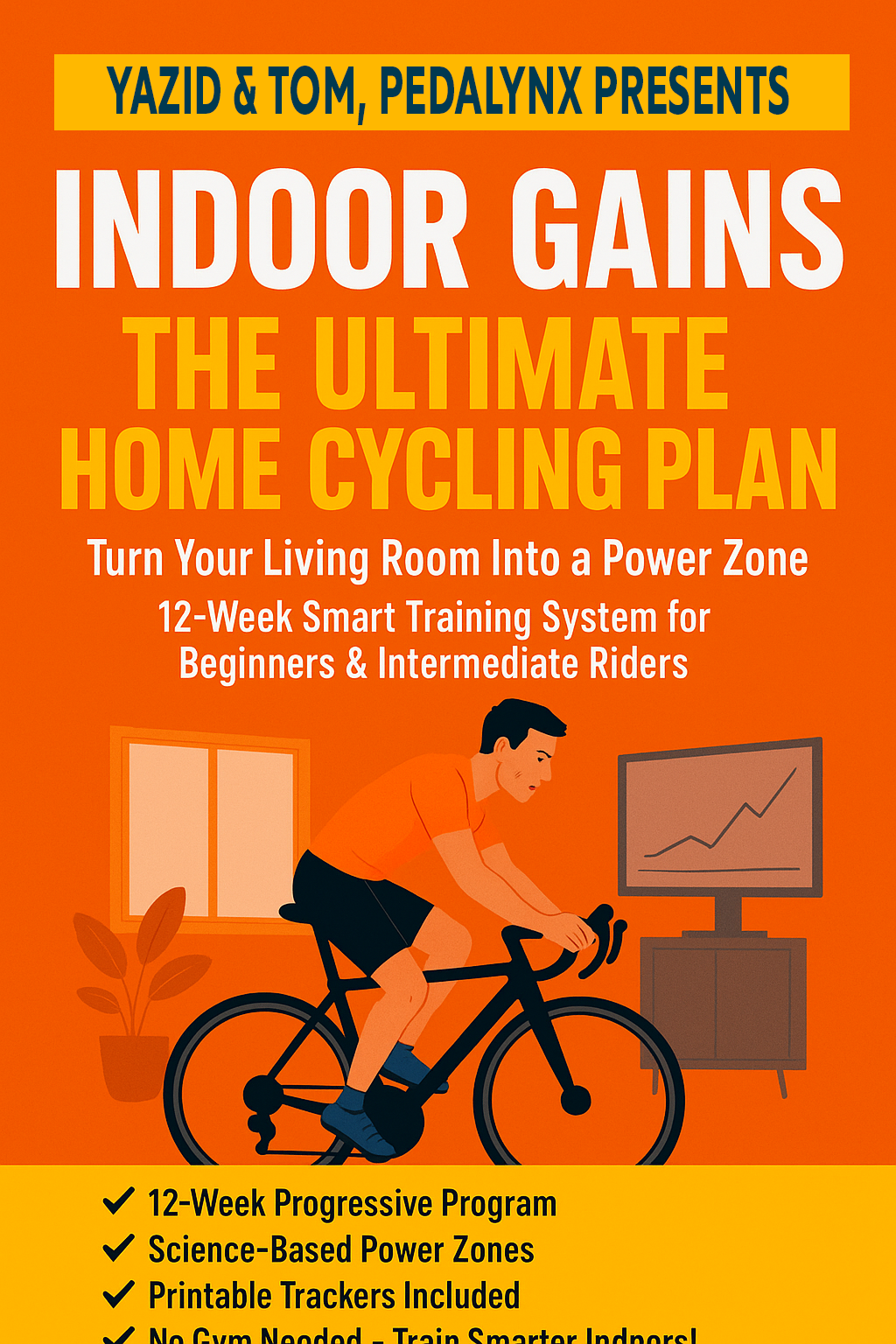
Pairing an e-bike for outdoor freedom with a solid indoor training structure for bad weather or recovery days? That’s the actual secret to year-round cycling success. Not just buying equipment and hoping for the best, but having a real PLAN.
Story time: James, who’s 70 and lives in my neighborhood, initially refused to even consider e-bikes. “Too expensive, I don’t need help, blah blah blah.” Then he bought a regular bike and struggled with every hill (and we’ve got some legitimate hills around here). After two months of barely riding, his wife finally convinced him to try her friend’s e-bike. He rode it once. ONCE. Bought his own Lectric XP 3.0 folding e-bike the next week and now rides six days a week instead of maybe twice on good weeks. He covers twice the distance with way less fatigue and actually enjoys it instead of dreading it.
And during winter? He’s got the Indoor Gains program set up in his basement so he doesn’t lose all that strength and endurance he’s built up. Smart guy, learned from his mistake.
Senior Bike Assembly and Maintenance: Why Professional Service Matters
Last one, but maybe the most important for actually staying on the bike long-term.
The way that seems smart but isn’t: Order online for the absolute lowest price, save $200, receive a giant box full of bike parts and incomprehensible instructions, spend three frustrating days trying to assemble it wrong, never quite get it fitted properly, have no idea where to take it when something inevitably needs adjustment…
The way that actually works: Pay a little more (we’re talking maybe $100-200 extra) to buy from retailers with actual assembly service, proper fitting, and ongoing maintenance support. This eliminates MONTHS of frustration and is 100% worth it.
Look, I tried to assemble my own bike once. ONCE. Never again. The instructions were like they’d been translated from Mandarin to Swedish to English by someone who’d never seen a bicycle. The “hex wrench” they included stripped the screws because it was cheap garbage. I spent four hours and ended up with a bike that made concerning clicking noises and the handlebars were somehow crooked even though they looked straight.
Don’t be me. Be smarter.
In 2025-2026, more retailers are finally catching on that seniors need specialized support. Local bike shops (the good ones anyway) are offering “Senior Cycling Packages”—I’m not making this up—that include professional assembly, custom fitting sessions where they actually adjust things multiple times until it’s perfect, basic maintenance training so you’re not completely helpless, and priority service appointments when you need repairs.
Online retailers like Ride1Up and Rad Power have started partnering with mobile services like Velofix who’ll come to YOUR HOUSE and assemble the bike right there. Worth. Every. Penny.
Here’s my rule: budget an extra $100-200 specifically for professional assembly and initial fitting. This isn’t optional luxury spending—this is the difference between a bike you actually ride versus one that sits in your garage because the seat hurts or the handlebars are positioned weird or something rattles and you don’t know how to fix it.
A properly fitted bike from day one means you start riding immediately. You build the habit before enthusiasm fades (and enthusiasm WILL fade if you’re fighting with mechanical problems).
Also—and people always forget this part—figure out your maintenance plan BEFORE you buy. Where are you taking it when you get a flat tire? When the brakes need adjustment? When the chain needs… whatever chains need? Knowing this upfront eliminates the paralysis that stops so many people from riding regularly. Something goes wrong, you know exactly where to take it, problem solved, back to riding.
Real example: Dorothy—she’s 69, lives three streets over—bought her Electra Townie through our local bike shop’s senior program. They assembled everything, adjusted the seat and handlebars THREE separate times over the course of two weeks until it was absolutely perfect, taught her basic maintenance stuff like checking tire pressure (which apparently matters? who knew?), and gave her a punch card for six free tune-ups throughout the year.
She started riding the literal day she brought it home. Hasn’t stopped since. That’s the power of proper support.
Buying the Best Bike for Seniors: Your Complete Action Plan
Enough theory—here’s exactly what you’re doing starting today. Not “when you feel ready” or “after you do more research”—TODAY.
This Week (Like, Before Sunday):
- Sit down for fifteen minutes and honestly assess your physical situation. Write it down if that helps. Be brutally honest because nobody’s judging.
- Make the two-wheel versus three-wheel decision. Right now. No more waffling.
- Spend a couple hours (broken up however works for you) reading real reviews from actual owners in your age range. Focus on bikes that match your physical needs and stability choice.
- Get your finalist list down to exactly three models.
Next Week:
- Call shops and schedule test rides for your three finalists. If they can’t accommodate 15-minute test rides, find a different shop.
- Ask about senior assembly and service packages. Get specific pricing.
- Make your decision. Buy the bike. Don’t second-guess yourself to death.
- Arrange for professional assembly and fitting—schedule it for as soon as possible so you don’t lose momentum.
Within Two Weeks:
- Take your first real ride on your properly fitted bike. Short is fine! Twenty minutes counts!
- If you’re going the e-bike route (which you should), grab a copy of “Indoor Gains: The Ultimate Home Cycling Plan” so you’ve got your year-round cycling routine figured out from the start. Bad weather happens. Having a plan for those days is what separates people who succeed from people who quit.
- Schedule your first maintenance check for a month out. Put it in your calendar right now.
The perfect bike for you already exists—it’s sitting in a shop or warehouse somewhere right now, waiting. You just need to cut through all the noise, follow this plan, and GO GET IT.
Every single day you spend “researching more” is another day without those cardiovascular benefits everyone keeps talking about, another day not working on your balance, another day stuck inside when you could be outside actually living your life.
The seniors who are thriving on their bikes aren’t smarter than you. They’re not more fit than you (well, they are NOW, but they weren’t when they started). They’re not more informed. They just stopped overthinking and started riding.
Your perfect cycling future is literally waiting for you to make a decision.
Fast-forward to it. Today.
Stop reading this and go make your list. I’m serious—close this browser and go write down your physical considerations. That’s step one. Do it now.
You’ve got this.