The Best Fluffy Pancakes recipe you will fall in love with. Full of tips and tricks to help you make the best pancakes.


Most cyclists tweak. They swap one bar for another, maybe throw in some almonds, call it an upgrade. Slow changes, slow results — and honestly? A little sad to watch.
Here’s what nobody wants to say out loud: incremental nutrition adjustments are the participation trophy of athletic performance. You’re moving, sure. But you’re not going anywhere fast.
The real problem isn’t what you’re eating. It’s that you’re treating snacks like an afterthought — something you grab when your legs start feeling heavy and your brain goes a little foggy around kilometer 55. That’s not fueling. That’s damage control.
The Assumption That’s Quietly Wrecking Your Rides
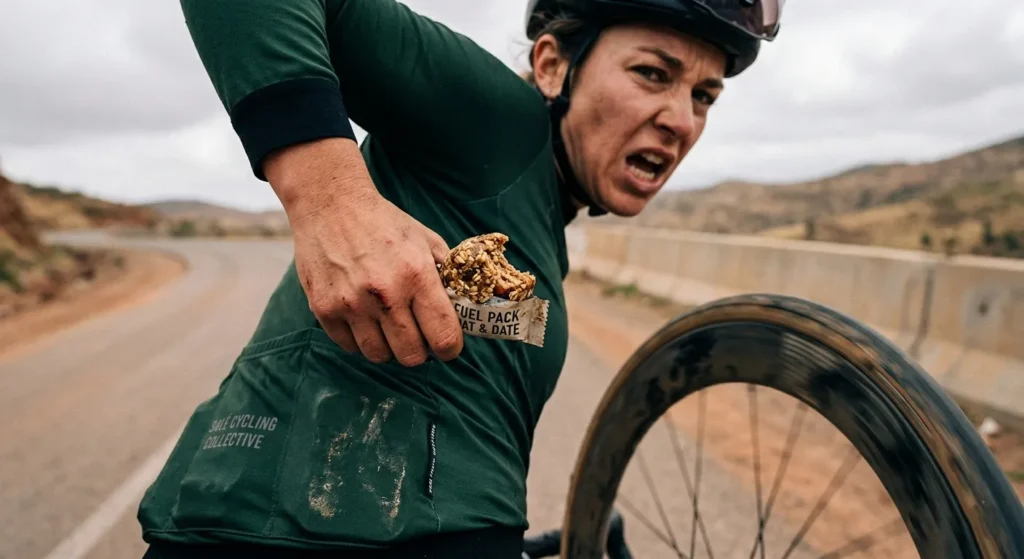
Plant-based cyclists — and I say this with full respect, genuinely — often fall into this trap of conflating “healthy” with “performance-ready.” And look, I get it. Walnuts are healthy. A homemade trail mix with goji berries and dark chocolate chips feels like the right call. It is the right call — just not at mile 40 when your gut has essentially shut up shop and gone on holiday.
During hard efforts your digestive system is running on reduced blood flow. Fat-heavy snacks, fiber-rich whole foods, even some protein bars — they sit there. Undigested. Like that email you’ve been meaning to reply to for three weeks.
The average cyclist loses 15–20% of available power output on rides beyond 90 minutes when fueling is off. Not from bad training. Not from weak legs. From wrong snacks at wrong times. And if you’re vegan without a real system? You’re probably in that bracket, even if your Strava numbers haven’t told you yet.
The single biggest bottleneck — and this one stings a little — is that most plant-based riders treat all snacks as one category. Pre-ride, mid-ride, post-ride. Same bag of stuff. One drawer, zero strategy.
Three completely different physiological windows. One chaotic snack drawer. That mismatch is where performance quietly bleeds out.
The Quantum Leap: Build the 3-Window Architecture
Forget intuitive eating during training. Your body is lying to you — hunger signals during intense cycling lag behind actual need by 20–30 minutes. By the time you feel empty, you’re already behind.
Here’s the system. It’s not complicated. But it requires intention.
Window 1 — Pre-Ride (60 to 90 Minutes Out)
You want fast carbs, low fat, almost zero fiber. Think of it like priming an engine before a cold morning drive — you’re not running it yet, you’re warming the lines.
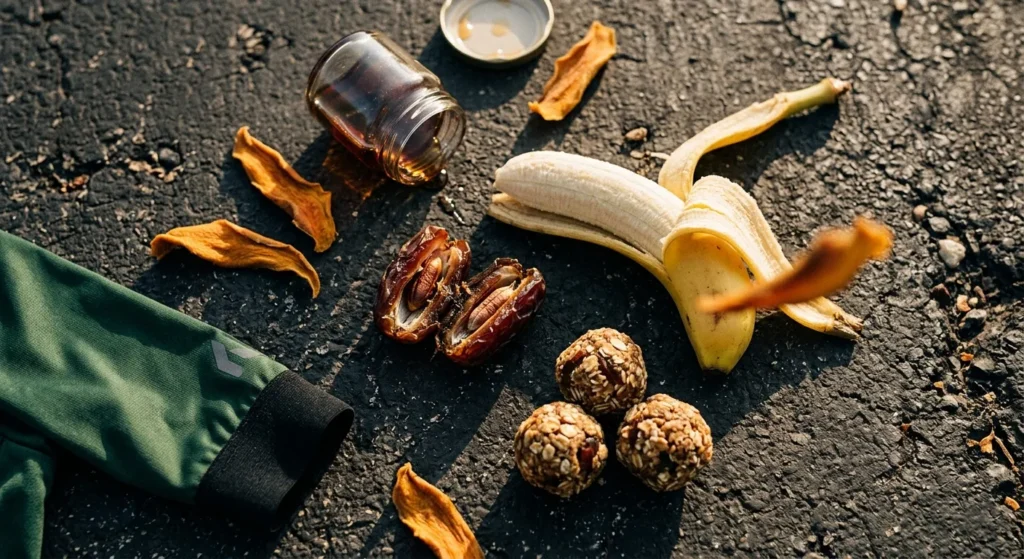
- 2 Medjool dates — roughly 36g of carbohydrates, natural sugars that hit the bloodstream clean
- 1 banana + 1 tablespoon almond butter — around 30g carbs, 4g protein, enough fat to slow nothing down at this timing
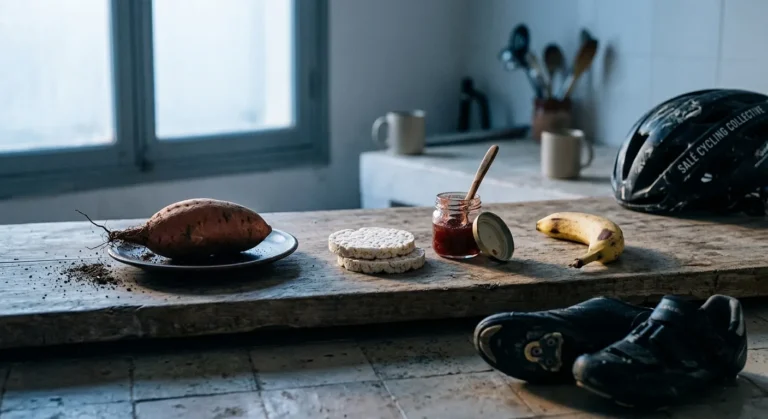
- Rice cakes with jam — honestly underrated, the pro peloton has been onto this forever, and there’s a reason cyclists swear by rice that goes deeper than tradition
No smoothie bowls loaded with flaxseed. Not now. Save those for days when you’re not about to suffer on a bike for two hours.
Window 2 — On The Bike (Every 45 Minutes, Non-Negotiable)
This is where the quantum leap actually happens. This is the window people blow.
Most riders wait until they’re hungry. That’s the mistake — blood sugar has already dropped, power output is already slipping, and now you’re in recovery mode mid-ride instead of maintenance mode. You’re chasing energy instead of riding on it. There’s a massive difference.
Target 30–60 grams of carbohydrates per hour on anything over 75 minutes. Not approximately. Not roughly. Set a timer if you have to.
What actually works at pace, from a jersey pocket, with one hand on the bars:
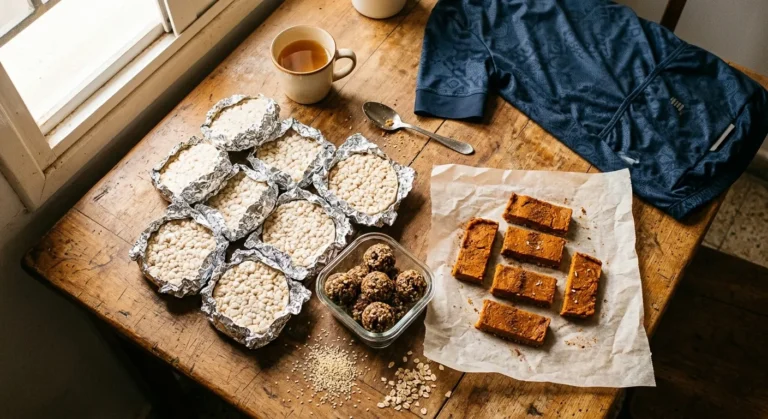
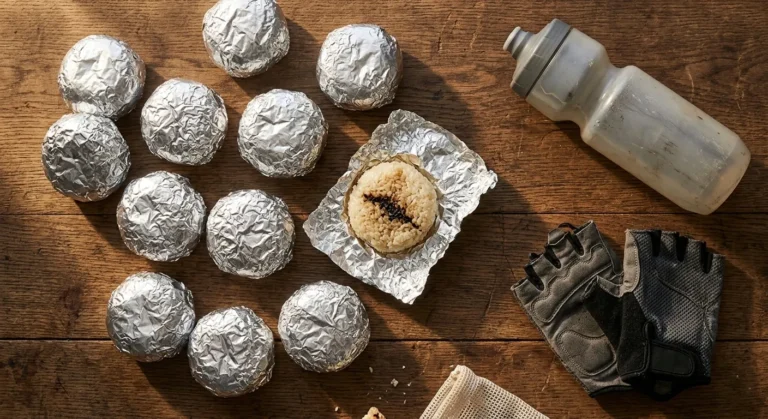
- Homemade date-oat energy balls — about 25g carbs per ball, no crinkly wrapper to fumble with at 35km/h, infinitely customizable
- Dried mango strips — ~35g carbs per 40g serving, high glycemic index, absorbs fast, tastes like a reward rather than a chore
- Half a banana wrapped in foil — ancient, unglamorous, still one of the most effective on-bike foods ever conceived
- Maple syrup sachets — 17g carbs per tablespoon, zero gut drama, and weirdly satisfying in a this-is-ridiculous-and-I-love-it kind of way
What you eat during the actual ride matters more than almost any other variable. More than your pre-ride meal, more than your recovery shake — because this window is live, it’s happening, and there’s no fixing it retroactively.
Window 3 — Recovery (The 30-Minute Door)
Miss this and you’ve essentially borrowed against tomorrow’s performance without agreeing to the interest rate.
The target: a 3:1 carbohydrate-to-protein ratio within 30 minutes of stopping. Not an hour. Not when you get home and shower and finally feel like eating. Thirty minutes.
- A smoothie — 1 cup frozen mango, 1 scoop plant protein (around 25g protein), 250ml coconut water — takes four minutes to make, tastes like something you’d pay twelve dollars for at a café
- Rice and edamame bowl with tamari — ~40g carbs, 18g protein, genuinely delicious, takes ten minutes if you batch-cook your rice (and you should be batch-cooking your rice)
- Overnight oats prepped the night before — oats, chia, plant milk, banana — so you literally cannot make an excuse about not having time
Why The Biology Actually Backs This Up
Above 65% VO2 max — which is most of your meaningful training — your body oxidizes carbohydrates almost exclusively. Fat metabolism is simply too slow. It’s like trying to stream a 4K film on a 2009 internet connection. Possible in theory. Painful in practice.
Here’s the part that should genuinely excite plant-based cyclists: dates, bananas, and dried fruit deliver glucose and fructose simultaneously. Two different intestinal transporters. Which means your gut can absorb up to 90 grams of carbohydrates per hour when both are active — compared to just 60 grams from glucose sources alone. That’s not a vegan workaround. That’s a physiological edge hiding in plain sight inside every date you’ve been underestimating.
“Honestly I thought my diet was the problem — that going plant-based was why I kept bonking on long rides. Took me way too long to realize it was the timing, not the food. Once I started treating the three windows like actual rules instead of loose suggestions, everything changed. Faster average speeds, way less post-ride misery.” — Rhea, Pedalynx Community
The Actual Numbers, At A Glance
| Window | What to eat | Carbs | When |
|---|---|---|---|
| Pre-ride | 2 dates + banana | ~56g | 60–90 min before |
| On-bike | Date-oat balls x2 | ~50g per hour | Every 45 min |
| Recovery | Plant smoothie + protein | ~45g | Within 30 min |
The full breakdown of the best vegan cycling snacks and how they fit across each window is worth reading alongside the complete vegan cycling nutrition guide — they work together.
Take the Leap. Literally This Week.
Pick one ride. One. Apply all three windows exactly as described — no improvising, no “close enough.” Pre-load with fast carbs, fuel every 45 minutes on the bike with something simple and digestible, hit your recovery window before you even unlace your shoes.
Then see what happens.
The riders who make real jumps in performance aren’t eating more exotic vegan cycling snacks. They’re not finding some rare superfood or spending a fortune on supplements. They built a system. They respected the windows. And they stopped treating their nutrition like a vague intention and started treating it like the third pillar of training it actually is.
The food is already there. The knowledge is right here.
The only thing left is the decision to actually leap.Check our Cycling Nutrition Guide for more infos.