The Best Fluffy Pancakes recipe you will fall in love with. Full of tips and tricks to help you make the best pancakes.


The Lie We Keep Telling Ourselves
Okay so — “stay consistent, trust the process, small steps add up.” Right?
We’ve all heard it. Coaches say it, Reddit threads repeat it, fitness influencers build entire brands on it. And honestly? For a certain kind of person, in a certain kind of headspace — it works. Kind of. Slowly. In the way that watching paint dry technically counts as watching something happen.
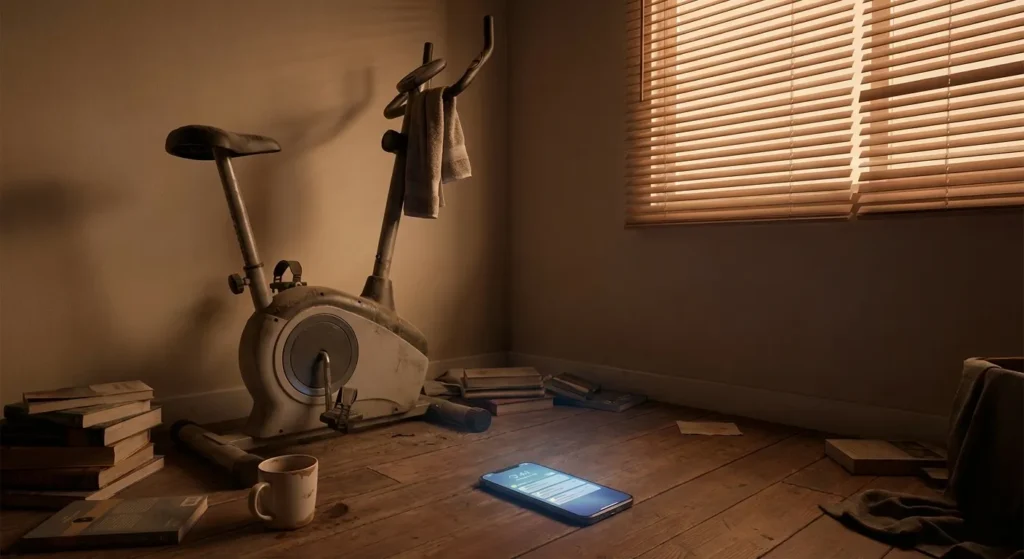
But here’s what nobody’s saying out loud: slow and steady, when applied to the indoor cycling mental experience specifically, doesn’t just produce slow results. It produces dread. That low-grade, creeping dread you feel on a Tuesday night when you walk past the bike, glance at it, and suddenly remember you have emails to answer. Very important emails. Emails that absolutely cannot wait.
You know exactly what I mean.
What’s Actually Broken (And It’s Not Your Willpower)
Here’s the thing most people get completely, embarrassingly wrong — they treat the mind like a side effect of the workout. Like, do the physical thing first, feel good about it second. Put in the 45 minutes, earn the endorphins, repeat. The mental piece just… follows along, supposedly.
It doesn’t.
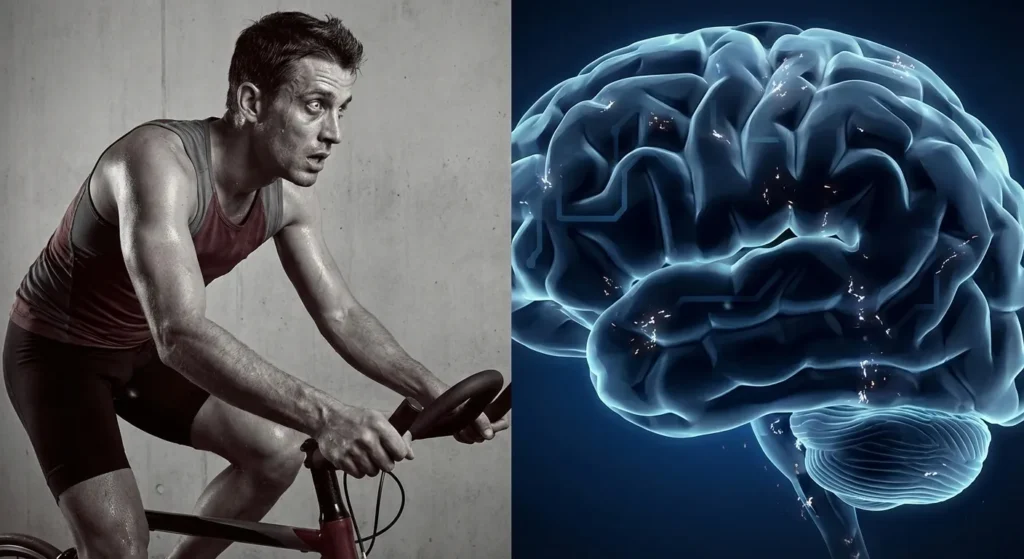
And I learned this the hard way, honestly. There was a stretch — maybe 8 weeks sometime back — where I was riding 4 days a week, eating well, hitting the numbers. And I was miserable on that bike every single time. Staring at a crack in the wall, counting rotations, negotiating with myself to just get to the 30-minute mark so I could justify stopping. That’s not fitness. That’s a hostage situation you’re running on yourself.
The bottleneck — the single, structural flaw underneath all the boredom and mental leakage — is this assumption: the body leads and the mind just tags along. That’s it. That’s the whole problem in one sentence.
Flip that, and everything changes. Seriously, everything.
Neuroscience has been screaming this for years (we just haven’t been listening). Mental fatigue alone — no physical exertion involved whatsoever — can tank endurance performance by up to 18%. Your brain isn’t just interpreting the ride. It’s running the ride. The legs are almost incidental, which sounds insane until you’ve experienced what happens when your mental state shifts mid-session and suddenly your body follows.
The Quantum Leap (Or: Stop Being a Passenger in Your Own Workout)
So here it is. The one move. The paradigm shift that doesn’t just improve your indoor cycling mental game — it renders the old approach totally obsolete.
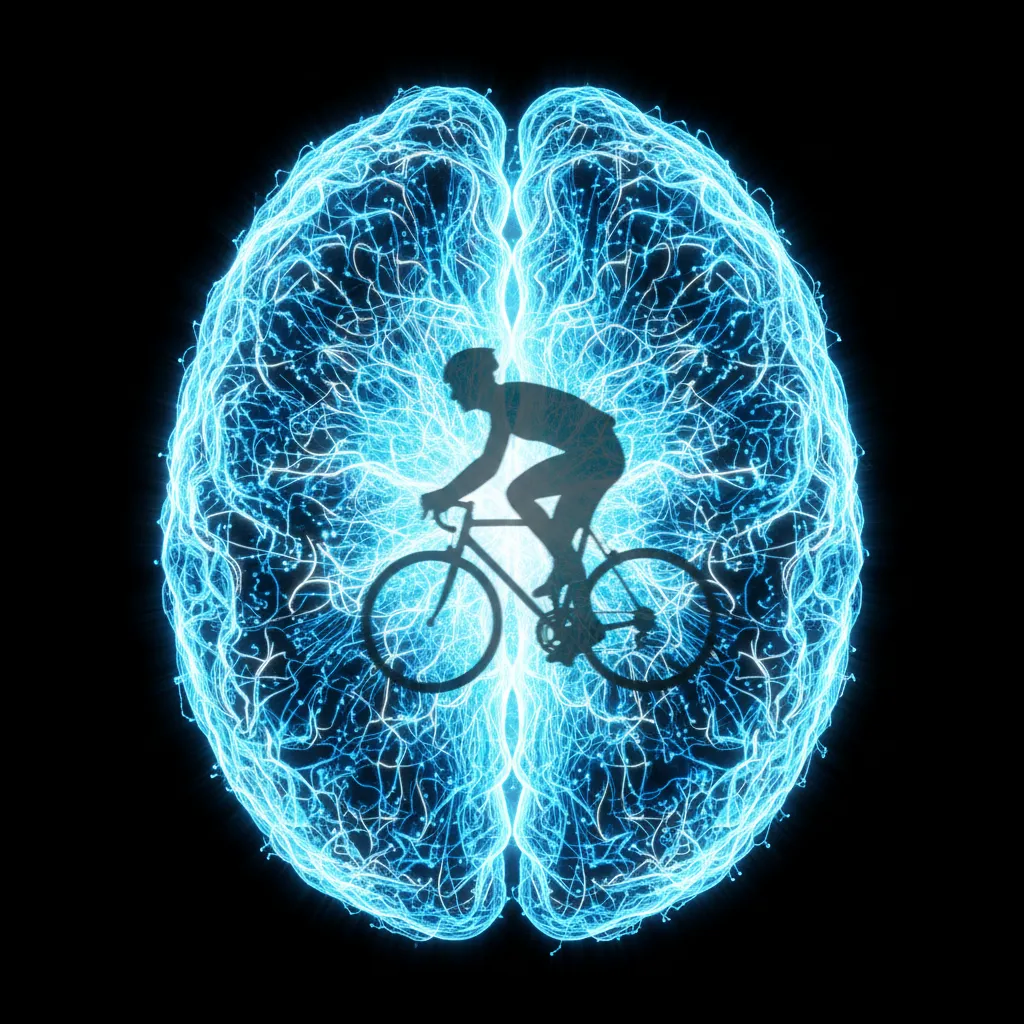
Become the architect of your mental state. Not the audience of your physical one.
That’s it. That’s the leap.
Which sounds — I know, I know — like something you’d read on a motivational poster in a dentist’s waiting room. Bear with me.
What this actually looks like, in practice, is a total restructuring of how you relate to every ride. Before, during, and after. You’re not “getting through” a session anymore. You’re designing a cognitive experience that uses the bike as its medium. Big difference.
Here’s how you build it:
- Pre-ride — design the mental environment first, workout second. Choose one psychological objective before you clip in. Stress discharge. Focus sharpening. Creative incubation (weirdly, some of my best ideas have come at minute 38 of a steady-state ride — the brain gets bored and starts producing). Pick the objective, then build toward it.
- Set a 3-word mental anchor. Three words — something like “locked, loose, lethal” or “sharp, present, alive.” Repeat it at the start of every interval. It sounds silly. Do it anyway.
- Mid-ride — run 2-minute attention drills. For a full 2 minutes, narrow everything down to one sensation. Just the cadence. Just the burn in your left quad. Just the sound of your breath. No music, no podcast — pure signal. This trains attentional control in a way that $300/month of meditation apps genuinely cannot replicate.
- Hit minute 20 with an identity reset. This is the classic boredom cliff — most people fall off here, mentally. Instead: a 10-second internal statement. “I control mental states. This discomfort is proof I’m succeeding.” Sounds dramatic. Works embarrassingly well.
And after the ride — debrief the mind before you check the metrics. Before you look at calories, distance, power output, whatever — ask yourself: did I hit my psychological objective? Rate your mental performance 1–10. Write down one cognitive insight from the session. Do this every single time and watch what happens to your relationship with the bike over the next 30 days.
Why This Blows the Old Obstacles Apart
Boredom? It’s irrelevant now — because your goal isn’t entertainment anymore. Monotony? Also irrelevant — you’re the variable, not the route. Pre-ride dread? That’s the most interesting one, actually. Dread only exists when you’re anticipating something being done to you. The moment you walk in as the architect — the director, not the audience — dread has nowhere to live.
The default mode network (the part of your brain responsible for mind-wandering, existential spiraling, and general boredom-manufacturing) literally shifts offline when you assign real psychological meaning to a task. This isn’t motivational fluff — this is how the brain is wired, full stop.
Riders using intentional mental frameworks — this is documented, not anecdotal — report 40–60% higher week-over-week consistency. Not because they became more disciplined, but because the experience itself changed categories. It stopped being a chore and started being something they were genuinely curious about.
The Checklist (Actually Use This)
- [ ] Name your psychological objective before you touch the bike
- [ ] 3-word anchor — write it on your hand if you have to
- [ ] 2-minute attention drill — once per ride, minimum
- [ ] Minute-20 identity reset — non-negotiable
- [ ] Post-ride mental debrief before any metric-checking
- [ ] Rate mental performance 1–10 — log it, track it, care about it
Take the Leap — Right Now
You’ve been managing boredom. Coping with it. Building elaborate workarounds — new playlists, new apps, new schedules — all to make an unbearable thing slightly less unbearable.
That ends today. Or it doesn’t — and six months from now you’re still negotiating with yourself at the 30-minute mark, still half-watching a show you don’t care about, still wondering why you dread a thing you theoretically chose.
The bike is the same. The sweat is the same. You are the variable.
Next time you clip in — ask not “how do I survive this?” Ask: “What am I building in my mind right now — and what does mastery look like in the next 45 minutes?”
That question is the quantum leap. Everything else is just pedaling.
Check Our Full Indoor Cycling Guide for more tips and info !