The Best Fluffy Pancakes recipe you will fall in love with. Full of tips and tricks to help you make the best pancakes.


Okay, so you’re killing it on the trainer—intervals that make your legs scream, FTP numbers climbing, cadence looking smooth as butter. But here’s the thing that’s been bugging me, and honestly, it took me way too long to figure this out: the real magic? It’s happening in the 24 hours AFTER you unclip. And most of us—myself included for years—are basically throwing away like 30-40% of what we just worked for.
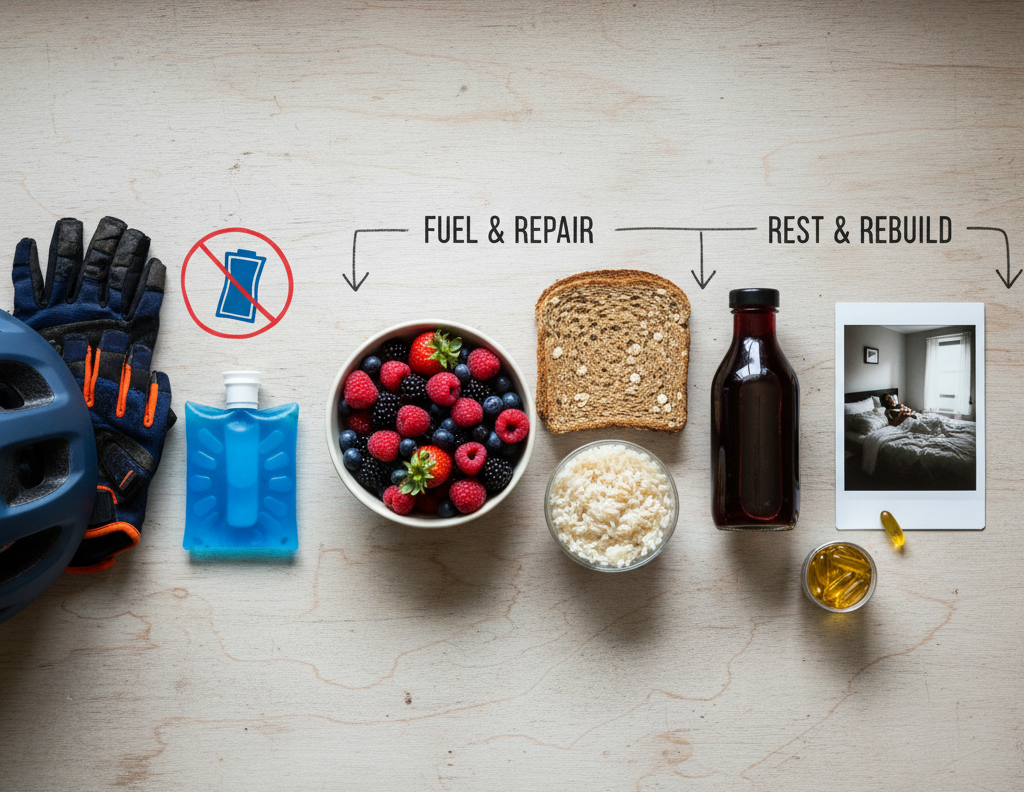
The secret nobody talks about? Timing your nutrition and recovery with your body’s internal clock.
Everyone’s obsessed with what to eat before rides, those mid-workout gels, all that stuff. Meanwhile elite athletes (the ones actually winning, not just talking about winning) have understood for years that WHEN you’re fueling matters just as much—maybe more?—than what you’re actually consuming. Your body doesn’t absorb nutrients the same way at 6 AM versus 8 PM. It just doesn’t. But most training plans act like your body’s some kind of 24/7 convenience store that’s always open for business.
Let me show you what you’re missing—and look, this isn’t rocket science, but it might feel that way at first.
Your Muscles Are Literally Running on Their Own Schedule
So this is wild—every single cell in your body operates on what’s called a circadian rhythm. Including your muscle fibers. Not just your brain saying “hey it’s bedtime” but your MUSCLES have their own clock ticking away.
There’s this study from Cell Metabolism back in 2019 that basically proved skeletal muscle has its own peripheral clock, separate from your brain’s master control. Which means:
- Protein synthesis rates peak late afternoon/early evening (not random, that’s biology)
- Your glucose uptake works best in the morning and right after training
- Mitochondrial biogenesis—the whole process of building new energy factories in your cells—gets optimized about 4-6 hours post-training
Why everyone misses this: Most of us train whenever life allows it. 5:30 AM before the kids wake up, lunch hour sessions, late night after work when the house is finally quiet. We assume if we’re hitting our macros it doesn’t matter. Wrong—just completely wrong.
There’s research from Physiological Reports (2020) showing that identical training sessions produced 17% better strength gains when recovery nutrition actually synced up with natural cortisol and testosterone rhythms. That’s not a small difference, that’s massive.
The problem: You’re eating the exact same post-ride meal at dawn and at dinner, expecting your body to respond the same way. It won’t. It can’t.
Here’s what to actually do:
- Morning riders (I’m talking before 10 AM): You need fast-acting carbs immediately—and I mean immediately—after you finish. 0.8-1.2g per kilogram of bodyweight within 30 minutes. Your insulin sensitivity is naturally jacked up in the morning which is perfect, but that window closes fast. Plus 20-25g of protein. Your muscle protein synthesis is primed but brief—like really brief.
- Evening riders (after 5 PM or so): Front-load your protein intake instead. 30-40g within an hour of finishing. Here’s why—evening cortisol drops make you more catabolic overnight, meaning your body’s breaking down muscle tissue while you sleep (not ideal). The Journal of Nutrition published findings in 2018 showing casein protein before bed increased overnight muscle protein synthesis by 22% in trained athletes. That’s significant.
Real talk: Are you actually feeding your recovery, or are you just feeding your hunger? Because those are two different things.
Inflammation Timing Is What Separates The Good From The Great
Here’s where things get interesting—and honestly kind of controversial. Controlled inflammation management.
Post-ride inflammation isn’t the enemy everyone makes it out to be. It’s actually the signal your body needs to adapt. But chronic inflammation from stacking sessions without strategic recovery? That’s the plateau trap. That’s where people get stuck for months (been there, it’s frustrating).
Why this gets overlooked: The fitness industry—don’t even get me started—pushes anti-inflammatory everything. Ice baths the second you finish, ibuprofen for any soreness, omega-3s like candy. But acute inflammation is NECESSARY for mitochondrial biogenesis and capillary development. A landmark study in the Journal of Physiology from 2017 found that aggressive anti-inflammatory protocols actually blunted training adaptations by up to 25%. Let me repeat that—by trying to reduce inflammation too much, athletes were literally blocking their own progress.
The timing secret nobody mentions: You want inflammation right after exercise (0-3 hours), then you aggressively control it during the resolution phase (4-24 hours later).
Implementation looks like this:
- Hours 0-3 after your ride: Skip the ice bath (I know, I know). Skip the NSAIDs. Let your body actually experience the inflammatory stimulus it needs. Eat antioxidant-rich foods but in moderation—one serving of berries, not five different supplements like you’re preparing for the apocalypse.
- Hours 4-24 post-ride: NOW you deploy everything:
- Omega-3s (2-3g EPA/DHA combined)
- Tart cherry juice—research shows 12-19% faster recovery markers, which is nuts
- Sleep optimization, because this is when your body clears inflammatory cytokines (basically the cleanup crew comes through)
This is exactly why structured periodization actually matters and isn’t just trainer jargon. “Indoor Gains: The Ultimate Home Cycling Plan” maps your weekly training microcycles around these inflammation windows—showing you which days to hammer it and which days your body is biochemically primed for easy recovery rides. The e-book has meal timing templates synced to three different training schedules because your nutrition timing should match your training intensity, not your calendar convenience or what feels easy to remember.
Question: Are you training smarter or just… training more? (There’s a difference, trust me.)
Glycogen Timing Controls Tomorrow’s Workout Quality
Most cyclists think glycogen replenishment is straightforward—burn carbs during the ride, eat carbs after, rinse and repeat. But glycogen storage operates on this biphasic timeline that almost everyone completely misses, and it’s costing them.
The actual science: When you finish an intense indoor session, you’ve got two totally distinct windows for glycogen restoration:
- Rapid phase (0-2 hours): This is insulin-independent glucose uptake. Your muscles are essentially “open” regardless of insulin levels. Glycogen synthesis rate hits 30-40 mmol/kg/hour—that’s fast.
- Slow phase (2-24 hours): Now it becomes insulin-dependent uptake. The synthesis rate drops dramatically to 2-5 mmol/kg/hour without proper timing. That’s like… a tenth of the speed?
Research published in Sports Medicine (2021) showed athletes who missed that rapid phase needed 33% more total carbohydrates over the next 24 hours to achieve the same glycogen restoration. And most never fully restore before their next session, which means they’re starting from a deficit. It’s like trying to fill a leaking bucket.
Why it’s overlooked (and this one’s frustrating): Life happens. You finish your ride, take a shower that feels amazing, maybe commute if you’re heading to work, handle emails, deal with whatever emergency came up, and suddenly you’re eating lunch 3 hours later. You’ve already missed the window when your body was biochemically desperate—literally desperate—for glucose.
How to actually implement this:
- Keep liquid carbs next to your trainer. Not in the kitchen, not upstairs—right there. 30-50g of carbs within 30 minutes post-ride is non-negotiable if you went over 60 minutes. Glucose polymers or maltodextrin get absorbed faster than whole foods, which matters here.
- Follow up with whole food carbs within 2 hours. Rice, potatoes, oats, quinoa—whatever your gut handles well. Aim for 1-1.5g per kilogram bodyweight. Real food, not just supplements.
- Don’t fear bedtime carbs (seriously, stop it). The myth that evening carbs automatically become fat is outdated science from like the 90s. A study in the British Journal of Nutrition back in 2011 found that athletes consuming carbs before bed had better next-day performance with zero—zero—changes in body composition.
Here’s the question that should keep you up at night (ironically): Why are you investing 90 minutes in training but completely skipping the 15-minute recovery window that actually determines if any of it counts?
The Truth They Don’t Tell You
Every indoor cycling session is basically your body asking a question. The answer—adaptation or stagnation, progress or plateau—depends entirely on what you do in those 24 hours afterward. Not the workout itself. The recovery.
You already know how to suffer on the bike—we all do, that’s the easy part honestly. The secret is learning how to recover like that suffering actually mattered. Like it was an investment, not just punishment.
Your move this week: Pick one ride. Just one. Set a timer on your phone. Implement that 30-minute post-ride nutrition window with precision—like you’re following a recipe. Track how you feel for the next workout, write it down somewhere. Then compare it to your usual approach where you kinda wing it.
One perfectly timed recovery window won’t transform you overnight (that’d be nice though). But 12 weeks of them? That’s how good cyclists become great ones. That’s the difference between people who talk about improvement and people who actually improve.
The clock is ticking—not on your intervals, that’s not what matters. On your recovery. On what you do in the next 24 hours.
So what will you do differently starting today? Not tomorrow, today.
Also you can check our Free Indoor Cycling Guide for more tips !