The Best Fluffy Pancakes recipe you will fall in love with. Full of tips and tricks to help you make the best pancakes.


Most of us are training wrong. Not a little wrong. Embarrassingly, fundamentally, “I’ve been wasting years of my life” wrong.
And the worst part? The mountain biking industry knows it. They just don’t care — because selling you the truth doesn’t move product.
We’ve done what everyone does. Watched Loic Bruni throw a corner like it’s nothing, replayed that segment 47 times, tried to copy the hip angle, bought the same knee pads. And still — STILL — the gap feels exactly the same as it did three seasons ago. Maybe wider. That’s not a fitness problem, nor a gear problem. That’s a “nobody told us the actual truth” problem.
So here it is. Four things pro mountain bikers do that we almost never talk about, explained without the usual watered-down, sponsor-friendly, palatable nonsense.
Truth #1: Pro Mountain Bikers Ride Easy — Aggressively, Deliberately, Infuriatingly Easy
This one stings because it sounds too simple. And we resist simple.
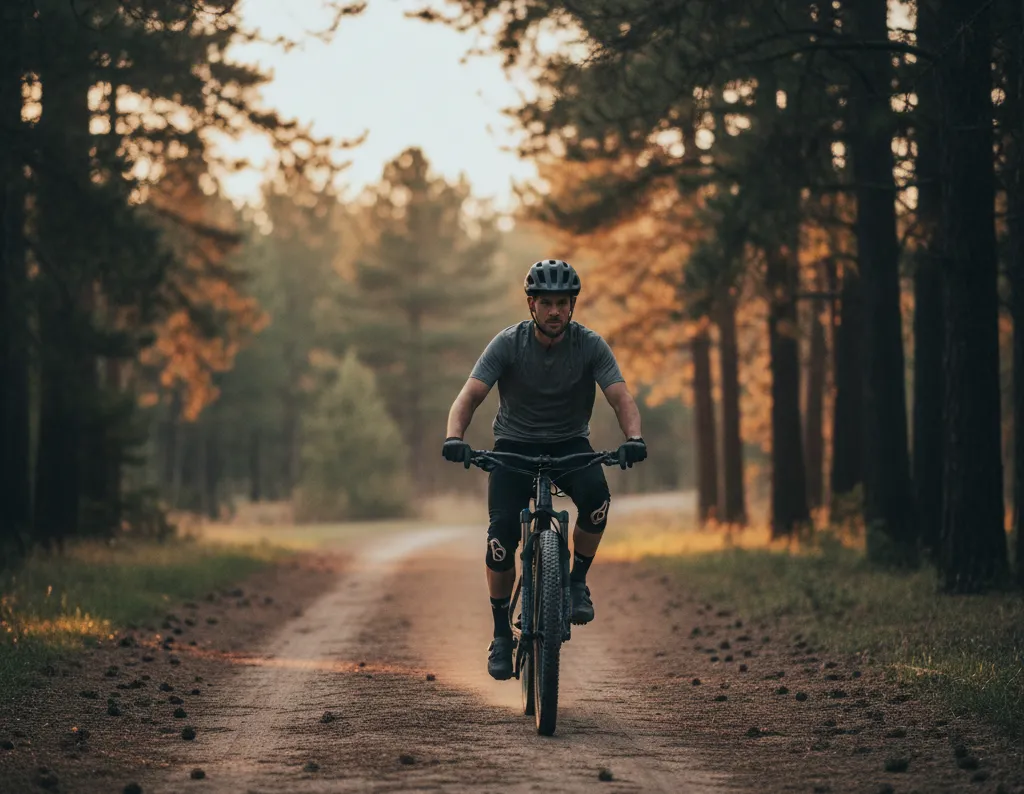
The polarized training model — which is essentially the backbone of how elite endurance athletes structure their seasons — dictates that roughly 80% of all training volume happens at low intensity. Zone 1 and Zone 2. The kind of pace where you could narrate a podcast, describe what you had for breakfast, argue about suspension setup. That easy.
Research out of the International Journal of Sports Physiology and Performance confirmed this across multiple elite endurance disciplines. The top performers weren’t grinding harder — they were protecting their high-intensity sessions by keeping everything else genuinely, almost boringly, calm.
Meanwhile — and this is where it gets uncomfortable — most of us ride in what coaches call the “black hole.” Not easy enough to recover. Not hard enough to actually build VO2 max or lactate threshold. Just… medium. Perpetually medium. It’s like ordering the same disappointing meal every time because you can’t commit to either extreme.
We’re accumulating fatigue without accumulating proportional fitness. That’s the trap.
The mindset shift: Easy isn’t lazy. Easy is structural. Pros aren’t coasting — they’re banking adaptation currency for the sessions that actually matter.
What to actually do:
- Drop 60–70% of your rides to full conversational pace — if you can’t speak in complete sentences, you’re already too hard
- Cap yourself at 1 high-intensity session per week during base phases — yes, one
- Sleep. Not 6 hours. Not “I’ll catch up on weekends.” 9–10 hours during heavy blocks. This is not optional at the pro level and it shouldn’t be for us either
Truth #2: Skills Work and Fitness Work Are Not the Same Thing — And Mixing Them Is Quietly Destroying Your Progress
OK so this is the one that broke our brain a little when we first really sat with it.
We’ve always treated a hard technical trail as a two-for-one deal — fitness AND skills in one session. Efficient, right? It’s actually kind of the worst approach you can take.
Here’s the thing about motor learning (the science of how your nervous system actually acquires new movement patterns): it degrades under fatigue. Not a little. Significantly. When you’re at 85–90% of max heart rate, your brain is in survival mode — it stops refining technique and starts defaulting to whatever ingrained pattern already exists. Good or bad.
Research published in the Journal of Experimental Psychology showed this clearly — skilled performance becomes fragile under physical stress, and the patterns drilled while fatigued are the ones that stick in a crisis. Which means if you’re always learning to corner while gassed… you’re learning to corner badly. Permanently.
Riders like Nino Schurter — nine-time XC World Champion, which feels absurd to even type — have talked about separating skills sessions entirely. Low heart rate, high focus, slow speed sometimes. Sounds counterintuitive. Works completely.
The mindset shift: Your nervous system and your cardiovascular system are different students. They don’t learn on the same schedule, and trying to teach them simultaneously means neither gets a proper lesson.
Practical counter-strategy:
- 1 dedicated skills session per week — no fitness goal, just technical focus
- Pick 1 or 2 specific elements (not “everything”) — maybe it’s late braking points, maybe it’s body position through compressions
- Film yourself. This feels awkward. Do it anyway. You literally cannot correct what you cannot observe and our internal sense of what our body is doing on a bike is hilariously inaccurate
Truth #3: The Way Pro Mountain Bikers Eat Would Genuinely Surprise You — Because It’s More, Not Less
There’s this quiet assumption in amateur riding culture that lean equals fast and therefore eating less is a performance strategy. It is not. It is the opposite of a performance strategy.
Elite MTB athletes consume 60 to 90 grams of carbohydrates per hour during race-intensity efforts. That’s according to both the American College of Sports Medicine and actual WorldCup team nutrition protocols. That’s a gel every 20–30 minutes plus additional carbohydrate sources. It sounds like a lot. It is a lot. It’s also correct.
The darker side of this — and this is where it gets genuinely important — is a condition called Relative Energy Deficiency in Sport (RED-S). The British Journal of Sports Medicine published IOC consensus statements on this and the findings are alarming: chronic undereating relative to training load suppresses hormones, tanks recovery, increases stress fracture risk, and destroys performance. It’s widespread in endurance sport. It’s almost never discussed in MTB specifically because the culture still quietly celebrates “looking like a climber.”
We’ve spoken to riders — not pros, just club-level people — who trained for an entire season, felt progressively worse, couldn’t understand why. Underfueling. That’s it. The whole mystery, solved.
Mindset shift: Food isn’t a reward for training. It’s the infrastructure that makes training mean something. Undereating isn’t discipline — it’s just a slower way of going backwards.
Actionable specifics:
- Fuel every 30–45 minutes on any ride longer than 90 minutes — real carbohydrates, not just water and optimism
- Hit 1.6–2.2 grams of protein per kilogram of bodyweight daily — this range isn’t aspirational, it’s the baseline for muscle repair
- Do NOT run a caloric deficit during your heaviest training weeks — time cuts for actual off-season, not concurrent with load
Truth #4: Pro Mountain Bikers Have a Fear Management System — “Just Commit” Is Not a Strategy, It’s How People Get Hurt
This is the one nobody wants to say out loud.
Because fear in MTB culture is still — in 2025, somehow — treated as a character flaw. “Just send it.” “Stop thinking.” “Commit.” As if the solution to a completely normal neurological threat-response is willpower and a good attitude.
Pro riders use sports psychologists. Not occasionally. Regularly. A 2020 survey of Olympic-level athletes found that over 85% engaged in some form of mental performance coaching. Kate Courtney has discussed it. Richie Rude has discussed it. It’s not a secret at the elite level — it’s standard infrastructure.
And the science behind visualization isn’t soft. Research in Frontiers in Psychology demonstrated that mental rehearsal activates the same neural pathways as physical execution. Which means 5 minutes of focused visualization is literally practicing the skill — your nervous system doesn’t fully distinguish between the imagined and the real movement at the neurological level. That’s wild. That’s also exploitable.
The reason nobody talks about this in MTB is simple: fear is vulnerable, and vulnerability doesn’t sell energy drinks.
Mindset shift: Pros aren’t fearless. That’s a myth we need to actively dismantle. They have a protocol for fear — a practiced, repeatable system. We’ve been trying to out-stubborn a biological response. It doesn’t work.
The system — simplified:
- 5 minutes pre-ride visualization — mentally ride your specific scary features 3 to 5 complete repetitions, eyes closed, first-person perspective
- Build a personal exposure hierarchy — rate your fear level on each feature 1 through 10, progress through them in order, don’t skip rungs
- If fear is linked to a crash or feels compulsive and recurring — a sports psychologist isn’t extreme. It’s what the best in the world actually do
So Here’s Where We Land
None of this requires a new bike. None of it requires a coach with a waiting list or an altitude tent or a blood lactate analyzer.
It requires honesty. About how we’re actually training. What we’re actually eating. Whether we’re actually dealing with the fear or just white-knuckling through it and calling it progression.
Pick one truth from this piece. Just one. Build one habit, one protocol, one intentional change — and hold it for 30 days before you layer anything else on top.
The pros aren’t a different species. They’re just operating with better information, applied with more consistency. Now we have the information.
The consistency part? That’s on us.
Visit Our Full Moutain Biking Guide for more tips and info !
Sources & References
- Polarized Training Model (80/20 distribution) — Seiler, S. (2010). What is Best Practice for Training Intensity and Duration Distribution in Endurance Athletes? International Journal of Sports Physiology and Performance. https://journals.humankinetics.com/view/journals/ijspp/5/3/article-p276.xml
- Skill Acquisition Under Fatigue — Beilock, S.L. & Carr, T.H. (2001). On the Fragility of Skilled Performance: What Governs Choking Under Pressure? Journal of Experimental Psychology. https://pubmed.ncbi.nlm.nih.gov/11701104/
- Carbohydrate Fueling Protocols — Burke, L.M. et al. (2011). Carbohydrates for Training and Competition. Journal of Sports Sciences / ACSM Guidelines. https://www.tandfonline.com/doi/abs/10.1080/02640414.2011.585473
- RED-S Consensus Statement — Mountjoy, M. et al. (2018). IOC Consensus Statement on Relative Energy Deficiency in Sport. British Journal of Sports Medicine. https://bjsm.bmj.com/content/52/11/687
- Mental Rehearsal & Neural Pathways — Schuster, C. et al. (2011). Best Practice for Motor Imagery: A Systematic Literature Review on Neurological Recovery. Frontiers in Psychology. https://www.frontiersin.org/articles/10.3389/fpsyg.2011.00056/full
- Mental Performance in Elite Athletes — Gulliver, A. et al. (2020). Barriers and Facilitators to Mental Health Help-Seeking in Elite Sport. British Journal of Sports Medicine. https://bjsm.bmj.com/content/54/18/1073
- Kate Courtney — Mental Performance & Training — Red Bull Athlete Feature.