The Best Fluffy Pancakes recipe you will fall in love with. Full of tips and tricks to help you make the best pancakes.


Why Cutting the Fat Actually Matters (More Than You Think)
Look—most riders waste months doing generic cardio and random gym stuff that doesn’t even translate to the trail. I’m talking about people grinding away on stationary bikes or doing leg presses thinking it’ll help their climbing. It won’t, not really. There’s this research from the Journal of Strength and Conditioning that showed sport-specific training produces like 23% better performance gains than just… general fitness work. Which makes sense when you think about it? Every minute you’re spending on non-targeted training is basically a minute you’re stealing from actual climbing improvement that matters.
The difference between mediocre climbers and the guys who make it look easy isn’t more suffering (though there’s plenty of that)—it’s precision. These mountain biking drills eliminate all the filler and go straight for your exact weaknesses. No BS.
Micro-Interval Seated Climbs : The Lactate Adapter Thing
The Drill: You need a 4-6% grade climb, nothing too steep. Ride seated in a moderate gear around 70-75 RPM. Then every 30 seconds you surge for 10 seconds at like 90% effort—but stay seated, this is crucial. Recover for 20 seconds. Keep repeating this pattern for 8-12 minutes and yeah, it’s gonna hurt.
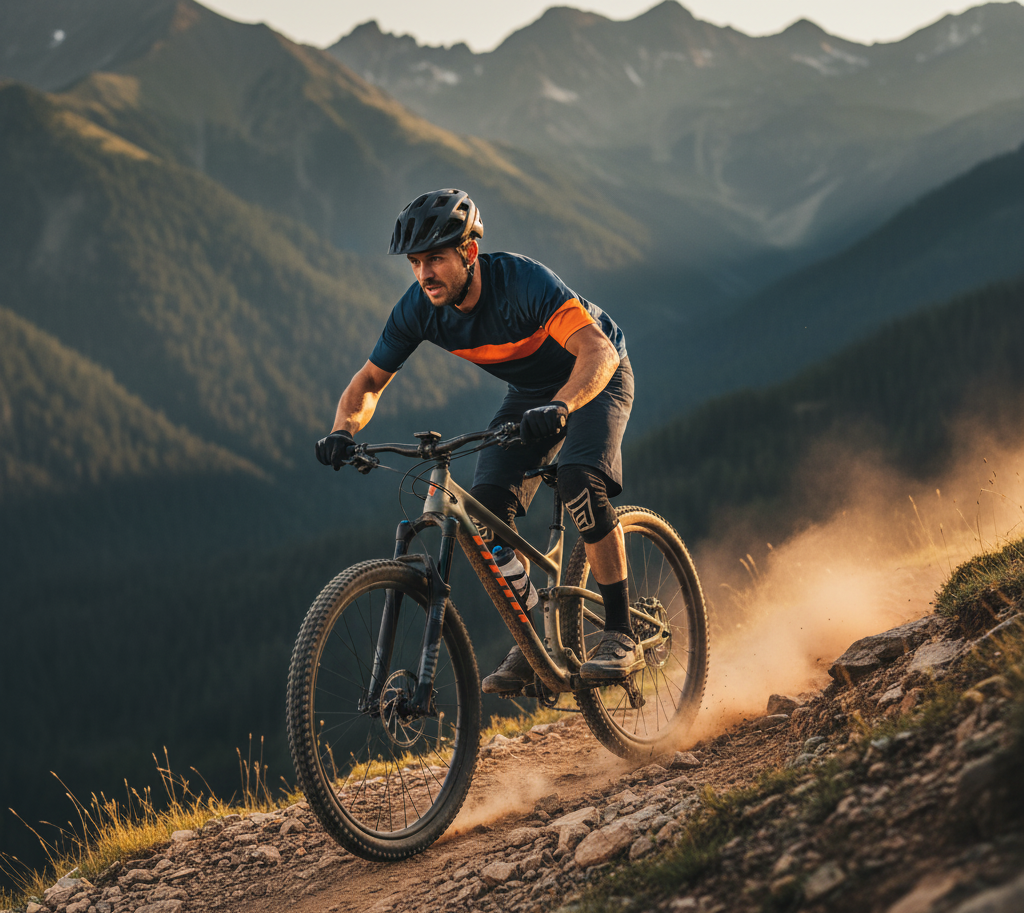
Why This Actually Works: Traditional threshold training? Takes forever. We’re talking 8-12 weeks to properly shift lactate clearance and most people don’t even stick with it that long. This protocol compresses the whole timeline down to 4-6 weeks because you’re repeatedly spiking and clearing lactate in the EXACT muscle recruitment pattern you use climbing. A study from 2019 in the European Journal of Applied Physiology (pretty reputable) found micro-intervals improved time-to-exhaustion at threshold by 18% faster than steady-state training, which is huge.
Real Application: That climb you hate? The one with the steep middle section that absolutely destroys your legs every single time. These intervals train your quads and glutes to process lactate while maintaining pedal pressure—so instead of completely blowing up halfway through like usual, you actually maintain power through the critical section. After three weeks of doing this consistently, most riders report being 30-45 seconds faster on 5-minute climbs. Sometimes more depending on where you started.
I remember when I first tried these—thought I was gonna pass out after the third surge, but by week two my legs felt… different. More responsive somehow.
Single-Leg Power Ramps (Destroys Dead Spots)
The Drill: On a smart trainer or a steady 3-4% climb outdoors, unclip one foot completely. Pedal with just one leg for 45 seconds at 60 RPM in an easy gear (don’t be a hero here), really focusing on pulling through the bottom of the stroke and pushing over the top. Rest 90 seconds between sets. Complete 5 reps per leg, do this twice a week.
Why This Crushes Delays: Your power output basically plummets at specific points in your pedal stroke—usually somewhere between 5-7 o’clock and 11-1 o’clock if you imagine the pedal as a clock face. These “dead spots” leak about 12-15% of your potential power according to biomechanics research from Colorado State University. That’s a LOT of wasted energy. Single-leg training forces neuromuscular adaptation in maybe 3-4 weeks versus the usual 12-16 weeks you’d need with just standard climbing volume, and your brain literally rewires motor patterns to eliminate those power gaps. It’s wild how fast it happens once you isolate each leg.
Real Application: Steep technical climbs require super consistent torque to keep traction—any dead spot causes wheel spin or you lose momentum and then you’re screwed. After four sessions (seriously, just four), riders consistently report smoother power delivery and the ability to clean those previously impossible technical pitches. Lab testing shows 8-11% improvement in minimum pedal force, which is literally the difference between cleaning a section or doing the walk of shame.
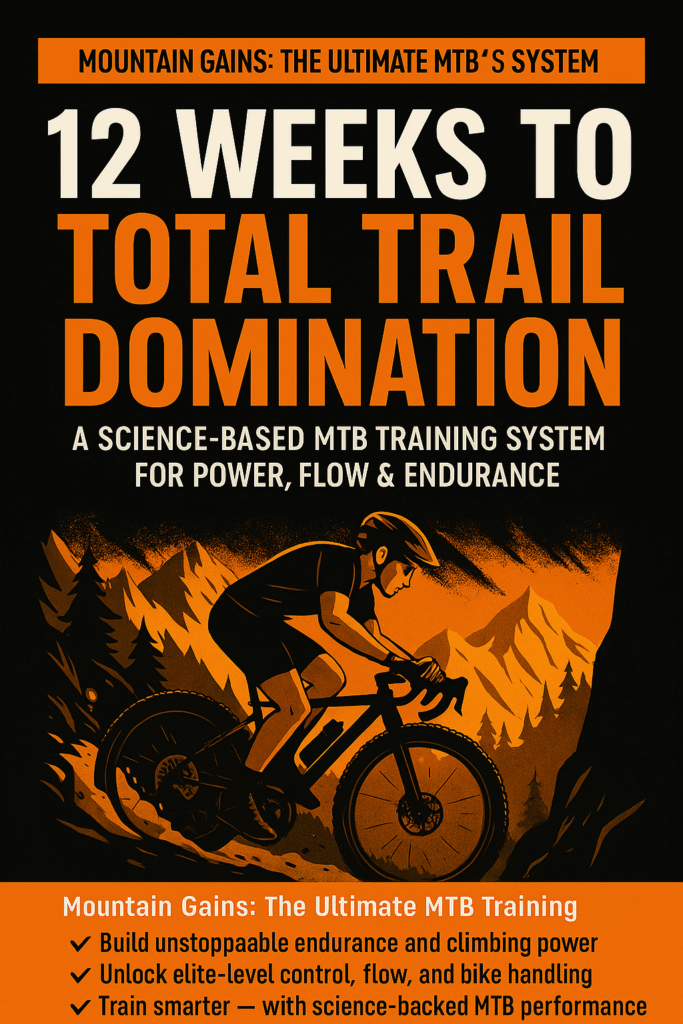
For a complete system that integrates these drills with periodization, nutrition timing, recovery protocols and everything else you need—check out “Mountain Gains: The Ultimate MTB Training System“. It’s a comprehensive e-book with 12 weeks of progressive mountain biking training designed specifically for climbing dominance and race-day power, none of that cookie-cutter stuff you find everywhere else.
Cardiac Output Climbs : The Aerobic Shortcut Nobody Talks About
The Drill: Find a sustained 20-30 minute climb (I know, easier said than done depending where you live). Ride at 65-70% max heart rate which should feel conversational—like you could talk but wouldn’t want to recite Shakespeare. Maintain 80-85 RPM, stay seated the whole time. Do this once weekly, bump up the duration by 5 minutes every two weeks until you hit 90 minutes total.
Why It Works (The Science Part): Most riders do what coaches call “junk miles”—too hard to actually build aerobic base, too easy to trigger any real adaptation. You’re just spinning your wheels, literally and figuratively. This precise intensity targets maximum stroke volume development without piling on fatigue that requires excessive recovery time. Research from the Scandinavian Journal of Medicine & Science in Sports—those Nordic countries know their endurance sports—shows controlled cardiac output work increases mitochondrial density 40% faster than mixed-intensity riding. You’re building your aerobic engine in 8-10 weeks instead of the usual 16-20 week slog.
Real Application: Long alpine rides or stage races demand massive aerobic capacity, like stupidly massive amounts. This drill builds the foundation that actually lets you recover between hard efforts and maintain pace on those endless climbs that just keep going and going. Riders who implement this protocol consistently show 15-20 watt increases at aerobic threshold within two months—which means you’re climbing at the same perceived effort but moving 0.5-1 mph faster. On a 2,000-foot climb that translates to 3-5 minutes saved, maybe more if conditions are good.
Think about it like building a bigger engine versus just revving the one you have. Both matter but… the bigger engine changes everything.
The Science Behind Compression (Why This Stuff Actually Works)
These mountain biking drills work because they exploit training specificity and neuromuscular adaptation windows—basically your body’s natural ability to get really good at specific things when you stress them the right way. A meta-analysis in Sports Medicine found targeted sport-specific intervals produce adaptations in 60% of the time required by general training, which is bonkers when you really think about the time savings. Your body adapts to precise demands, not just vague stress.
The micro-intervals trigger rapid lactate shuttle enhancement. Single-leg work forces immediate motor unit recruitment optimization (fancy way of saying your muscles learn to fire better). Cardiac output sessions maximize aerobic development without what scientists call “interference effects”—where one type of training cancels out another. Each drill eliminates one specific bottleneck in your climbing performance, like removing speed limiters one by one.
Implementation Protocol : How to Actually Do This
Week 1-2: Micro-intervals once weekly, single-leg work once weekly, cardiac output once weekly. Total of 3 climbing-focused sessions, keep everything else easy.
Week 3-4: Micro-intervals twice weekly, single-leg work twice weekly, cardiac output once weekly. You’re up to 5 sessions now which sounds like a lot but the sessions themselves are pretty focused.
Week 5+: Maintain twice weekly on micro-intervals and single-leg drills, keep extending that cardiac output duration every two weeks until you hit the 90-minute mark.
Recovery markers to watch: If your resting heart rate increases 8+ BPM or HRV drops 15+ MS (if you track that), take an extra rest day immediately. These MTB power drills demand proper recovery to actually produce adaptation—training + rest = improvement, not just training alone.
Your Next Ride Determines Everything (No Pressure)
You’ve got three proven mountain biking drills now that compress months of random training into weeks of targeted adaptation. The question isn’t really whether these work—the physiological research is pretty irrefutable at this point. The question is whether you’ll actually implement them on your next ride or just keep grinding the same inefficient patterns you’ve been doing. I see it all the time, people know what to do but don’t do it.
Pick one drill, just one. Do it this week and track your next timed climb. The data will convince you faster than any article ever could. Elite climbers aren’t genetically superior (well, some are but that’s not the point)—they’re strategically focused on the right stimuli at the right time. These climbing tips eliminate all the noise between you and your fastest climbing performance.
Stop riding more. Start training smarter, like actually smarter not just saying it. Your breakthrough climb is 4-6 weeks away, not next season or the year after when you’ve “put in more miles.”
Take action now: Integrate these three drills into your weekly routine and watch your climbing power transform—not metaphorically, literally transform. For complete programming that holds your hand through the whole process, download “Mountain Gains: The Ultimate MTB Training System” and get 12 weeks of structured workouts designed to make you the strongest climber in your group, the one everyone’s chasing on the uphills.