The Best Fluffy Pancakes recipe you will fall in love with. Full of tips and tricks to help you make the best pancakes.


Look, every watt matters—but you already know that. In road cycling, the gap between 250 watts and 255 might sound laughable until you’re getting dropped. Here’s the thing though: aerodynamic drag eats up like 90% of your resistance past 40 km/h. Which is wild.
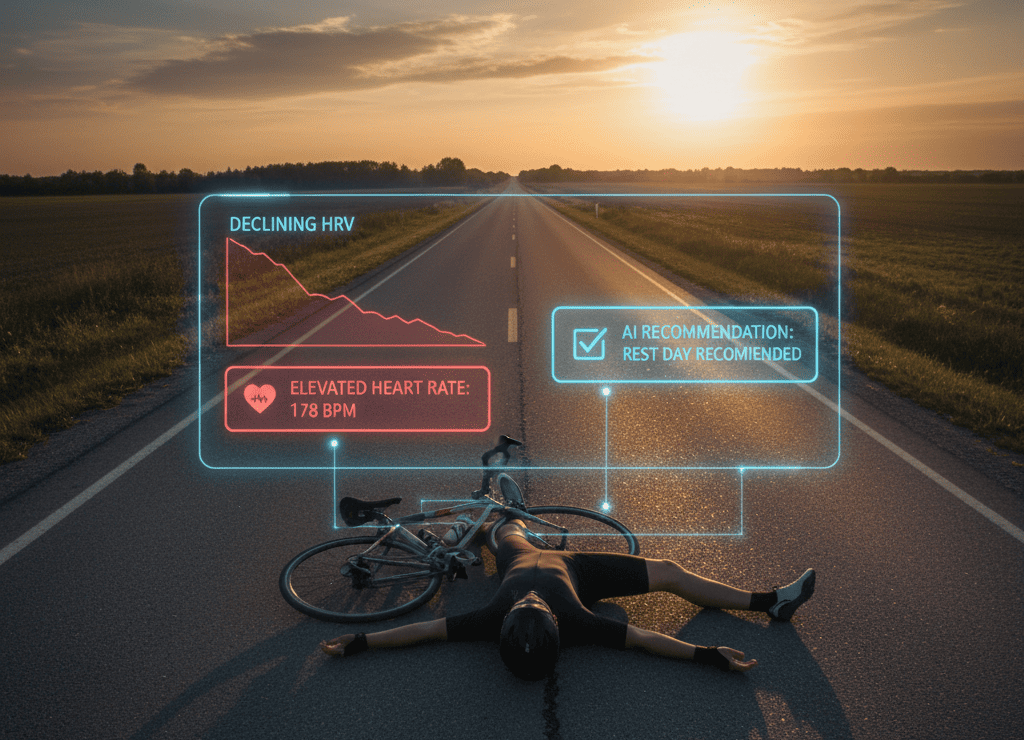
Traditional bike fitting? What a nightmare. You’d shell out $300-500, then wait weeks to get into a wind tunnel ($500-2000 per hour!). For most of us grinding on smart trainers in the garage, that’s just not realistic.
But AI has flipped the script. Computer vision, CFD, machine learning—they’re giving us feedback that used to require sports scientists. In real-time. It’s honestly insane.
Why Speed Actually Matters
Time is everything. The Journal of Science and Cycling showed optimal positioning cuts drag by 15-20%—that’s 30-50 watts at racing speeds. But achieving that used to take 6-12 months of trial and error. Every week in suboptimal position? Performance left on the table.
Working with a cycling coach remotely makes it worse. Traditional video analysis means frame-by-frame review, then feedback you have to interpret. “Drop your shoulders more.” Okay, but how much? One adjustment stretches across 2-3 weeks.
AI eliminates that. Modern algorithms process biomechanical data instantly, comparing you against thousands of riders, catching inefficiencies your eyes miss. What took months now happens in weeks.
Three AI Tools Changing Everything
1. MyVeloFit — Computer Vision That Works
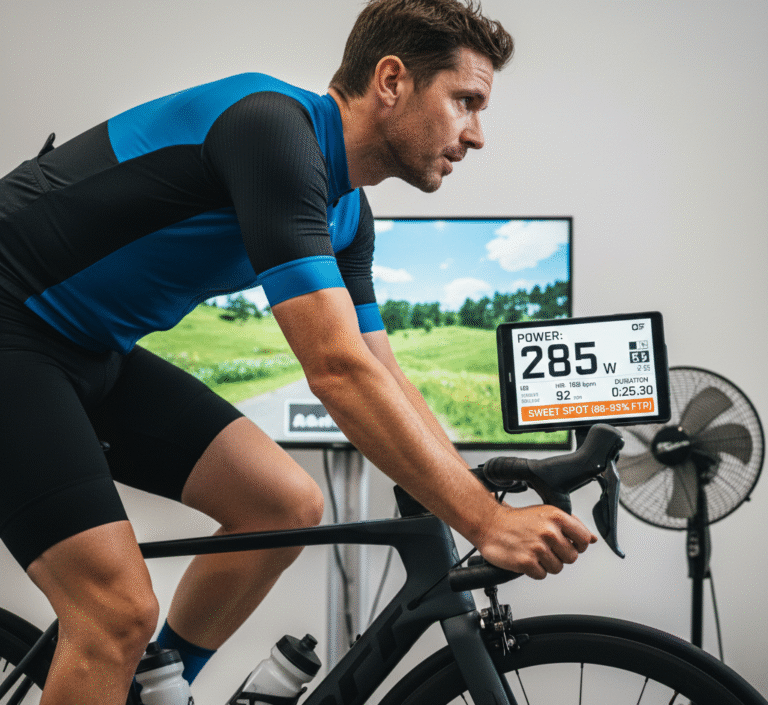
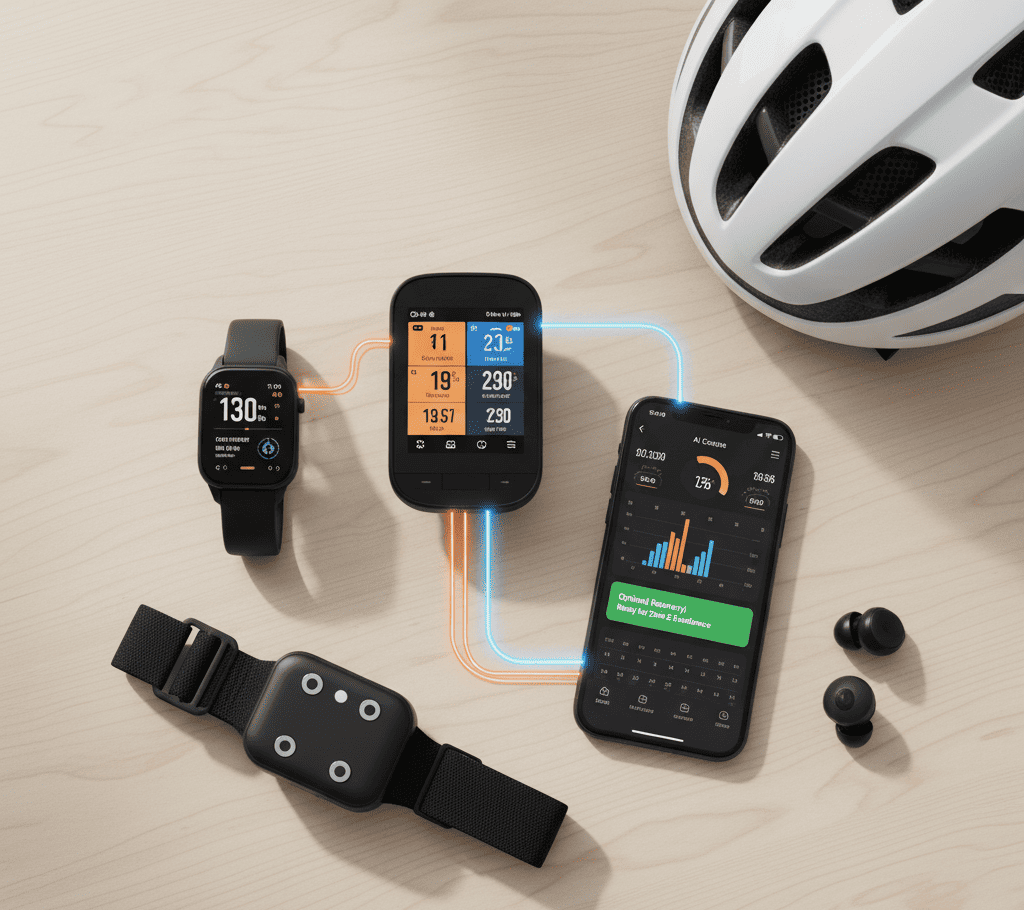
MyVeloFit uses your smartphone to analyze position on the smart trainer. The AI identifies 23 biomechanical points with sub-degree precision.
Real story: A 38-year-old triathlete uploaded indoor footage. MyVeloFit caught a 12-degree excessive hip angle destroying his hip flexors. The fix? Drop saddle 8mm, rotate forward 3 degrees.
Results:
- Before: 3.2 W/kg sustainable over 40km TT
- After: 3.4 W/kg (6.25% improvement!)
- Comfort from 6/10 to 9/10
- Hip flexor fatigue eliminated
Six percent from moving your saddle less than a centimeter.
2. Notio Aeroscale — Your Bike Becomes a Wind Tunnel
Notio’s device measures CdA on real roads. The AI processes wind, gradient, road surface—filtering everything except pure aero performance.
Case study: Competitive amateur tested five hand positions during weekly 40km loops. AI analyzed 47 rides across all weather conditions.
Numbers:
- Baseline: CdA 0.289
- Optimized (elbows 2cm narrower): CdA 0.267
- 7.6% drag reduction
- 22 watts saved at 40 km/h
- 68 seconds faster over 40km TT
Sixty-eight seconds from two centimeters.
3. Alphamantis Virtual Wind Tunnel — CFD Without the Price
Alphamantis uses AI-enhanced CFD to simulate wind tunnel testing. Upload photos, get 3D models, run thousands of simulations.
Real application: Masters criterium racer avoided expensive wind tunnel sessions. AI showed pressure differentials around his torso.
Findings:
- Wide elbows cost 31 watts
- New position: 4cm narrower grip, 2cm lower head
- CdA from 0.312 to 0.281 (10% reduction)
- 28-watt savings validated on-road
Twenty-eight watts is like adding FTP without a single interval.
#1: Test Everything Simultaneously
Traditional methods are painfully slow—change saddle height, ride two weeks, assess. AI lets you optimize multiple variables at once.
Use MyVeloFit during smart trainer sessions to capture baseline biomechanics. The AI identifies top three limiters (usually saddle height, fore-aft position, handlebar drop). Make calculated changes to all three, then validate in one follow-up session.
One cyclist compressed 14 weeks into 9 days—4.2% FTP improvement just from position adjustments.
#2: Filter Environmental Noise
Wind and weather create testing noise. Headwinds make good positions look bad; tailwinds do the opposite (learned this the hard way).
Notio’s AI filters noise automatically. Collect data during normal training rides—any conditions. Machine learning separates environmental factors from positional aerodynamics.
One athlete collected 30 rides over two weeks—feedback equivalent to 15+ wind tunnel hours, maybe $10,000 worth. He did it on normal rides while listening to podcasts.
#3: Predict Injuries Before They Happen
Poor positioning breaks you. AI analyzes movement patterns to predict injury risks before pain develops.
MyVeloFit caught 7% force imbalance through one rider’s right leg. The AI predicted IT band issues. Simple adjustments—cleat rotation, saddle leveling—corrected it before injury occurred. That’s 6-8 weeks of recovery avoided, plus the mental anguish of being off the bike.
Actually Implementing This
Week 1: Baseline with MyVeloFit during three smart trainer sessions (endurance, tempo, threshold). Document comfort, power, angles.
Week 2: Implement AI recommendations. Use Notio outdoors to capture real-world CdA. Test suggested positions during actual training.
Week 3: Upload photos to Alphamantis. Cross-reference virtual wind tunnel data with Notio measurements. When multiple AI sources agree? Commit to changes.
Week 4: Validate. Compare power, CdA, comfort against Week 1 baseline. Document W/kg gains and drag reduction.
Four weeks for results that traditional methods need 4-6 months to achieve.
The Math That Matters
Research shows optimal aero positioning gives bigger performance gains than equivalent FTP increases in time-trials and criteriums.
Run the numbers: 300 watts with CdA 0.300 = 41.2 km/h. Same 300 watts with CdA 0.270 = 42.4 km/h. That’s 1.2 km/h faster without gaining fitness. Zero additional training—just better positioning.
For age-groupers (most of us), these tools democratize pro-level optimization. Your smart trainer becomes a biomechanics lab. Weekend rides become aero testing. Your smartphone is your cycling coach’s most powerful tool now.
Stop Leaving Free Speed Behind
The technology exists right now for professional precision without professional prices. No excuses.
Start with one tool. MyVeloFit for biomechanics and injury prevention. Notio for pure aerodynamics. Alphamantis for predictive modeling before physical changes.
Document baseline metrics this week—literally this week. Sustainable power, comfort, current measurements. Implement AI recommendations within 10 days. Validate through structured testing on your smart trainer and road cycling sessions.
Uncomfortable truth: riders winning criteriums in your category probably aren’t fitter. They’re more aerodynamic, more efficient. They found the free speed you’re leaving behind.
AI demolished traditional barriers—cost, time, access. The physics works. Case studies prove it. Only question: will you implement before competitors do?
Your next breakthrough isn’t another brutal training block. It’s in centimeters and degrees AI can unlock this month. Every ride in suboptimal position wastes watts and speed.
Start optimizing today. Or keep getting dropped. Your choice.
You can also check Our Road Cycling Guide where we discuss more topics and give more tips !