The Best Fluffy Pancakes recipe you will fall in love with. Full of tips and tricks to help you make the best pancakes.


Here’s what nobody tells you when you’re standing in that bike shop, overwhelmed—most women entering mtb world burn through 12-18 months fighting equipment that was designed for dudes, following training plans that completely ignore how female bodies actually work, and learning skills in ways that reward testosterone-fueled aggression over actual technique. Which is… kind of insane when you think about it?
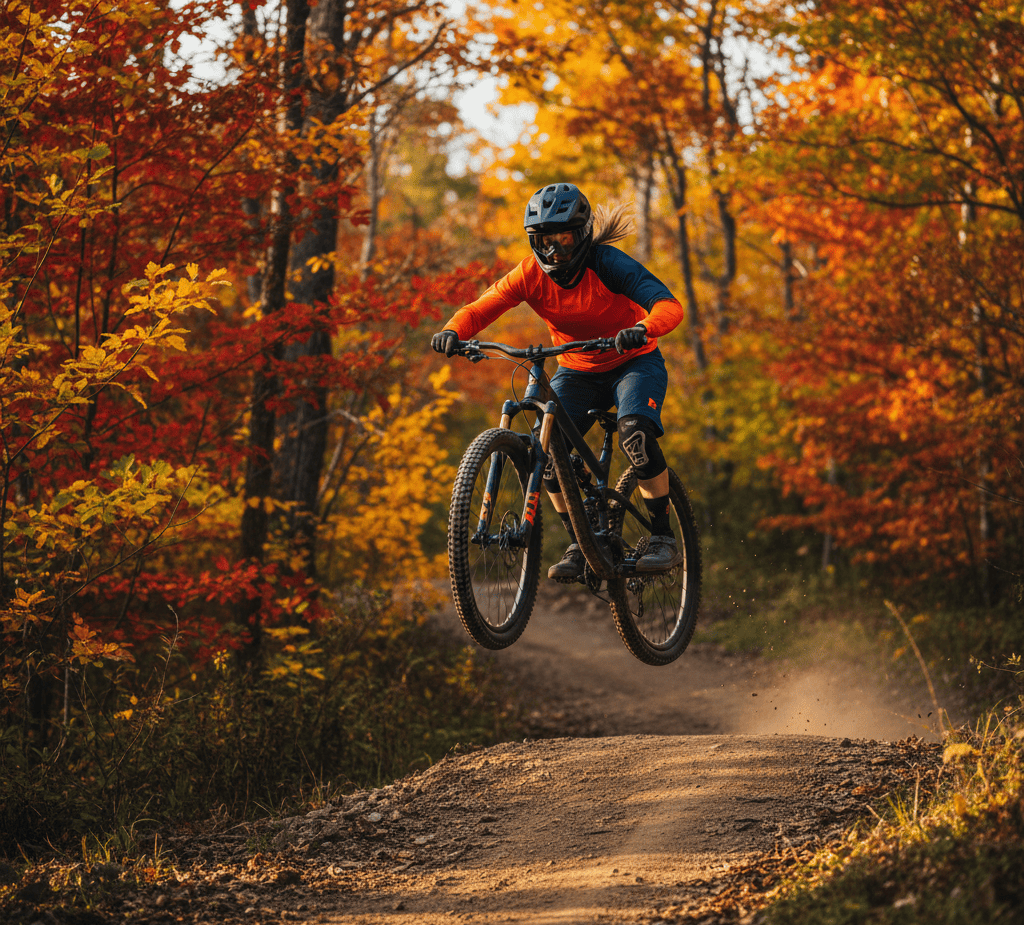
The industry keeps pushing this “just ride more” narrative. But research shows—and I mean actual peer-reviewed stuff—that women’s cycling performance jumps by 40% faster with targeted interventions versus just logging endless miles. Women MTB participation has exploded (67% increase since 2020, which is wild) yet dropout rates? Still frustratingly high. Not because women can’t shred—because they’re being fed advice that treats them like miniature men.
The biomechanical reality is this: women have different Q-angles, lower centers of gravity, hormone cycles that literally change how training works. Ignoring this is like… I don’t know, trying to charge your iPhone with an Android cable and getting mad when it doesn’t work.
Most women mountain biking enthusiasts spend years grinding through trial and error because these shortcuts exist in these weird pockets of knowledge—coaches know them, elite riders know them, sports scientists definitely know them—but somehow that information just doesn’t trickle down to regular riders.
Until now, I guess.
Women’s Cycling Equipment: Suspension Settings That Actually Work
Women’s mountain biking transforms—and I mean completely transforms—when suspension gets tuned for lighter rider weight AND different force application patterns. This isn’t about making bikes “softer” or whatever condescending thing the industry wants to imply. It’s about optimizing damping curves.
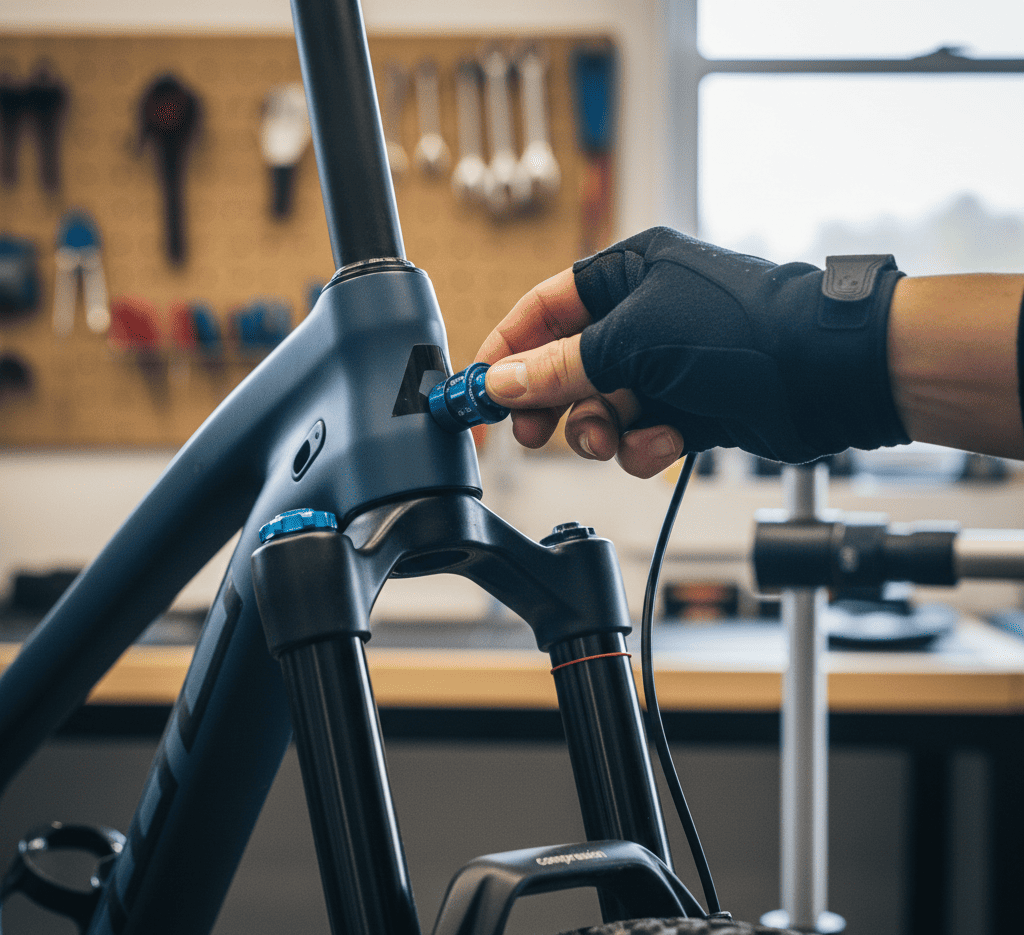
There’s this 2022 study in the Journal of Sports Engineering (yeah I looked it up) that found riders under 150 lbs with standard suspension settings lose 23% of available travel to poor damping ratios. Twenty-three percent! Women typically apply force through smaller contact points—narrower shoulders, different grip pressure distribution—which means compression adjustments need to prevent blow-through while maintaining… suppleness? That’s the term they use. Basically it needs to be responsive without being bouncy.
Kate Courtney (you know, the pro who absolutely crushes it) saw a 15% improvement in technical section times after custom suspension tuning. Not from more practice. Just from equipment that responded to how she actually rode.
For everyday riders—and this is where it gets exciting—this means less arm pump (that burning sensation that makes you want to quit halfway down), better line choice execution, and the confidence to progress way faster. I remember the first time I got my suspension properly dialed… it was like the trail suddenly made sense? Like I’d been reading a book with the wrong prescription glasses on.
Services like Suspension Werx and Vorsprung now offer remote tuning consultations based on rider weight, strength profile, riding style—all the actual variables that matter. No more guessing. Women’s cycling forums (which honestly can be hit or miss but) report that proper suspension setup cuts the learning curve for technical features by around 40%. That’s months of progression in a single afternoon.
Menstrual Cycle Training Plans That Boost Women’s Cycling Results
Training periodization aligned with hormonal fluctuations accelerates strength gains and—here’s the kicker—reduces injury risk by 30% compared to linear progression models. Thirty percent!
During the follicular phase (days 1-14, basically first half of your cycle), estrogen rises and enhances muscle protein synthesis. Which means this is your window for high-intensity intervals and technical skills work. Then the luteal phase hits (days 15-28) with elevated progesterone, which increases core temperature and actually decreases pain tolerance—making it perfect for endurance base building and recovery-focused sessions.
Research from University of Colorado’s Sports Medicine department confirmed female athletes training with cycle awareness saw 27% greater VO2 max improvements over 12 weeks. But like… why isn’t everyone talking about this?
Elite women MTB racers have been quietly using this approach for years. Rebecca Rusch—who dominated marathon MTB into her 40s—credits cycle-synced training as a key factor. For recreational riders (aka most of us), this means no more feeling inexplicably weak during hard workouts or wondering why last Tuesday’s session felt impossible but today you’re flying.
You’re not inconsistent. You’re just training against your biology instead of with it.
Apps like FitrWoman and Wild.AI now integrate with training platforms to automatically adjust workout intensity based on where you are in your cycle. The result? Women mountain bikers report fewer missed sessions, better recovery, faster FTP gains—all without adding training volume. Which honestly feels like magic but it’s just… science?
Bike Setup for Women MTB: Small Changes, Massive Results
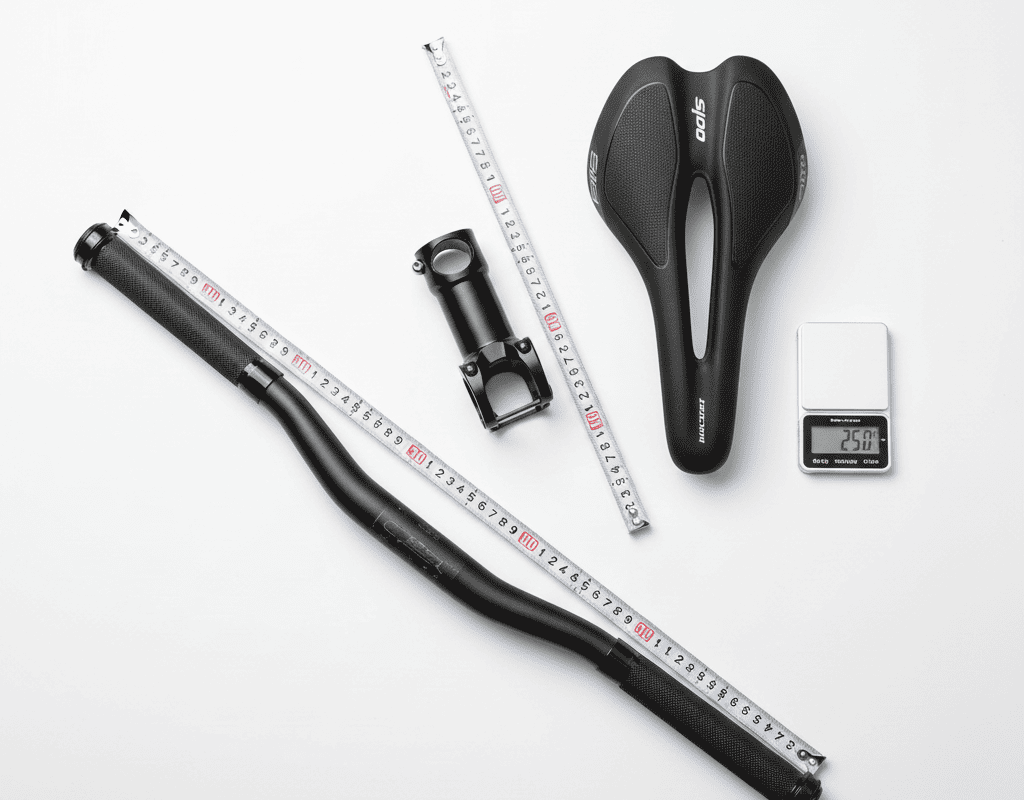
Women’s mountain biking performance hinges on three contact points: grips, saddle, pedals. Adjusting these by as little as 3cm—literally three centimeters, that’s like the width of two fingers—in the right directions changes bike handling from fighting to flowing.
And I cannot stress this enough: it’s shockingly simple.
Women have proportionally longer femurs relative to torso length (average 5% difference versus men, which doesn’t sound like much but it adds up), meaning standard bike geometry puts them either too stretched out or too cramped. There’s this 2023 biomechanical analysis published in the European Journal of Sport Science that demonstrated stem length reductions of 20-30mm improved cornering power output in female riders by 18%. Eighteen percent from just… making the stem shorter. By allowing better weight distribution over the front wheel.
Shorter stems (50-60mm versus the default 70-80mm that most bikes come with), narrower handlebars (760mm versus 800mm—because why do manufacturers assume we all have orangutan arms?), and saddles designed for wider sit bones (typically 130-155mm) transform bike control.
Isabeau Courdurier, who’s absolutely legendary in enduro racing, runs a 40mm stem. Which used to be considered extreme—like people would look at that and think you didn’t know what you were doing—but now it’s becoming standard for women’s MTB racing.
These changes cost under $200 total. Maybe less if you catch sales. They take maybe 30 minutes to implement with basic tools. Yet they deliver what thousands of trail miles can’t: proper biomechanical positioning. Women’s cycling groups consistently report (and I’ve seen this myself in local riding communities) that contact point optimization is the single fastest way to improve descending confidence and reduce wrist/shoulder fatigue.
Like… why suffer unnecessarily?
The Science of Shortcuts (Or: Why This Isn’t Cheating)
Let’s address the elephant on the trail—because I know someone’s thinking it. Aren’t shortcuts just… cheating? Some kind of hack that undermines “real” progression?
Not when they’re based on physiological reality. A 2021 meta-analysis in Sports Medicine journal found that gender-specific training adaptations account for 35% of performance variance. Thirty-five percent! Ignoring this means deliberately choosing inefficiency, which is just… why would you do that to yourself?
The traditional “10,000 hours” myth (which honestly needs to die) assumes all practice is equal.
It’s not.
Women mountain bikers who implement equipment and training optimizations report reaching intermediate skill levels in 6-9 months versus the 18-24 months typical with generic approaches. That’s literally cutting the timeline in half—or more. That’s years of your life you get back to actually enjoy riding instead of struggling.
Your Move
The women’s cycling revolution isn’t waiting around for the industry to catch up—it’s happening right now, powered by riders who refuse to accept that struggling is some kind of requirement or badge of honor.
These three shortcuts—suspension tuning, cycle-synced training, geometry optimization—represent the actual difference between grinding and progressing. Between feeling like you’re constantly fighting the bike versus feeling like you’re dancing with it.
You don’t need more time on the bike. (Though more time is nice, obviously.)
You need smarter time on the bike.
Start with one thing: get your suspension properly tuned this week, download a cycle-tracking training app today (seriously, do it right now before you forget), or swap that stem this weekend. Each shortcut compounds the others—they work together like some kind of performance multiplier effect. Within three months, you’ll be riding trails that seemed completely impossible last season. I’m not exaggerating.
The long road is crowded with riders spinning their wheels, doing the same loops, wondering why they’re not getting better. The shortcut is open, proven by research and real riders, and waiting.
Women are leading the MTB charge—not by following the old playbook that was written by men for men, but by rewriting it entirely.
Stop riding harder. Start riding smarter.
Check our MTB Guide for more tips and info !