The Best Fluffy Pancakes recipe you will fall in love with. Full of tips and tricks to help you make the best pancakes.


Look, I know exactly where you’re at right now. You’ve got like seventeen browser tabs open—each one screaming a different “truth” about trail bikes 2026—and honestly? You’re ready to just buy whatever bike your buddy rides because at least that feels like a decision you can actually make. The geometry charts look like they were designed by someone who really wanted you to feel stupid, and the suspension terminology sounds like it belongs in a physics thesis rather than a bike shop conversation.
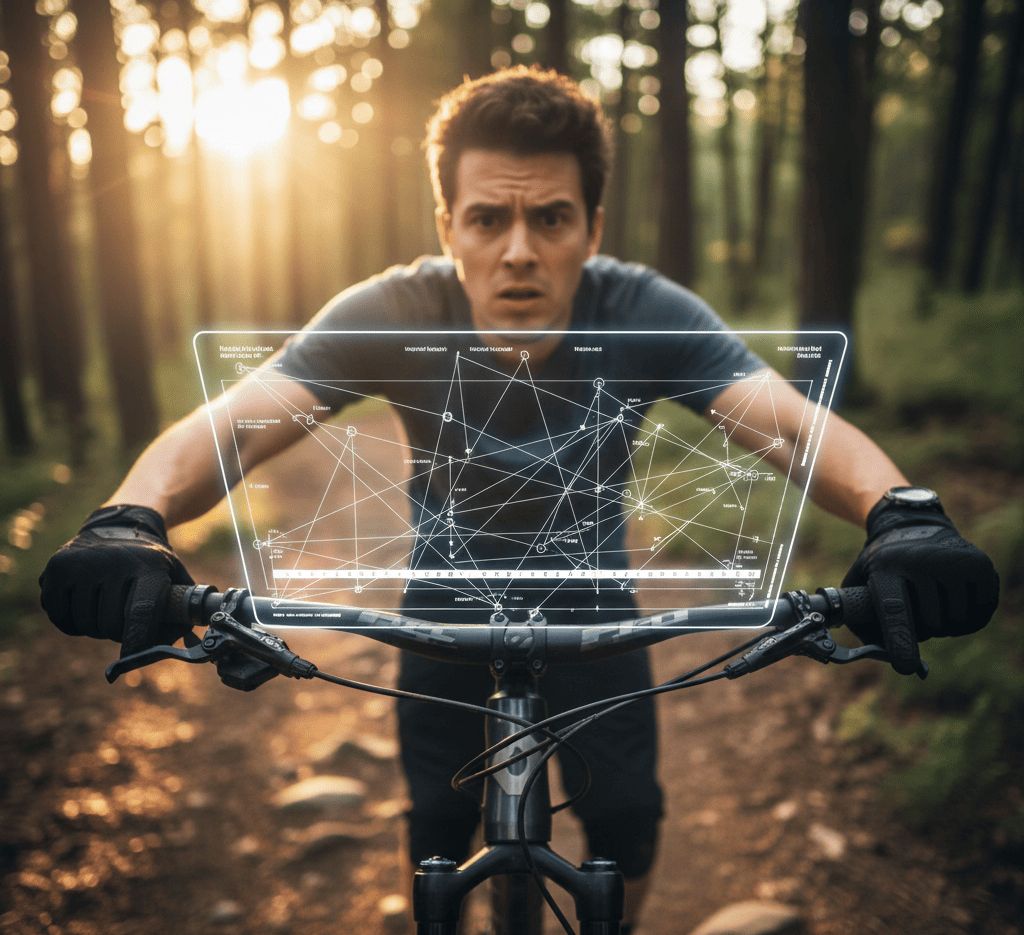
Here’s what nobody’s telling you though—you’re not dumb for feeling lost. The industry WANTS this. Confusion = more “research” = more clicks = more sales of the “latest breakthrough.” But the fundamentals? They haven’t really changed that much.
Let’s fix this.
Problem #1: Those Geometry Numbers That Make Zero Sense
Why your brain hurts: Every brand throws numbers at you—head tube angle, reach, stack, seat tube angle, chainstay length… and then they change them by 0.5 degrees and act like it’s revolutionary.
Here’s the actual truth: only three numbers will genuinely affect how your ride feels on trail bikes 2026.
- Head tube angle (63-66°) – Lower number = slacker = way more stable when you’re bombing down something gnarly, but it makes your bike feel like a lazy freight train in tight switchbacks. Research on bike handling dynamics shows that when you slack out the head angle, you’re increasing “trail” which makes steering slower but more predictable at speed.
- Reach (425-500mm) – This is literally how stretched out you are. Too short and you’ll feel cramped on descents; too long and climbing becomes awkward. Modern trail bikes went long on reach specifically so you could run that slack head angle without sitting on the back wheel constantly.
- Seat tube angle (76-78°) – Steeper angles put you more forward over the pedals when climbing = better traction and less wasted energy.
What you actually need to do:
- Forget the other numbers exist
- Rent or demo bikes if you possibly can
- Pay attention to ONE thing: do you feel balanced climbing AND stable descending?
- The 2026 standard = roughly 64-65° head angle, 76-77° seat tube angle for 140-150mm trail bikes 2026
I spent three months last year obsessing over half-degree differences and you know what made the difference? Getting on the actual bike.
Problem #2: The Suspension Travel Chaos
Why it’s maddening: The “trail bike” category includes bikes that are almost XC race machines AND bikes that could legitimately race enduro. We’re talking 125mm travel up to 145mm, and every brand swears their specific number is the magic formula.
Real talk though— travel numbers are mostly marketing theater. Some 130mm bikes will absolutely destroy 150mm bikes on the same trail because suspension design matters WAY more than raw millimeters.
What trail bikes 2026 are actually focusing on:
- How efficiently they pedal (anti-squat ratios)
- How they respond to small bumps—that first 30% of travel
- Progression in the curve so you don’t blow through all your travel on one hit
Here’s your move:
- Match travel to where you actually ride: 125-135mm if your trails are flowy, 140-150mm if you’re dealing with proper technical stuff
- Recent 2026 field testing shows the trend’s moving toward more pedal-focused designs in that 125-145mm range
- Test the actual suspension feel, not the spec sheet
- Set your sag at 25-30% (sit on the bike, measure how much the shock compresses)
- Don’t touch compression or rebound adjustments until you’ve ridden it at least five times
Problem #3: Wheel Size Wars Are Still Somehow a Thing
The confusion factor: Pure 29ers, some brands still pushing 27.5″, and NOW mullet setups (29″ front, 27.5″ rear) being marketed as breakthrough hybrid solutions.
The boring reality: Pretty much every 2026 trail bike that gets tested seriously is running 29″ wheels. Why? Because physics doesn’t care about marketing trends. Bigger wheels objectively roll over stuff better and hold momentum more efficiently.
Rolling resistance studies have proven:
- 29″ = more stable, faster rolling, better if you’re taller
- 27.5″ = more nimble, easier to maneuver if you’re shorter
- Mullet = trying to get best of both (compromises both, honestly)
Just do this:
- Over 5’8″? Get 29″ wheels and stop overthinking
- Under 5’6″? Maybe test 27.5″ but probably still go 29″
- Some 2026 bikes like the Ibis Ripley let you swap the rear wheel between 29″ and 27.5″ with a flip chip—pretty cool for experimentation but most people never bother
The standardization on 29″ for trail bikes 2026 isn’t some conspiracy, it’s just what works best for most people.
Problem #4: Setup Paralysis
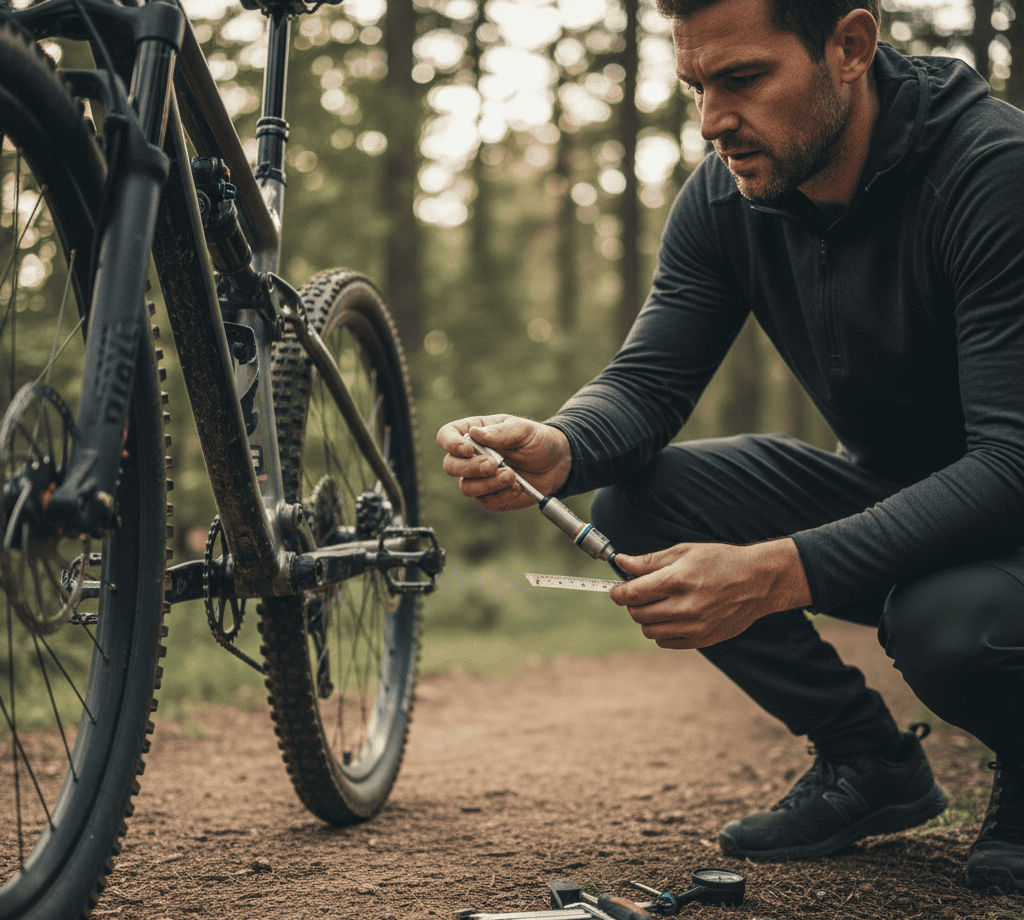
Why you’re stuck: Modern bikes have flip chips, adjustable headsets, geometry adjusters, compression settings, rebound settings, tire pressure variables… and brands suggest you should be “optimizing” all of this simultaneously. It’s paralyzing.
Reality check— factory settings work perfectly fine for like 80% of riders. Yeah, there’s emerging tech with AI-driven suspension that auto-calibrates, but you don’t need any of that complexity.
The ONLY setup that actually matters:
First week: Ride everything stock except:
- Suspension sag (25-30%)
- Tire pressure (25-30 PSI rear, 23-28 PSI front)
- Saddle height (heel on pedal at bottom = straight leg)
Weeks 2-4: Change ONE thing at a time:
- Handlebar width (wider = more control, narrower = quicker steering)
- Rebound speed if your bike feels bouncy OR dead
- Saddle position forward/back for climbing comfort
After a full month: THEN maybe consider geometry adjustments if you’re consistently uncomfortable
That Trek Fuel trail bike for 2026 has interchangeable rocker links and shock mounts—pretty clever—but use this stuff ONLY after you understand how your bike currently performs.
(I made the mistake of adjusting everything at once on a new bike last spring and literally had no idea what was actually affecting what)
Problem #5: The Component Spec Black Hole
The trap: GX versus X01, Pike versus Lyrik, Fox versus RockShox, carbon versus aluminum… every trail bikes 2026 review drowns you in component hierarchy discussions.
What’s actually happening: Mid-tier components—SRAM GX, Shimano XT, RockShox Pike—perform at like 90% of top-tier stuff for literally half the money.
Your sanity-preserving approach:
Stop obsessing over:
- Carbon vs aluminum frames (both work, carbon saves 1-2 pounds)
- Top-tier drivetrain parts (shifting precision difference is minimal)
- Ultra-lightweight components (they sacrifice durability)
DO actually care about:
- Dropper post quality (minimum 150mm for trail bikes 2026)
- Brake power (4-piston for steep terrain, 2-piston for mellow trails)
- Tire quality (biggest performance-per-dollar upgrade)
Contact point research shows that handlebars, grips, saddle, and pedals affect your riding experience way more than whether your frame is carbon or alloy.
Moving Forward: Simplicity Is Actually the Answer
The trail bikes 2026 market thrives on your confusion—genuinely, that’s the business model. But what actually matters? Finding a bike that fits your body, matches what your local trails demand, and makes you genuinely excited to ride.
Be really honest with yourself: do you travel constantly to ride different terrain, or hit the same trails 95% of the year? Do you care more about speed or playfulness? Climbing efficiency or descending confidence? There’s no wrong answer, just YOUR answer.
Your actual action plan:
- Set a realistic budget and stick to it
- Pick the right travel range for YOUR trails (125-135mm or 140-150mm)
- Get properly sized (reach is everything)
- Ride it completely stock for a full month
- Make small adjustments one at a time
The best trail bikes 2026 aren’t the ones with the most features—they’re the ones you actually want to ride repeatedly. Stop researching. Start pedaling. The clarity you’re desperately searching for isn’t hiding in another geometry chart… it’s waiting out on the trail.
You’ve absolutely got this. Read our Full MTB Guide for more tips and infos !