The Best Fluffy Pancakes recipe you will fall in love with. Full of tips and tricks to help you make the best pancakes.


Real talk— most people spinning away in those dark studios with the pulsing bass? They’re basically just… pedaling, no cadence zones actually for their indoor cycling. Fast, slow, whatever the instructor yells. And here’s the kicker nobody wants to admit: your legs don’t care about the music drop. They care about RPM specificity.
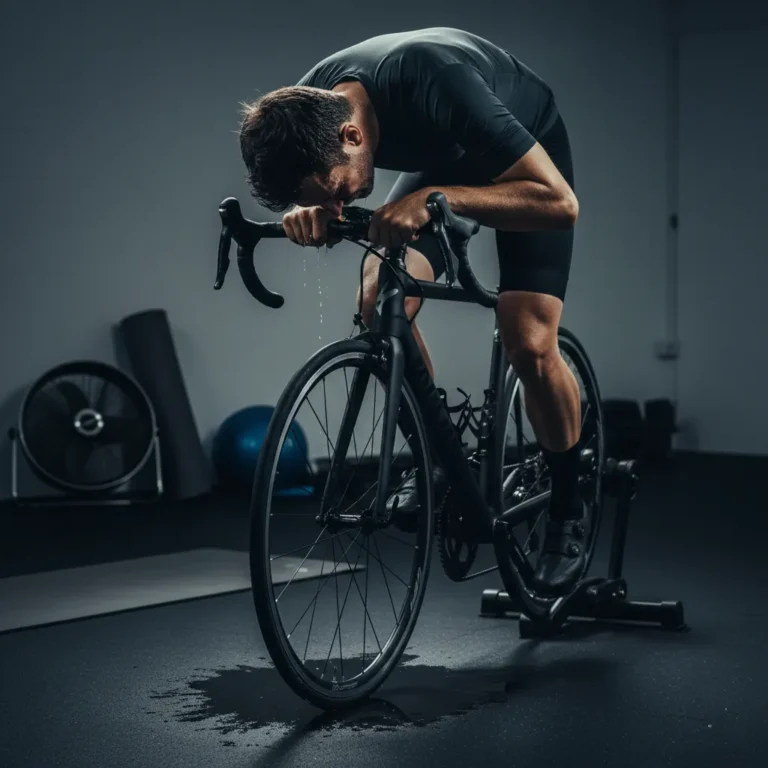
I remember this one ride back in early 2024, right after New Year’s when everyone’s flooding the gym (you know the type), and the instructor kept screaming “FEEL IT” while we bounced between 60 RPM and 100 RPM like caffeinated pinballs. My quads were screaming but not in the good way—more like confused screaming. Because here’s what they don’t tell you in the new member orientation: random cadence = random results.
The secret? Each RPM range triggers completely different stuff in your body. And I mean completely different—like comparing lifting heavy dumbbells to doing burpees. Both make you sweaty, sure, but your muscles are having entirely different conversations with your brain.
Why This Gets Buried Under Motivational Quotes
Studios need butts in seats (bikes? you know what I mean). A class that says “we’re spending 45 minutes at 80 RPM building mitochondrial density” doesn’t exactly scream excitement on the schedule—even though that’s literally what makes you not-terrible at everything else.
The outdoor cycling world obsesses over watts. Power meters, FTP tests, training peaks… it’s a whole thing. But indoor? “Add more resistance!” “Go faster!” Yeah, thanks coach, super helpful. It’s like telling someone to “just cook better” without explaining what salt does.
And honestly? The fitness industry has this weird addiction to looking hardcore. High cadence sprints photograph well for Instagram. Heavy climbs make you feel like you’re dying (in that weirdly satisfying way). But the zone in between—the “boring” middle ground—that’s where the actual magic lives, and nobody’s making highlight reels about it.
The 3 Zones That Actually Matter
Low Cadence: 50–70 RPM — When Your Legs Turn Into Anvils
What’s actually happening: You’re forcing your muscle fibers to produce more force per single push. Think of it like… if pedaling normally is slicing bread, this is kneading dense sourdough dough. More resistance, more recruitment of the big motor units (those type II fast-twitch fibers that usually just hang out unless you really need them).
The physiological deal:
- Time under tension increases—your muscles stay contracted longer per revolution, which (according to Schoenfeld’s research in the Journal of Strength & Conditioning, like 2016-ish?) optimizes strength adaptation
- Your glutes and quads have to generate serious torque… we’re talking actual force production not just “I’m working hard”
- Neuromuscular coordination improves because your nervous system basically learns to yell at your muscles more effectively
How to do it without wrecking yourself:
- Resistance needs to be heavy—like 7-9 out of 10, where you’re genuinely thinking “this is hard” not “this is impossible”
- Intervals: 3-8 minutes (yeah it’s a range, because it depends on your fitness level and nobody’s the same)
- Rest between: 2-3 minutes, easy spinning
- Do this once, maybe twice a week MAX
- Critical thing everyone screws up: Don’t rock your upper body like you’re trying to win a dance-off. Power comes from your hips driving down, not from throwing your shoulders around
When to use it:
- Hill simulations (obviously)
- Building your FTP (functional threshold power—basically how hard you can go before everything hurts)
- Time trials
- Off-season when you need to build raw strength
Here’s what I see constantly: people go WAY too heavy because it feels more “legit” and then their form falls apart. Your lower back starts doing the work instead of your legs, and congratulations, you’ve just turned a leg workout into a back injury waiting to happen.
Moderate Cadence: 75–90 RPM — The Zone Everyone Skips (Huge Mistake)
What’s happening: This is where your body learns to actually USE oxygen efficiently. Not just breathe hard—actually utilize it at the cellular level.
The science part:
- Perfect sweet spot between mechanical efficiency and cardiovascular demand
- Fat oxidation peaks here—like around 60-70% of your VO2max (Achten & Jeukendrup proved this in Sports Medicine journal, it’s solid research)
- You can sustain this basically… forever? Well, a long time. Without depleting all your glycogen stores
I’ll be honest, this zone feels boring. You’re not gasping, you’re not crushing it, you’re just… going. But (and this is huge)—this builds mitochondria. Those little cellular powerhouses that everyone learned about in 8th grade biology? Turns out they actually matter. More mitochondria = more energy production = better performance everywhere else.
Protocol:
- Resistance: moderate, like 5-6/10, comfortable but not easy
- Duration: 20 minutes minimum, up to an hour or more
- Heart rate sits around 65-75% of max (Zone 2-3 for you heart rate monitor people)
- You should be able to talk in short sentences—not full conversations but not gasping either
- Do this 3-5 times per week if you’re serious
Applications:
- Base building (the foundation for literally everything)
- Recovery rides (yes, active recovery is real)
- Long endurance sessions
- Warm-ups before harder stuff
The thing coaches won’t say: This is “boring training” and it doesn’t sell. But skip it and you’ll plateau faster than a sourdough starter in a cold kitchen (see? I’m thinking about bread again). Elite cyclists spend like 80% of their volume here. EIGHTY PERCENT. Not doing Instagram-worthy sprints.
High Cadence: 95–110+ RPM — Spin Class Energy, Actual Purpose
The adaptation: Your neuromuscular system learns to fire muscles faster and more smoothly. Less force per stroke but way more strokes, which trains coordination.
What’s going on inside:
- Each pedal stroke requires less force, so you’re training SPEED of contraction not strength
- Your pedal stroke gets smoother—less wasted energy from choppy firing patterns
- Lactate clearance improves (your muscles get better at processing that burning sensation byproduct)
Research from Lucia et al. (British Journal of Sports Medicine) shows high-cadence work improves cycling economy. Like, measurably. Elite cyclists naturally pedal faster because they’re more efficient at clearing metabolic waste.
How to actually do this:
- Resistance: LIGHT. Like 3-5 out of 10. This is critical—
- Duration: 30 seconds to 3 minutes per interval
- Recovery: same time or double the work time
- 2-3 times per week
- Form cue that matters: Your core stays tight, no bouncing, and you should feel like you’re pulling through the bottom of the stroke not just pushing down
Use cases:
- HIIT intervals (the trendy stuff)
- Sprint training
- After strength work to “wake up” the neuromuscular system
- Breaking plateaus
The mistake literally everyone makes: Adding heavy resistance at high cadence. NO. This is how you trash your form and maybe your knees. High cadence = light resistance. Period. End of story.
Random benefit nobody mentions: Training at high cadence actually improves your recovery during moderate work because your cardiovascular system learns to deliver oxygen faster. It’s like… training your body’s delivery system, not just the warehouse.
Okay So How Do You Actually Use This?
4-Week Plan (that I’ve actually tested, not just theory):
Weeks 1-2: Get familiar with zones
- Monday: 45 minutes at 75-90 RPM (yeah, just that, the whole time)
- Wednesday: Low cadence intervals—5 minutes at 50-70 RPM, 3 minutes recovery, repeat until you’ve done maybe 20-30 minutes of work
- Friday: High cadence bursts—1 minute at 95-110 RPM, 2 minutes easy, repeat for 30 minutes total
Weeks 3-4: Mix it up
- Warm up: 10 minutes Zone 2 (moderate cadence)
- Main set: Alternate 5 minutes low cadence with 2 minutes high cadence, do this 4 times
- Cool down: 10 minutes Zone 2
Advanced approach (polarized training): Spend 80% of your time in Zone 2, split the remaining 20% between low and high cadence work. This comes from Seiler & Tønnessen’s research (International Journal of Sports Physiology and Performance)—and it consistently produces better results than just hammering yourself constantly at medium-high intensity.
Questions You Should Be Asking Yourself

Are you actually training different energy systems? Or just… sweating randomly?
Do you track cadence as carefully as resistance? (Most people don’t, and it shows)
When’s the last time you did a full 30-minute ride at 80 RPM without changing anything? If you can’t remember, your aerobic base probably looks like Swiss cheese.
Can you hold 105 RPM for 2 straight minutes with good form? Try it. It’s harder than it sounds.
Look—
Cadence zones aren’t about speed or slowness for their own sake. It’s about targeting specific physiological adaptations with precision instead of just hoping your body figures it out.
Low cadence = strength for climbs and sustained power. Moderate cadence = the aerobic engine that makes everything else possible (seriously, don’t skip this). High cadence = neuromuscular coordination that translates power into actual speed.
Stop letting your studio class randomize your cadence like a DJ mixing tracks. Start programming it strategically.
One question for your next ride: What adaptation am I targeting today?
Track it. Respect what the research says. Watch everything change.
Now go pedal with actual intent, after you check and read our Indoor Cycling Guide for more tips !