
The Best Fluffy Pancakes recipe you will fall in love with. Full of tips and tricks to help you make the best pancakes.


Stop Training More. Start Training Right.
Here’s the thing nobody wants to admit — most riders grinding for speed are just… grinding. More hours, more trails, more tired legs with nothing to show for it. And look, I get it. The impulse to just ride more feels logical. Feels productive. Feels like you’re doing something. But speed doesn’t reward volume. It rewards precision. Every redundant session, every junk mile, every “I’ll just do another lap” is a vote against your own progress. You want to get faster at mountain biking? Then stop stacking inputs that don’t stack up. The fastest riders in the room aren’t the ones who rode the most — they’re the ones who stopped tolerating inefficiency in their training. Three strategies. Real results. Let’s get into it.
Strategy 1: HIIT Cycling Is the Shortcut Your Lungs Have Been Waiting For

Okay so — cardiovascular fitness. Boring word for a thing that will absolutely wreck you if you ignore it. Here’s what typically happens: rider wants to get faster, rider logs more trail hours, rider feels fitter but doesn’t actually go faster. Why? Because moderate-effort riding — the comfortable, “I could do this all day” kind — barely touches your VO2 max. It’s like practicing free throws at half-speed and wondering why you miss under pressure.
HIIT fixes this. Fast.
The protocol isn’t complicated but it is uncomfortable — which, honestly, is the point:
- 20–30 second all-out efforts (we’re talking legs-on-fire, lungs-screaming intensity)
- 90 seconds active recovery between each
- 6–10 rounds per session
- 2–3 sessions per week — not every day, recovery matters more than people think
A 2019 study out of the International Journal of Sports Physiology and Performance showed that 8 weeks of structured HIIT produced meaningfully greater VO2 max improvements versus steady-state aerobic work. Eight weeks. That’s two months to a genuinely different engine.
Swap out one long casual ride weekly for a 35-minute HIIT block — on a trainer, flat fire road, wherever. Within 4 weeks you’ll notice climbs that used to wreck you start feeling… manageable? Almost insultingly so. That’s the adaptation kicking in. Don’t fight it, chase it.
Strategy 2: The Gym Stuff You’re Doing Probably Isn’t Helping (Sorry)
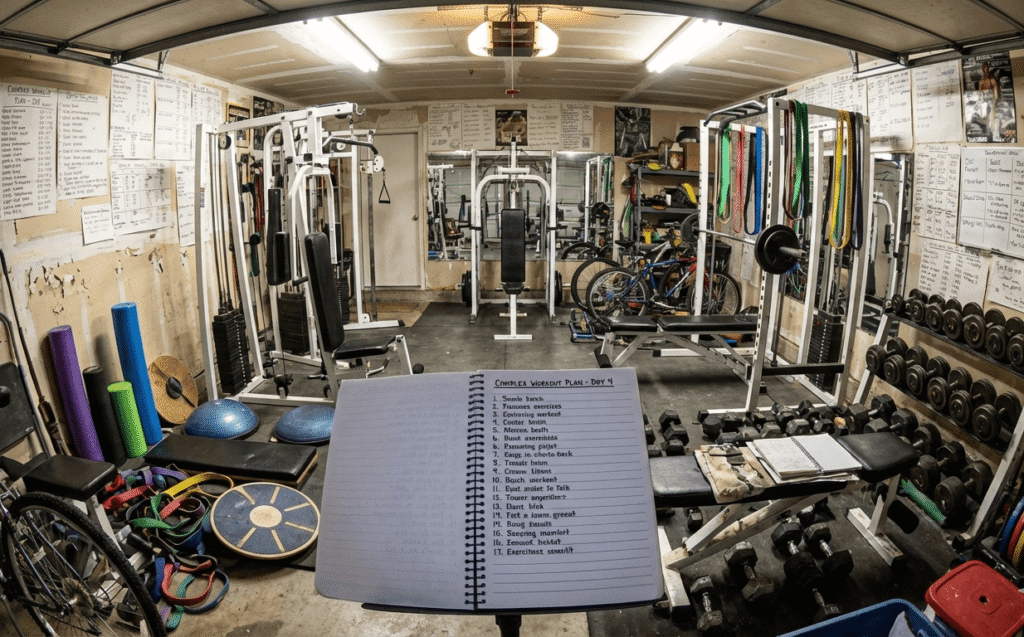
Trail riding is weird in the best way. It’s not running, it’s not weightlifting, it’s not yoga — but it’s kind of all three at once? You’re absorbing hits, driving through pedals, pulling bars, bracing your core, and doing this all while your brain processes terrain at 15–25 mph. Generic gym programs — the bro splits, the chest-and-back days — they build muscle, sure. But they don’t build MTB muscle. There’s a difference. A big one.
Trail-specific strength is about targeting the firing sequences your body actually needs when you’re dropping into a rock garden or muscling through a blown-out corner.
Here’s the short list, non-negotiable:
- Bulgarian split squats — 3 sets, 8–12 reps per leg. Single-leg stability is the foundation of everything
- Hip thrusts — 3 sets, 10–15 reps. Glutes drive climbs. Full stop
- Single-arm dumbbell rows — 3 sets of 10. Handlebar control lives here
- Dead bugs — 3 sets, 10 reps per side. Weird name, essential movement — core bracing for trail chaos
Add 2 of these sessions per week for 6–8 weeks and something clicks. Arm pump fades. Corners feel planted. Climbs stop punishing you quite so viciously. And you don’t need some fancy facility — resistance bands and a pair of dumbbells cover 90% of this work. Garage, bedroom, hotel room, doesn’t matter.
Strategy 3: Your Brain Is Costing You More Speed Than Your Fitness Is
This one’s uncomfortable to hear, maybe. But the hesitation you feel before a steep rollover — that half-second of “oh god” before you commit — that’s not a fitness problem. That’s a wiring problem. And it’s costing you speed you’ve already physically earned.
Mental performance isn’t meditation-app fluff. It’s trainable. Quantifiable, even. And for most riders it’s the last 10–20% of speed that’s just… sitting there, unclaimed.
Three tools that actually work in the real world:
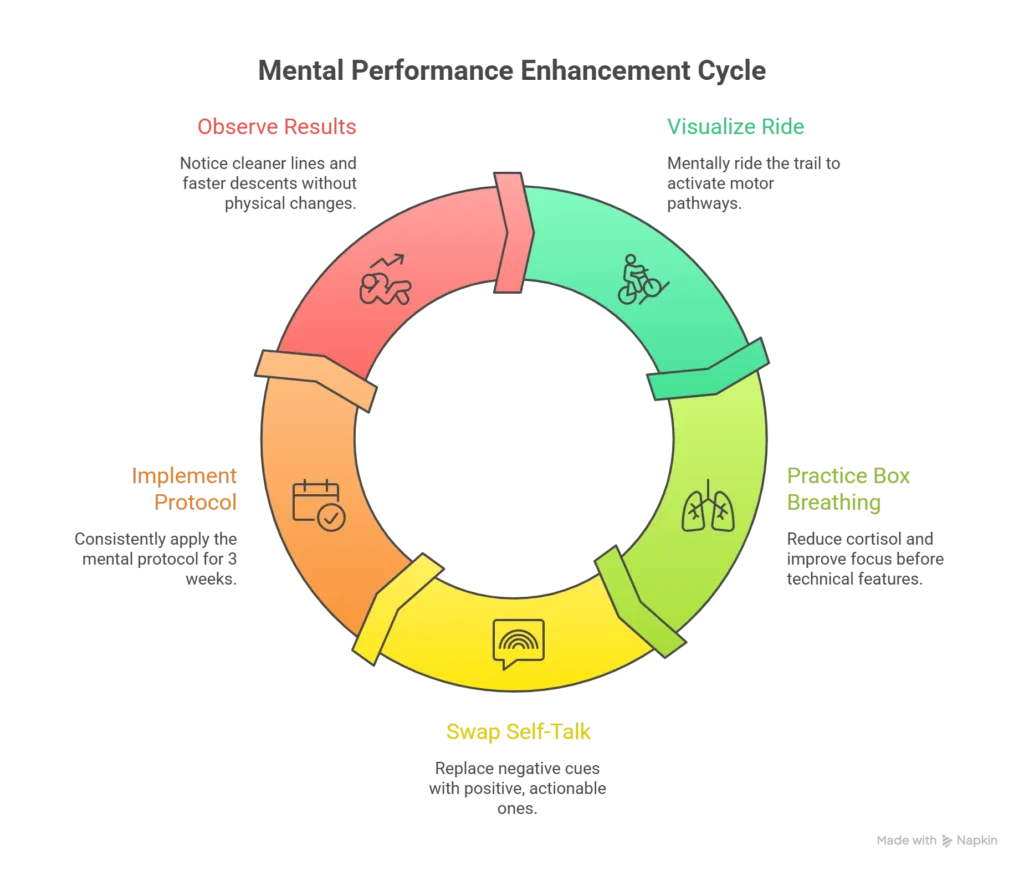
Pre-ride visualization — 5 minutes, eyes closed, mentally riding your target trail or feature. Not imagining success — riding it. Feel the lean, the weight shift, the exit. Neuroscience backs this: the brain activates identical motor pathways during vivid visualization as during actual movement. Wild, right?
Box breathing before technical features — 4 counts in, 4 hold, 4 out. Cortisol drops. Focus narrows. You stop white-knuckling and start riding.
Swap the self-talk — “don’t crash” is the worst cue you can give your brain (it literally processes crash as the target). Replace it: “find the line,” “look through the corner,” “smooth hands.” Specific. Positive. Actionable.
3 weeks of a 10-minute pre-ride mental protocol and riders consistently report something that sounds almost too simple — they stop hesitating. Lines get cleaner. Descents get faster without anything physical changing. The fitness was always there. The brain just finally caught up.
Mountain Gains: The System That Ties All of This Together
Here’s where I’d normally tell you these three things are enough. And — honestly? They kinda are, if you execute them perfectly, forever, with zero structure keeping you accountable. Most people can’t. Most people (myself included at one point) need a framework, not just tactics floating around in a notes app.
Mountain Gains: The Ultimate MTB Training System is a 12-week, fully structured program that takes everything above — HIIT, trail-specific strength, mental performance — and sequences it into a Foundation → Build → Peak progression that builds on itself week by week. No redundant sessions. No guessing. Just purposeful work, stacked intelligently.
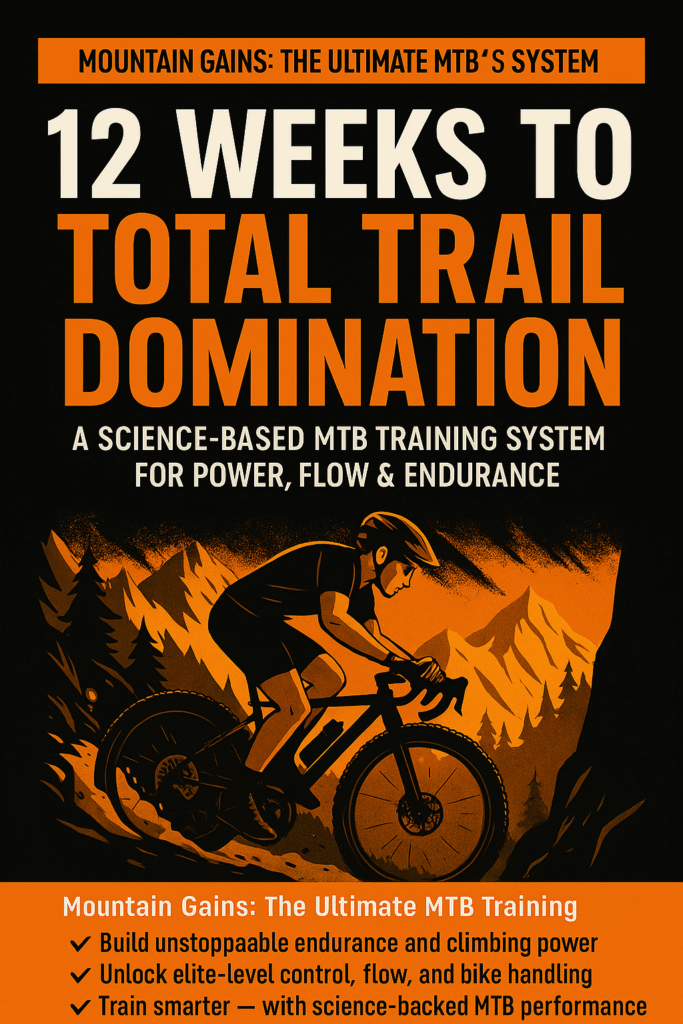
What you’re actually getting:
- Trail-specific strength protocols — gym and home-friendly, built for MTB mechanics, not generic fitness outcomes
- Mental performance drills — flow-state techniques and focus habits baked into the weekly plan, not bolted on as an afterthought
- Full recovery architecture — sleep optimization, fueling windows, hydration protocols. Because adaptation happens in recovery, not during the ride
- Performance tracking templates — log power outputs, endurance markers, and skill benchmarks so weekly progress is visible, not just felt
- Bridge Maintenance Plan — an off-season routine so you don’t lose what you built when winter hits or life gets chaotic
4–6 focused sessions per week. Built for people with jobs, families, obligations — not full-time pros. Science-backed, not trend-chasing. If you’ve been riding hard and going nowhere, this is the missing architecture.
Charlie Tried the HIIT + Home Training Combination. Here’s What Happened.
“Two years of consistent riding and I was genuinely stuck — like, embarrassingly stuck. Descents sloppy, climbs miserable, no idea what I was doing wrong. Started mixing HIIT sessions on the trainer — brutal, short, stupid-hard — with the home strength plan from Mountain Gains. Six weeks later? My trail times dropped. Not by a little. Climbs I used to dread became the part I actually looked forward to? Which still sounds insane to say. The HIIT restructured my engine, the strength work made me feel planted on the bike, and the recovery protocols in the ebook meant I wasn’t constantly wrecked between sessions. What changed wasn’t volume — I was riding less, actually. It was the quality of what I was doing between rides. That combination cracked something open.”
— Charlie, Trail Rider | 18 months into structured training
Our Purpose
We built this content because we’ve seen what happens when riders train without structure — years of effort producing months of results. That gap is not a talent problem. It’s a system problem. And system problems have system solutions.
We believe mountain biking is one of the most rewarding, physically demanding, mentally sharpening things a person can do. The sport deserves better than random workouts and hoping for speed. Whether you’re clipping into a mountain bike for the first time next weekend or you’ve been riding for a decade and still can’t figure out why the clock won’t move — start. Start structured, intentional, with Mountain Gains.
Follow the 12-week plan. Stack the HIIT. Build the strength. Train the brain. Track the numbers. Then go ride and feel the difference in your legs, your lungs, and your nerve.
We promise — the trail will feel different. You just have to show up for it.
Check our Full MTB Training Guide for more tips and info !
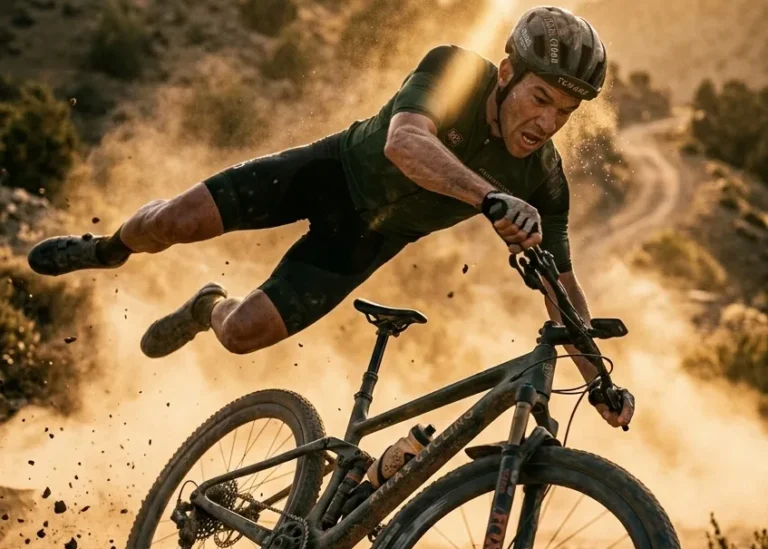




[…] is self-inflicted. You came into the season with a plan, maybe you’d been working on [How to Get Faster at Mountain Biking (Proven Training Blueprint)], stacking fitness, dialing your skills — and then one wrong line on a wet root and suddenly […]