
The Best Fluffy Pancakes recipe you will fall in love with. Full of tips and tricks to help you make the best pancakes.


Picture this: it’s kilometer 70 of an 80-kilometer ride, your legs feel like they’ve been stuffed with wet sand, and you’re doing that mental arithmetic — how far to the next turn? can I soft-pedal this bit? — that every cyclist knows but nobody wants to admit they do. That moment? It’s not a fitness problem. Not really.
The real bottleneck for most riders — and I mean the actual ceiling they keep smashing their heads against — is a combination of unmanaged fatigue accumulation, leaky mechanical efficiency, and fueling that’s months behind where their training actually is. Fix those three things together, and your cycling stamina doesn’t just inch forward. It jumps. Sometimes violently.
So. Let’s get into it.
1. Zone 2 Is the Base — But You’re Almost Definitely Riding It Wrong

Everyone nods along to “build your aerobic base” like it’s obvious. It isn’t. Most riders drift into the black hole — that dead zone between easy and hard where you’re working too much to recover and not enough to adapt. It’s like being stuck in second gear on a six-speed — you’re moving, sure, but nothing meaningful is happening under the hood.
True Zone 2 means 60–70% of your maximum heart rate. Conversational pace. Slightly boring, honestly. You should be able to narrate your ride out loud without gasping — if you can’t, you’re already too hard. Ride here for 45 to 90 minutes, multiple times a week, and your mitochondria start adapting in ways that interval sessions alone simply cannot replicate.
Be honest with yourself — are you actually riding Zone 2, or are you riding “what feels easy today” and calling it the same thing?
Stack this with a real cycling endurance workout structure — adding roughly 10–15 minutes to your long ride each week — and you start building the aerobic infrastructure that everything else plugs into. Without this base, intervals are just expensive suffering.
2. Intervals Work. But Only After the Foundation Is Laid — Not Instead of It
Here’s where ambition becomes the enemy. Riders discover tempo blocks and VO₂ sessions, get obsessed (understandably), and skip straight to the hard stuff. The result: moderate gains, elevated injury risk, and a frustrating plateau that arrives right when things should be getting good.
Periodization isn’t a buzzword — it’s the actual sequencing that makes training compound:
- Weeks 1–6 (Base block): Purely aerobic. Volume over intensity. Zone 2 anchors every week.
- Weeks 7–12 (Build block): Now you introduce threshold and tempo work — twice per week maximum. The base absorbs the stress.
- Weeks 13–16 (Peak block): VO₂ max efforts, race-simulation intervals, sharpening what you’ve built.
Skip step one, and steps two and three are built on sand. That’s not metaphor — it’s physiology.
3. Strength Training Is the Stamina Secret Nobody Wants to Do
Ask a group of cyclists whether they strength train consistently and watch how many suddenly need to check their phones. It’s uncomfortable because most of us know we should — and don’t. And it costs us, every single ride.
Stronger legs, stable core, firing glutes — these translate directly to fewer wasted watts per pedal stroke. When your stabilizing muscles are underdeveloped, your body compensates by recruiting everything else, and smaller muscle groups fatigue faster than you’d believe. By hour three, you’re not tired from the effort — you’re tired from the inefficiency.
If your glutes aren’t the primary driver on every downstroke — where is that energy actually coming from?
The fix isn’t complicated, just consistent. A cycling leg workout twice a week during base phase — squats, Romanian deadlifts, single-leg work — changes the conversation entirely. Pair it with a dedicated glute exercises for cycling routine, and you’ll feel the difference on climbs before you even notice it in your data.
4. You’re Fueling the Ride That Ended. Not the One You’re On.
This one stings a little. Most riders eat a big meal the night before, maybe have oats in the morning, and assume that covers it. It doesn’t. Not even close — especially past the 75-minute mark, which is roughly when glycogen stores start getting genuinely threatened.
What actually works:

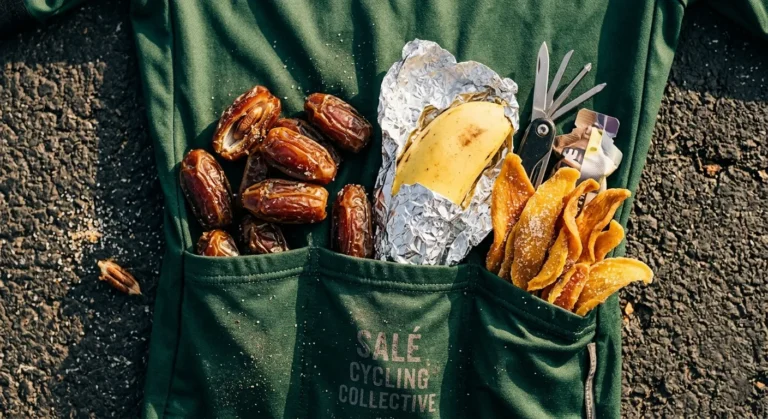
- Take in 30–60 grams of carbohydrates per hour on rides exceeding 75 minutes — gels, chews, real food, whatever you’ll actually eat mid-ride
- Hydration target: 500–750ml per hour in mild conditions. Hot Moroccan summer afternoon? Push that higher, aggressively
- Post-ride — and this window matters — consume 1.0–1.2g of carbohydrate per kg of bodyweight within 30 minutes of finishing
That last one isn’t just about today’s recovery. It’s about whether tomorrow’s session is good or completely ruined before it starts.
5. Recovery Isn’t Rest. It’s Where the Actual Adaptation Lives.
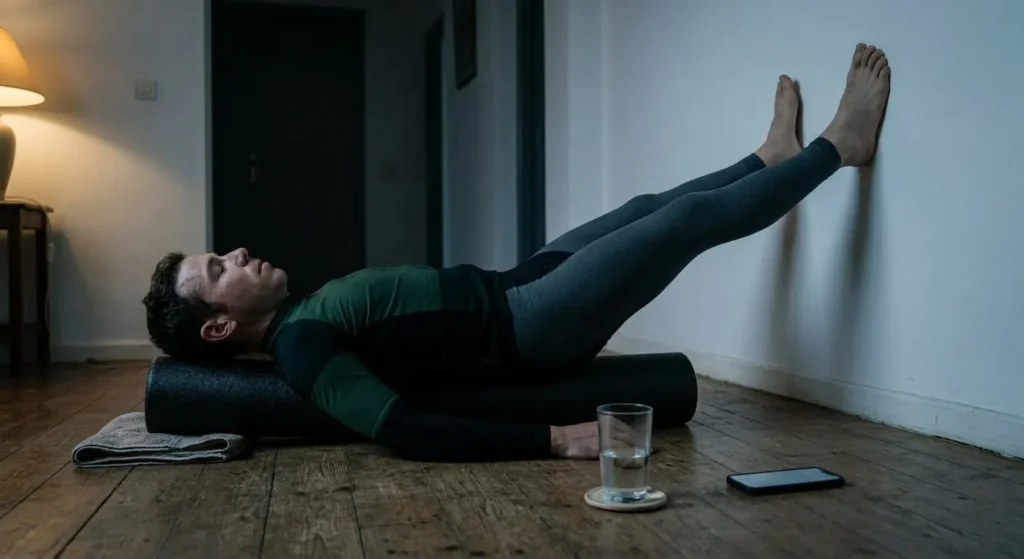
Training breaks tissue and depletes systems. That part everyone knows. What gets glossed over — constantly, frustratingly — is that the stamina gains don’t happen during the ride. They happen in the 48 hours after it, when your body is rebuilding something slightly better than what was there before. Interrupt that process and you’re not building fitness — you’re just accumulating fatigue with a cycling habit attached.
Sleep under 7 hours per night? Performance drops measurably. Hormonal adaptation blunts. Perceived effort goes up. Everything feels harder because physiologically, it is harder.
- 7–9 hours of sleep — not negotiable during training blocks
- 1–2 full rest days per week, actual rest, not “easy ride” disguised as rest
- Zone 1 spins — 20–30 minutes — the day after hard sessions flush lactate and move blood without digging deeper
- Track resting HR or HRV consistently; a rising trend over 3–4 days is your body asking, politely, to back off
Are you training harder because you’re fitter — or because accumulated fatigue has eroded your sense of what “normal effort” feels like?
Two years. I spent two full years just adding kilometers and going harder — and my stamina barely moved. Then I started strength sessions, actually fueled during rides instead of just before them, and took recovery weeks seriously for the first time. Broke through a plateau in about six weeks that I’d been stuck on for months. It wasn’t about doing more. Turns out I needed to do it smarter — which is an annoying thing to realize after two years, but here we are.
— Christopher · Community Member · Join the cycling community →
Okay — So What Now?
Here’s the thing about cycling stamina: it isn’t one lever. It’s five, all pulling in the same direction — aerobic base, structured intervals, functional strength, mid-ride fueling, and actual recovery. Most riders are working three of them and wondering why the other two keep costing them on the road.
Pick the one pillar you’ve been quietly avoiding. Commit to it — genuinely commit — for four weeks. Then add the next. Stamina compounds when the whole system works. And it starts, always, with the next ride you haven’t taken yet. Go take it.
Check out our free Full Cycling Training Guide for more tips and info !







[…] to your relationship with the bike over the next 30 days. You are going to builda phenomenal stamina over the bike […]
[…] into actual stamina — including the nutrition side that most people completely ignore — How To Increase Cycling Stamina is the most comprehensive thing we’ve put together on the […]
[…] the ambient anxiety that follows gluten-sensitive athletes through every meal. Building real cycling stamina across a season demands consistency. Consistency demands simplicity you can actually sustain when […]