The Best Fluffy Pancakes recipe you will fall in love with. Full of tips and tricks to help you make the best pancakes.


Here’s the thing nobody wants to admit—and I mean really admit, not just pay lip service to: you’ve probably been telling yourself you need like, years of cycling experience or this peak athletic condition before you can even think about enjoying the cycling benefits for seniors. Right? And that belief, that one single thought, has stopped more people from transforming their lives than I can count.
But what if I told you that’s backwards?
What if being a complete novice—someone who hasn’t touched a bike since their kids were little, or maybe ever—is actually the best position to be in. The truth is stranger than the myth, always is.
The whole “you need expertise” thing… it’s like this phantom created by watching Tour de France highlights or seeing those weekend warriors in their expensive gear whizzing past at 25 mph. But cycling for seniors? It has nothing—and I mean nothing—to do with that world. It’s not about speed or competition or mastering some arcane technical skill that takes a decade to learn.
It’s about waking up and feeling like your body belongs to you again. About boosting your health in ways that actually matter (not just numbers on a chart), and rediscovering that pure, uncomplicated joy of movement we all had as kids. Remember that?
And here’s something that’ll blow your mind: seniors who start cycling later in life—like way later, 60s, 70s, even 80s—often experience more dramatic health improvements than people who’ve been pedaling since the Reagan administration. Why? Because they’re building from scratch with clear goals. No muscle memory forcing them into bad habits, no ego telling them to push too hard. Just fresh possibility.
There was this study in the Journal of Aging and Physical Activity (published fairly recently) showing that seniors beginning low-impact programs like cycling see remarkable cardiovascular improvements, better joint mobility, enhanced mental wellbeing—all within 12 weeks. Twelve! Regardless of where they started fitness-wise. Your beginner status isn’t some deficit you need to apologize for; it’s a blank canvas.
Hidden Advantages Beginners Have (That Experienced Cyclists Would Kill For)
Starting cycling after 60 comes with these weird, counterintuitive advantages.
First—and this is big—you don’t have any ingrained bad habits. No outdated techniques from the 1980s cluttering up your muscle memory. You get to learn modern safety practices, proper ergonomic positioning, correct posture (which matters more than almost anything else) from square one. It’s like learning a language as a child versus as an adult, except in this case being the adult is better because you have the wisdom to learn correctly.
Second, your motivation is pure. Crystal clear. You want to feel better, move easier, live longer, stay independent—that’s it. No complicated ego stuff about Strava times or beating your college roommate’s distance record. This clarity of purpose? It drives consistency way more effectively than habit or pride ever could.
My friend Robert (62, started cycling last spring) put it perfectly over coffee: “I finally have nothing to prove except to myself.” And that mindset—that liberation from external expectations—it creates the kind of sustainable practice that those burn-out types never achieve.
Beginners also listen to their bodies. Like, really listen. You’re not trying to match some arbitrary standard or push through pain to hit a goal. You’re just… present with the experience, noticing how good it feels when you stop. That awareness prevents injury and builds this foundation of trust between you and the activity.
The Real Cycling Benefits for Seniors Nobody Emphasizes Enough
Before we get tactical with strategies (they’re coming, hold on), let’s talk about what you’re actually signing up for. Because understanding these cycling benefits for seniors—truly understanding them, not just intellectually but viscerally—that’s what’ll keep you going when motivation inevitably dips.
Physical Stuff: Your cardiovascular system gets stronger without pulverizing your joints, which if you’ve ever tried running after 60, you know is kind of everything. Studies indicate regular cycling slashes heart disease risk by up to 50% (fifty percent—that’s not a typo). It improves bone density when most activities are actively making it worse. Enhances balance and coordination, which translates directly to fewer falls, fewer fractures, fewer of those devastating injuries that steal independence.
And the leg strength? It makes carrying groceries easier, getting up from chairs smoother, playing with grandchildren less exhausting. The functional benefits ripple out into literally every corner of your daily life.
Mental/Emotional Territory: This is where cycling benefits for seniors get really interesting, maybe even more impactful than the physical stuff (controversial opinion, I know). Outdoor cycling floods you with vitamin D, triggers endorphin release, combats depression and anxiety in ways that prescription medications often struggle to match.
Research out of University of California showed seniors cycling regularly report 30% higher life satisfaction scores. Thirty percent! They also maintain sharper cognitive function—potentially delaying or even preventing dementia symptoms. Your brain thrives on the combination of physical movement, fresh air, visual stimulation, and that sense of achievement.
Social Dimension: Group rides, cycling clubs, chance encounters on bike paths… they create community in this organic way that gym memberships never quite manage. These social cycling benefits for seniors fight isolation (which is literally as dangerous as smoking 15 cigarettes daily, according to recent public health data). You’ll make friends who share your goals, find accountability partners, experience shared joy that extends way beyond the actual riding.
Humans are tribal creatures—we always have been, always will be—and cycling taps into that need beautifully.
4 Strategies That Actually Work for Beginners
1. Electric Bikes: Your Secret Weapon (Stop Feeling Guilty About Them)
E-bikes have completely revolutionized cycling benefits for seniors, and yet there’s still this weird stigma about them being “cheating.” Let me be clear: they’re not cheating. They’re equalizing.
Electric bikes let you dial in exactly how much assistance you need—hills become manageable instead of terrifying, distances that seemed impossible suddenly feel achievable. You start with high assistance (zero shame in that, seriously) and dial it down gradually as your fitness improves. It’s like having a personalized training program without hiring someone for $100/hour.
Here’s real data: a Transportation Research study from 2023 found seniors using e-bikes cycled 50% more frequently than those on traditional bikes. Why? Because it stayed fun instead of becoming torture. You go farther, see more, build confidence faster without destroying yourself in the process.
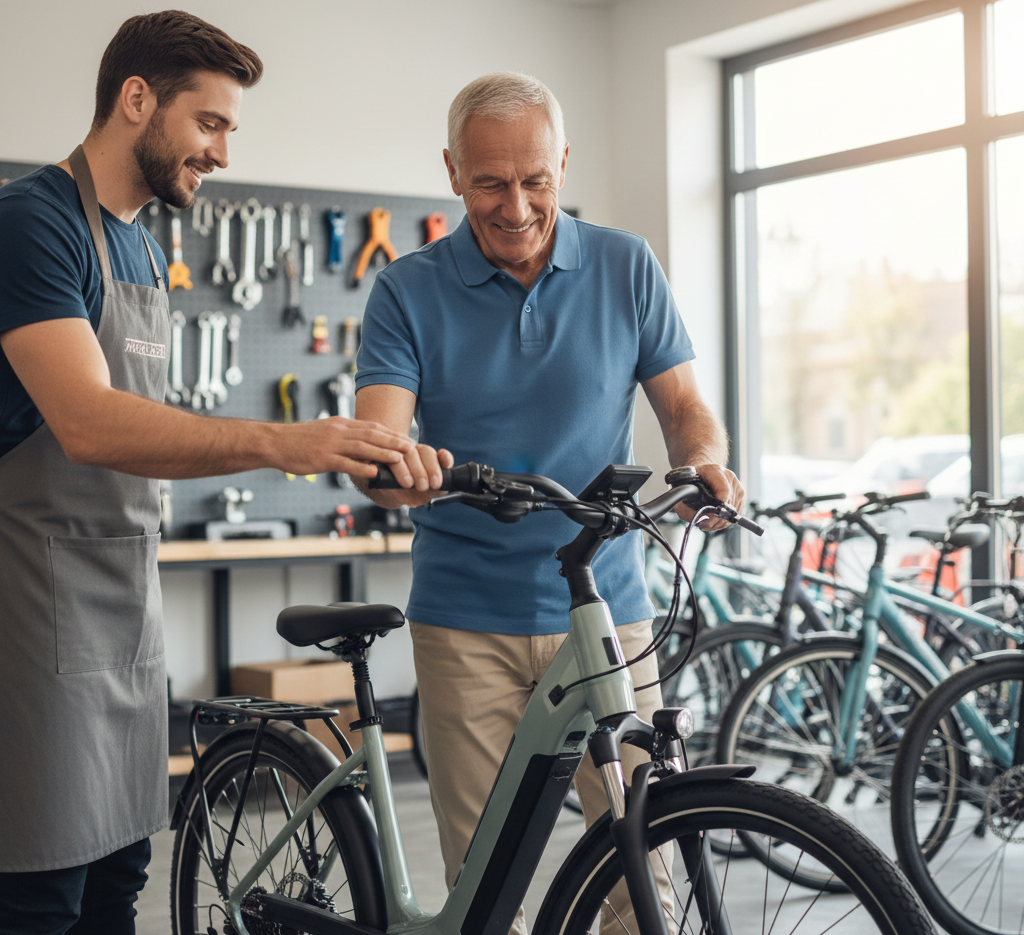
Go test ride some models at your local bike shop—tell them straight up you’re a senior beginner. They’ll appreciate the honesty and give you proper guidance on fit, which matters more than any spec sheet.
2. The 10-Minute Method (Sounds Stupid Simple, Works Stupidly Well)
Forget everything you think you know about exercise duration.
Start with 10 minutes. Three times weekly. That’s it—shorter than most YouTube videos you’ve watched recently. This micro-commitment bypasses all the psychological resistance while delivering legitimate, measurable cardiovascular benefits. Recent research confirms short consistent sessions improve heart health almost as effectively as longer workouts for beginners, which completely upends the conventional wisdom.
But here’s the magic trick: those 10 minutes expand naturally. They just do. After two weeks you’ll want more. After a month, 25-30 minute rides feel easy, or at least manageable. This gradual progression prevents both burnout and injury while building ironclad confidence in your abilities.
Set a timer, ride around your neighborhood (nowhere fancy required), celebrate every single session even when you feel slow. You’re adding years to your life 10 minutes at a time—and unlike most things that sound too good to be true, this one actually delivers.
Sometimes the smallest actions create the biggest transformations. Or however that saying goes.
3. Comfort Is King: Safety Over Speed, Always
Beginners have this advantage—this wisdom earned through living—to prioritize safety over performance, and honestly? This approach maximizes long-term cycling benefits for seniors better than any aggressive training plan.
Get yourself a comfortable cruiser or hybrid bike with upright positioning that doesn’t wreck your back and neck (your future self will thank you profusely). Add a cushioned seat because those racing saddles are designed by sadists, ergonomic handlebars, step-through frame for easy mounting. That step-through design? It’s not just convenience—it’s preventing falls and injuries that could sideline you for months.
Safety gear is non-negotiable: properly fitted helmet (your brain only gets one skull), bright visible clothing, lights, rearview mirror. Choose flat paved paths or quiet streets initially—you don’t need to conquer steep trails or navigate rush hour traffic until you’re ready, and you’ll know when that is. Your body will tell you, trust it.
Many communities run dedicated senior cycling programs on closed courses, which provide this perfect low-pressure environment for building skills. It’s like a practice space where the stakes are zero and the learning is maximum.
When cycling feels genuinely good—not just “good for you” but actually enjoyable—it becomes sustainable. And sustainability is everything in this game.
4. Find Your Tribe: Communities Accelerate Everything
Look, you don’t need personal expertise when you can tap into collective wisdom—it’s crowdsourcing your knowledge base. Senior cycling clubs provide instant access to literal decades of combined experience, plus accountability and encouragement that fuel consistency better than willpower ever could.
These communities welcome beginners with open arms (the experienced members love helping newbies, gives them purpose). Search through community centers, local bike shops, Meetup app. Many areas offer beginner-specific rides with slower paces, frequent breaks, zero judgment.
If in-person groups don’t exist near you—and depending on where you live, they might not—online communities still provide valuable route recommendations, equipment advice, motivational support when you need it.
The social cycling benefits for seniors in these groups often become as crucial as the physical exercise, maybe more so. You’ll forge friendships, discover routes you never knew existed right in your backyard, never feel isolated on this journey. Plus group riding dramatically improves safety and confidence—there’s primal comfort in numbers that we can’t logic away.
Your Expertise Will Develop (But You Don’t Need It Yet)
The beautiful paradox of cycling benefits for seniors: expertise isn’t required for transformation. Every pedal stroke strengthens your heart, clears mental fog, reconnects you with the physical world in ways that climate-controlled gyms just… can’t replicate.
Those senior cyclists you admire today—the ones who seem so confident and capable—they were beginners once too. Wobbly, uncertain, breathing hard after short distances, wondering if they’d made a terrible mistake.
Your skills will grow through repetition. It’s inevitable, like compound interest. Within weeks, getting on the bike feels natural. Within months, you’re tackling routes that seemed laughable before. After one year, you’ll barely remember being hesitant. But future milestones aren’t the point—it’s the immediate benefits from day one: elevated mood, increased energy, less joint pain, that profound satisfaction of choosing yourself and your health.
That matters now, today, not someday.
Start Now: Your Ride Is Literally Waiting
Stop waiting for perfect timing, perfect equipment, perfect fitness levels. Perfect is a lie we tell ourselves to justify inaction.
The cycling benefits for seniors are available right now, exactly as you are—with all your legitimate concerns and valid hesitations and very real limitations.
This week (not next month after things “calm down,” not post-holidays, not after you’ve “gotten in better shape first”)—take ONE concrete step:
Visit a bike shop and test three different models including an e-bike. Tell them you’re a senior beginner—most shops love helping newcomers because it reminds them why they’re in business.
Find senior cycling groups nearby and attend one intro session. Show up, introduce yourself, ask every question bouncing around your head (none are stupid). You’ll be welcomed.
Put a 10-minute ride on tomorrow’s calendar. Lay out comfortable clothes and helmet tonight—make it effortless for future you. When morning arrives, you’ll have opportunity waiting instead of obstacles.
The ultimate guide to cycling benefits for seniors isn’t some manual to memorize chapter by chapter—it’s a lived experience. Breath by breath, pedal by pedal. Your body was designed by millions of years of evolution for movement, your mind craves fresh air and challenge, your spirit needs the freedom only cycling delivers. That wind-in-hair, sun-on-face, childlike liberation kind of freedom.
Age gave you something young cyclists lack: wisdom to know life is precious and finite and every healthy day counts more than you realized at 30.
Don’t waste another week on the sidelines constructing elaborate excuses. Your bike is waiting—dusty in the garage or gleaming in a shop window. Your health is waiting. And your best years? They’re waiting too, and they might shock you with their richness.
Start today, ride tomorrow, transform your life one revolution at a time.
The road ahead belongs to you—and here’s what you need to hear: you’re ready. You always were, you just didn’t know it yet.
Check our Cycling Training Guide for more tips and info !