
The Best Fluffy Pancakes recipe you will fall in love with. Full of tips and tricks to help you make the best pancakes.


Let’s talk about the lies you’ve been told.
Not malicious lies exactly—more like inherited wisdom that’s been passed down so many times nobody bothers questioning it anymore. The kind of “truths” about HIIT training that sound reasonable, feel safe, and keep you spinning your wheels (literally) without making real progress.
Here’s what nobody wants to admit: conventional wisdom in fitness is often just… conventional. Not wise. It’s designed for ideal conditions, perfect schedules, and people who don’t actually exist. You know the type—mythical athlete who has two hours daily, zero work stress, a personal chef (wouldn’t that be nice?), and the recovery capacity of a 20-year-old Olympian.
But you’re not that person. You’re busy—genuinely, exhaustingly busy—juggling work deadlines, family stuff, that thing called sleep you vaguely remember experiencing once, and somewhere in the chaos you’re trying to squeeze in workouts that actually move the needle. The old rules weren’t written for you. And frankly? They’re holding you back more than helping.
“Indoor Gains: The Ultimate Home Cycling Plan” evolved specifically to address real-world constraints because effective training isn’t about following rules blindly—it’s about understanding principles and adapting them intelligently to your actual life. As HIIT continues dominating indoor cycling (and for good reason, it works when you do it right), it’s time to torch some sacred cows cluttering your path.
Ready to break free? Let’s dismantle three outdated rules probably sabotaging your training right now.
Outdated Rule #1: “HIIT Sessions Must Be at Least 45-60 Minutes Long”

The tyranny of duration. Somewhere along the way we decided workouts don’t “count” unless they cross some arbitrary time threshold. Forty-five minutes minimum became gospel, an hour became the gold standard, and anything less? Just a warm-up, apparently.
Wrong. Spectacularly wrong.
This rule came from an era when volume was king—when more was always better and training time directly correlated with results. But HIIT fundamentally changed that equation, and yet… we’re still clinging to duration requirements like they’re carved in stone tablets Moses brought down.
Why it doesn’t work: True high-intensity interval training is, by definition, unsustainable for long periods. If you can maintain “high intensity” for 60 minutes straight, you’re not doing HIIT—you’re doing moderately hard steady-state work with a fancy acronym slapped on it. Real HIIT demands everything you’ve got in short, brutal bursts. The magic isn’t in the duration; it’s in the intensity and the metabolic disruption you create.
For busy people (which is everyone, let’s be honest), the 45-60 minute requirement becomes a barrier. You skip workouts because you “don’t have time for a real session”, you half-ass longer workouts while watching the clock tick. You sacrifice quality for quantity and wonder why results plateau like you’ve hit an invisible ceiling.
The modern approach: Embrace concentrated suffering. A properly executed 20-25 minute HIIT session—with genuine max efforts and adequate recovery intervals—delivers superior results to a mediocre hour-long slog. “Indoor Gains” emphasizes workout density and intensity over duration because the science backs it up: short, intense sessions trigger massive metabolic responses, improve VO2max efficiently, and actually fit into human schedules.
Think espresso versus watered-down coffee. You want the concentrated shot that kicks you in the face, not the oversized cup of weak brew you sip for an hour. Twenty minutes of absolutely crushing it beats forty-five minutes of “pretty hard” every single time—your cardiovascular system doesn’t have a time clock, it responds to stimulus intensity.
Outdated Rule #2: “You Need 48-72 Hours Between HIIT Sessions”
The recovery dogma. Deeply entrenched, constantly repeated, and—here’s the kicker—based on research studying populations doing much longer, more voluminous HIIT protocols than what modern busy athletes actually need or do.
This rule assumes every HIIT session destroys you equally, requires massive recovery, and that doing them closer together guarantees overtraining. Sounds cautious and responsible, which is why it persists despite not matching reality for most people.
Why it’s limiting: If you’re only doing HIIT twice weekly with 72-hour gaps, you’re training roughly 8-10 times monthly. That’s not enough frequency to drive significant adaptation, especially if these are your primary workouts. You lose the compounding effect of consistent stimulus, your body never fully adapts to handling intensity regularly, and every session feels like starting over because… you kind of are.
For busy people trying to maintain fitness with limited time, this rule is devastating. It suggests you can’t train back-to-back days even with shorter sessions, can’t mix intensities intelligently throughout the week, and basically need bubble wrap between workouts.
The smarter way: Recovery requirements depend on session intensity, duration, volume, and YOUR individual capacity—not arbitrary calendar rules. A 20-minute HIIT session with four max intervals doesn’t require the same recovery as a 90-minute threshold torture fest (I’ve done both, trust me, the difference is massive).
“Indoor Gains” teaches undulating intensity—varying your HIIT sessions between absolutely brutal efforts and “hard but manageable” sessions so you can train more frequently without accumulating excessive fatigue. You might crush it Monday, do moderate HIIT Wednesday, another hard session Friday. That’s three quality workouts in five days, which traditional rules would deem impossible or reckless or both.
Your body’s more resilient than you’ve been told. It adapts to frequent stimulus if you’re strategic about intensity distribution. The key isn’t avoiding back-to-back hard days—it’s understanding the spectrum of “hard” and manipulating variables intelligently.
Stop letting arbitrary recovery rules dictate training frequency. Start listening to your actual body—performance, sleep quality, motivation levels, how you feel during workouts. Not what some outdated chart says you “should” do.
Outdated Rule #3: “HIIT Requires Complex Periodization and Planning”
The periodization obsession has infected amateur athletics like a contagious virus. Suddenly everyone needs 12-week mesocycles, precisely calculated training phases, elaborate spreadsheets tracking volume and intensity, periodization schemes that would make an Olympic coach nod approvingly.
For professional athletes with singular goals? Sure, knock yourself out. For busy people trying to stay fit and get faster? This is overthinking masquerading as sophistication.
Why it’s counterproductive: Complex periodization assumes consistency—that you’ll execute the plan as written, that life won’t interfere (ha!), that your recovery and stress levels remain stable. For busy people, this assumption is laughable. Work explodes unexpectedly, kids get sick, sleep suffers, travel happens, and suddenly your carefully planned mesocycle is in shambles and you feel like a complete failure.
The rigid structure becomes the enemy. You skip workouts because they don’t “fit” the current phase. You stress about whether you’re in “build” or “peak” period. Also you lose the forest for the trees.
The liberating alternative: Embrace flexible, principle-based training instead of rigid periodization. Focus on hitting key workout patterns regularly rather than following predetermined phases. Have a handful of proven HIIT sessions—max intervals, tempo work, mixed-intensity pyramids—and rotate through them based on how you feel, what time you have, and what sounds tolerable that day.
“Indoor Gains” advocates what I call “chaos periodization”—maintaining variety and progression without being enslaved to elaborate planning. Some weeks you crush three hard sessions; some weeks life happens and you manage one quality workout and call it a win. That’s not failure, that’s reality.
This isn’t lazy or unstructured—it’s intelligently adaptive. You’re still progressing, still challenging yourself, still accumulating training stimulus. You’re just not pretending your life allows the kind of control traditional periodization demands (which, let’s face it, it doesn’t).
Forge Your Own Damn Rules
Here’s the uncomfortable truth: most training rules weren’t designed for you. They were created for ideal conditions, traditional schedules, and theoretical athletes who don’t juggle real-world chaos.
But you’re not theoretical. You’re real, you’re busy, and you deserve an approach that actually works within your constraints instead of guilt-tripping you for not having unlimited time and energy (which nobody has, despite what Instagram suggests).
The future of HIIT indoor cycling for busy people isn’t about following outdated dogma—it’s about understanding fundamental principles and applying them intelligently to your unique situation. Shorter, more intense sessions that fit your schedule. Training frequently with variable intensity instead of spacing sessions according to arbitrary rules. Flexible patterns instead of rigid periodization that crumbles when life happens.
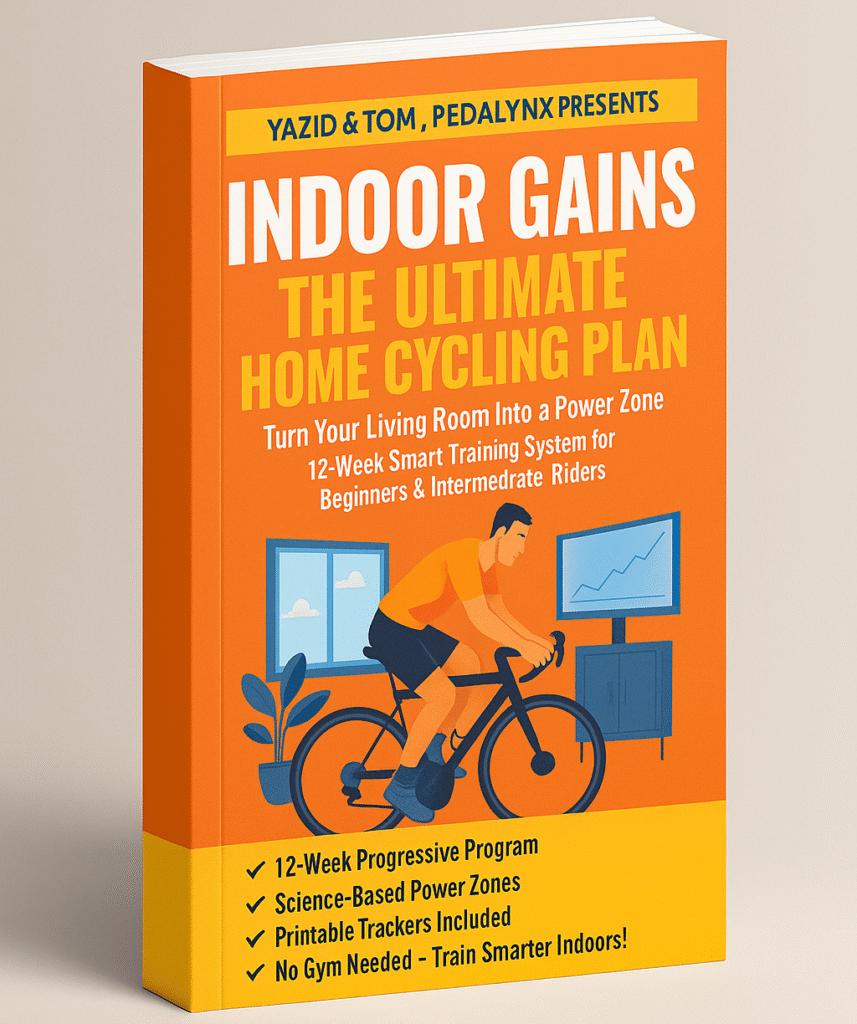
“Indoor Gains: The Ultimate Home Cycling Plan” gives you the framework, but you write the actual rules. Start questioning the “shoulds” that don’t serve you. Stop apologizing for 20-minute workouts that leave you gasping. Quit feeling guilty about training consecutive days when your body feels strong.
Your rules should reflect your reality—not someone else’s ideal conditions that don’t exist.
Here’s your call to action: this week, break one outdated rule deliberately. Do that 20-minute absolute burner instead of skipping because you “only” have 20 minutes. Train back-to-back days and notice you don’t actually explode. Choose your workout based on how you feel rather than what your periodization chart demands.
Notice what happens, you survive, you might even thrive.
Break the rules. Forge your own. Get faster despite the chaos.
Now get on that bike and show conventional wisdom what rebellious consistency looks like.