
The Best Fluffy Pancakes recipe you will fall in love with. Full of tips and tricks to help you make the best pancakes.


Here’s what nobody wants to admit out loud: Indoor cycling gets sold like some kind of fitness magic bullet—but there’s this whole universe of truth hiding right behind those Instagram-perfect marketing campaigns that could actually make you way better at this.
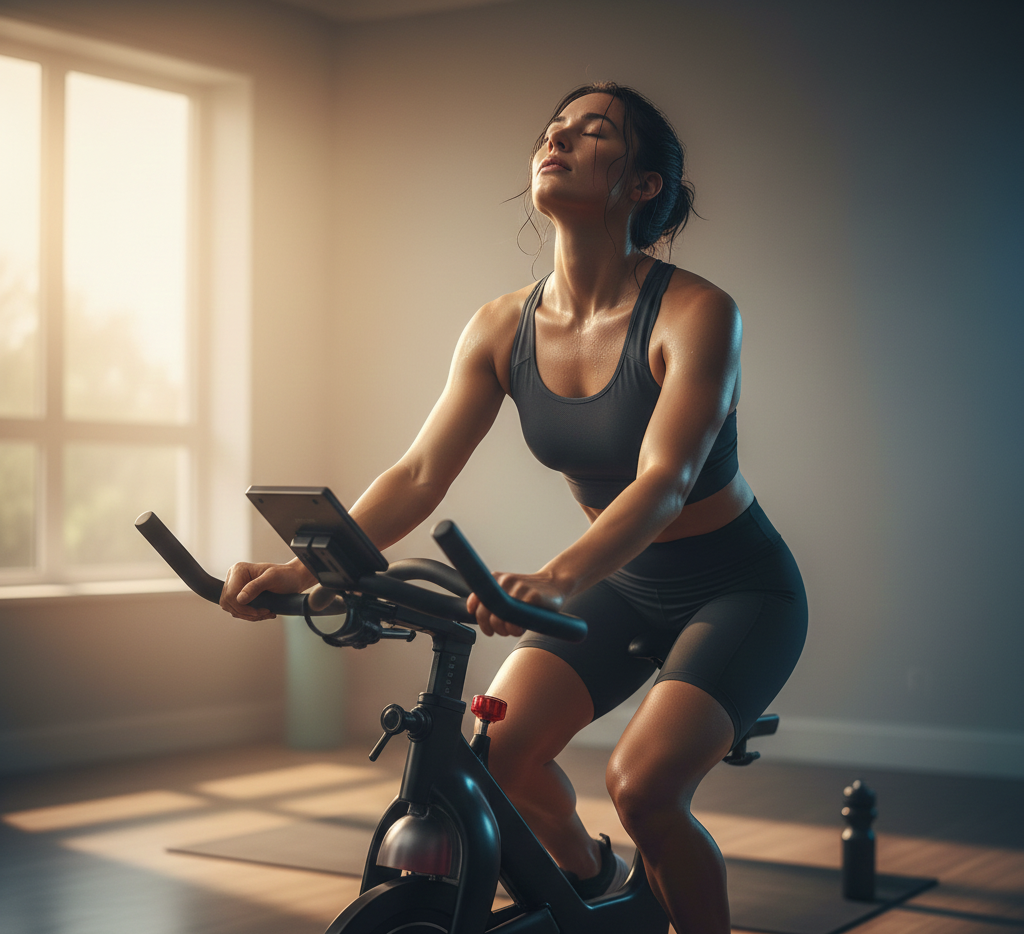
Every fitness trend comes packaged with promises. Indoor cycling basically exploded into mainstream consciousness wrapped in aspirational marketing, celebrity endorsements (remember when everyone suddenly had a Peloton during lockdown?), and this absolutely seductive promise of total transformation. Those commercials where everyone’s glistening, euphoric almost. The tribal energy pulsing through spin studios with instructors shouting motivational mantras while you’re dying. It screams: clip in, pedal hard, become your best self.
But something happens around month three, maybe two if you’re really going at it.
The endorphin high fades—and I mean really fades—you’re sitting there wondering why your knees hurt in ways that perky instructor with the curated playlist never once mentioned. You get bored despite the music. Your body looks… exactly the same. Maybe worse if you’re eating more because “I earned it” (guilty).
They’re not lying to you. They’re just not talking about the stuff that genuinely matters.
Let’s get brutally honest about three unspoken truths that change everything.
Indoor Cycling Benefits For Weight Loss
Walk into any premium spin studio—SoulCycle, Flywheel, those boutique places charging insane amounts per class—and you’ll see it. Lean bodies, muscular definition, quads that look carved. The implicit promise just hangs there: do this enough times, you’ll look like that too.
The uncomfortable reality? Those bodies got built with so much more than just indoor cycling.
And honestly, I wish someone had told me this upfront.
Indoor cycling is phenomenal for cardiovascular fitness—genuinely exceptional. A vigorous 45-minute session burns somewhere between 400-600 calories depending on how hard you actually push (not how hard you think you’re pushing). It strengthens your heart in measurable ways, improves VO2 max—that’s your body’s ability to use oxygen efficiently—enhances lower body endurance, floods your system with those feel-good endorphins. These are legitimate, research-backed indoor cycling benefits that improve your health markers.
But here’s the part the glossy marketing conveniently forgets: indoor cycling is primarily a cardiovascular and muscular endurance activity, not some comprehensive muscle-building or serious fat-shredding program. You’re working the same muscle groups over and over. Quads, hamstrings, glutes. Repetitive motion pattern. Your upper body? Just… holding on for dear life. Your core engages sure, but not with the progressive overload you’d actually need for visible ab definition (that everyone wants but nobody wants to earn properly).
What indoor cycling actually does for your body:
• Cardiovascular endurance improvements – Your heart becomes more efficient at pumping blood, resting heart rate drops by 5-10 beats over maybe 8-12 weeks of consistency
• Lower body muscular endurance – Quads, hamstrings, glutes develop this fatigue resistance that lets you keep going when before you’d be toast
• Solid caloric expenditure – Those 400-600 calorie burns per session contribute to energy deficit when—and this is crucial—combined with actual nutrition management
• Metabolic adaptations happening – Better insulin sensitivity, improved glucose metabolism, your body just processes energy more efficiently
• Cellular level changes – Increased mitochondrial density means your cells literally grow more “power plants” for producing energy
But what it doesn’t do as effectively? Build significant muscle mass anywhere. Create dramatic muscle definition without supporting resistance training. Automatically result in visible fat loss without dietary changes happening simultaneously.
The instructors with those incredible physiques? They’re teaching maybe 8-12 classes every week (which is basically a part-time job), lifting weights on off days, doing yoga or pilates, eating in precise alignment with their body composition goals, and often—this part matters—they have years of athletic background before they ever clipped into an indoor bike.
I remember my first three months like it was yesterday… I was going four times weekly! Pushing so hard! Following all the metrics! And my body just looked… the same. Maybe slightly different in my legs? But nothing remotely close to what I expected based on the marketing.
Why this truth goes unspoken: The fitness industry literally thrives on aspiration. If studios led with “this will significantly improve your cardiovascular health and muscular endurance in ways that reduce heart disease risk”—which is TRUE and genuinely IMPORTANT—they’d sell way fewer memberships than they do with those dramatic before-and-after transformation photos.
The mindset shift you desperately need: Stop measuring indoor cycling’s value by aesthetic outcomes alone. Just stop doing that to yourself. The real indoor cycling benefits are internal and completely invisible—a stronger heart pumping blood more efficiently, lungs processing oxygen more effectively, reduced risk of cardiovascular disease and stroke, enhanced mental clarity throughout your day. These invisible adaptations literally add years to your life and quality to those years.
The counter-strategy that works: If body composition is your actual goal (and there’s zero shame in that), treat indoor cycling as one component of a comprehensive program—not the entire thing. Add resistance training 2-3 times weekly to build actual muscle tissue. Manage your nutrition with real intention, not just vaguely “eating healthy.” Use your bike for what it genuinely does best—building cardiovascular capacity and creating calorie burn—while leveraging other training modalities for balanced development.
Indoor Cycling Mental Health Benefits
Here’s what literally every beginner indoor cyclist experiences but rarely admits out loud: the first 6-8 sessions are frequently… awful. Like genuinely terrible.
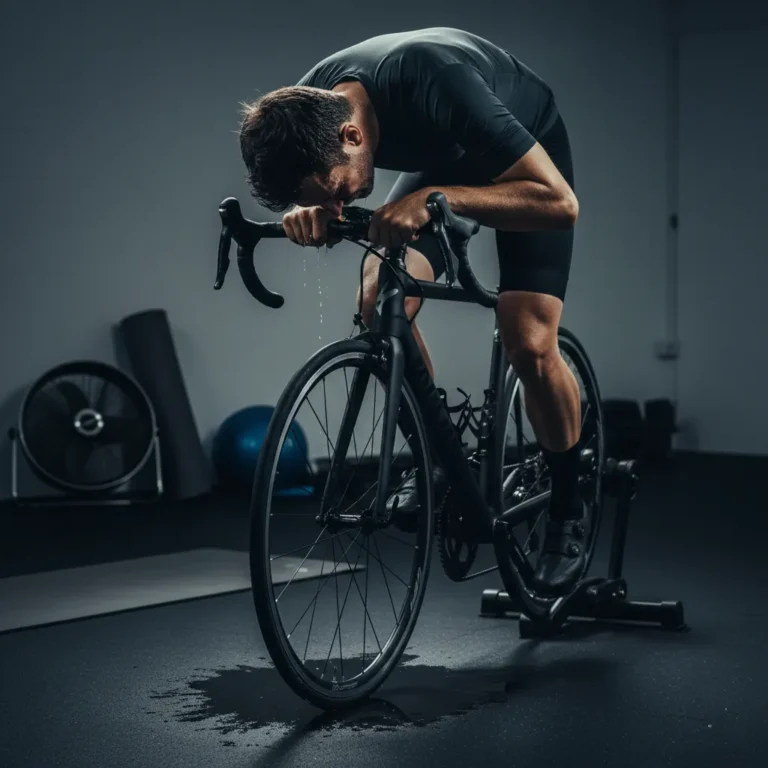
Your sit bones ache in ways you didn’t know bones could ache. Your legs burn—not the good motivational burn, the “am I having a medical emergency?” burn. You feel completely uncoordinated while everyone else seems to somehow know choreography you’ve never seen. You question your fitness level, your bike setup, honestly… your entire life choices.
But—and this is where it gets really interesting—the mental health benefits of indoor cycling are extensively documented in actual peer-reviewed research. Reduced anxiety levels. Improved overall mood. Enhanced stress resilience. Better sleep quality. Increased self-efficacy (that’s your belief in your ability to accomplish hard things). Regular cyclists report genuinely significant improvements in depression symptoms, anxiety management, overall psychological well-being.
The combination of rhythmic movement, endorphin release, goal achievement cycles, and community connection creates this powerful cocktail for mental health. Like, genuinely powerful in ways that surprise people.
But there’s this gap. This uncomfortable gap between the promise and the actual payoff—and it gets filled with discomfort, biological adaptation, and a level of persistence most people don’t anticipate going in.
Your body needs legitimate TIME to adapt. Cardiovascular system building new capillaries—literally growing new blood vessels. Muscles developing specific endurance adaptations. Nervous system learning efficient movement patterns (which is why you feel so awkward at first). This adaptation period takes somewhere between 4-6 weeks of consistent riding, sometimes longer depending on your starting point.
During those early weeks, SO many people just… quit. They conclude that indoor cycling “isn’t for them” or they’re “just not good at it naturally.” They completely miss the mental health benefits because they never stay long enough for their neurobiology to actually respond to the consistent stimulus.
And that’s kind of tragic when you think about it.
Key mental health improvements from consistent riding:
• Anxiety reduction that’s measurable – Lower cortisol levels, increased GABA production (that’s the calming neurotransmitter your brain needs)
• Depression symptom relief – Endorphin release combined with sense of accomplishment creates mood elevation that lasts way beyond the workout itself
• Stress resilience building – Learning to tolerate physical discomfort literally builds your psychological capacity to handle emotional discomfort too
• Sleep quality enhancement – Physical fatigue combined with stress hormone regulation means you fall asleep faster and stay asleep better
• Cognitive function boost – Increased blood flow to your brain enhances focus, memory, mental processing speed throughout your entire day
• Self-efficacy development – Consistently achieving challenging goals transfers to confidence in completely unrelated life areas
Why this truth goes unspoken: Marketing emphasizes instant gratification and immediate transformation. Those 30-day challenges. Quick-fix promises. Acknowledging that the REAL benefits require weeks of potentially uncomfortable practice just doesn’t align with viral marketing campaigns or getting you to buy that class package before the trial ends.
The mindset shift: Reframe the adaptation period as part of the actual benefit itself, not some annoying barrier you have to suffer through to get to the “real” benefit. The mental resilience you build by riding through discomfort is itself a genuinely transferable life skill. You’re not just training your body to pedal more efficiently—you’re training your mind to tolerate discomfort, delay gratification, commit to processes that don’t offer immediate rewards.
That applies to basically everything worth doing.
The counter-strategy: Commit to exactly 12 sessions before you even evaluate whether indoor cycling “works” for you. Just 12. Get proper bike fitting early—saddle height, position, handlebar reach—to minimize unnecessary discomfort (because some discomfort is necessary for adaptation, but some is just bad setup causing problems). Start with shorter sessions, maybe 20-30 minutes, at less intense effort levels. Track subjective metrics like energy throughout your day, sleep quality, how you respond to work stress—not just performance markers. Lot of riders notice mental health improvements BEFORE physical fitness gains become obvious.
Indoor Cycling Injury Prevention Benefits: When Biomechanics Matter More Than Your PR
Indoor cycling has this quiet epidemic nobody really discusses openly: overuse injuries that develop so gradually, go completely unaddressed because “it’s low-impact so I must be fine,” and eventually sideline enthusiastic riders entirely.
Knee pain. Lower back discomfort that won’t quit. IT band syndrome—that’s the outside of your knee feeling like it’s literally on fire.
These injuries don’t emerge because indoor cycling is inherently dangerous—it’s not. They emerge because the controlled, repetitive nature of the activity amplifies any biomechanical inefficiencies in your setup or movement patterns. Unlike outdoor cycling where terrain variation creates movement diversity, indoor cycling involves thousands upon thousands of repetitions of the exact same motion pattern.
If that pattern is even slightly misaligned? The accumulation creates big problems.
I developed IT band issues around month four. Thought I could just ride through it—absolutely wrong decision that cost me three weeks off the bike entirely.
The low-impact nature gets positioned as this universal benefit—easier on joints than running, accessible for people with existing joint issues. This is true, but it creates a false sense of invincibility. Riders assume no ground impact equals no injury risk whatsoever. They ignore pain signals. Ride through discomfort because the instructor’s shouting about pushing through barriers. Never get professional bike fitting because “it’s just a stationary bike, how complicated can it be?”
Benefits from proper form and setup:
• Joint-friendly cardiovascular training – Non-impact nature genuinely protects knees, hips, ankles from the repetitive stress of running or jumping
• Lower body strength development – Controlled resistance builds quad, hamstring, and glute strength without the eccentric loading damage
• Core stabilization training – Maintaining proper position on the bike requires sustained core engagement that improves postural strength
• Bone density maintenance – The loading patterns, while not weight-bearing, still stimulate bone remodeling and help preserve density
• Mobility preservation – Hip and knee range of motion gets repeatedly practiced through the pedal stroke movement
Why this goes unspoken: Acknowledging injury risk directly contradicts the “safe, low-impact, accessible to literally everyone” marketing message that attracts customers initially. Many instructors genuinely lack formal biomechanics training. Studios want riders pushing hard, achieving PR metrics, feeling accomplished enough to buy another package.
The mindset shift: View your body as the primary equipment, not the bike. The bike is just a tool. Your kinetic chain is the actual system that generates power and adapts to training stress. Proper setup and body awareness isn’t optional maintenance—it’s foundational work determining whether you sustain practice for years or just months before something breaks.
The counter-strategy: Get professional bike fitting within your first month—literally the best money you’ll spend on your practice. Develop body literacy through regular self-assessment. Where’s the tension? What hurts after? Pain is information, not weakness to ignore. Add complementary movement—hip flexor stretching, glute activation work, thoracic mobility exercises. Practice intelligent load management because more isn’t always better, it’s frequently worse. Progressive overload should be gradual, not sudden jumps for special theme rides.
The Liberation: What Changes When You Actually Know The Truth
Indoor cycling benefits those who approach it with patience, intelligence, and genuinely realistic expectations.
Commit to 12 weeks—three rides weekly minimum. But do it strategically:
Weeks 1-2: Focus exclusively on bike setup and finding sustainable comfort. Ignore metrics completely. Ignore the leaderboard.
Weeks 3-6: Build consistency while monitoring for developing discomfort patterns. This is adaptation—expect challenges, ride accordingly.
Weeks 7-12: Push intensity strategically. Track how you feel outside workouts—energy, stress response, sleep quality, mood throughout your day.
Add basic strength training twice weekly. Measure success by internal markers: how stairs feel, resting heart rate, stress handling capacity, sleep quality, recovery speed between efforts.
When someone asks why you ride, tell them the actual truth. Because your heart is measurably stronger. Your mind is demonstrably clearer. Your stress tolerance is noticeably higher. And you’ve built the discipline to commit to something genuinely difficult even when it wasn’t immediately rewarding.
The bike is waiting. Not to transform you into someone else—you’re already enough—but to reveal capabilities you already possess but haven’t fully developed yet.
Clip in with clarity. That’s where the real work actually begins.
Read our Indoor Cycling Guide for more tips !



Very great post. I simply stumbled upon your weblog and wanted to say that I have truly
enjoyed browsing your weblog posts. After all I’ll be subscribing for your rss feed and I hope you write again very
soon!
If you would like to take much from this paragraph
then you have to apply such strategies to
your won web site.
Hi there, I found your blog by the use of Google whilst searching
for a similar subject, your web site got here up, it seems to be good.
I have bookmarked it in my google bookmarks.
Hello there, simply became alert to your blog thru Google, and located that it is truly informative.
I am going to be careful for brussels. I will be grateful should you
continue this in future. A lot of other folks might be benefited out of your writing.
Cheers!
Hi Trista, We are glad our website gives you value ! Feel free to check more of our indoor cycling training blogs!
I’m not sure the place you are getting your information, however good topic.
I must spend a while learning much more or working out more.
Thank you for fantastic information I was on the lookout for this info for my mission.
May I simply say what a comfort to find someone who truly
understands what they are talking about on the web. You definitely realize how to bring a problem to light and make it important.
A lot more people really need to check this out and understand this
side of the story. I was surprised you aren’t more popular given that you surely
possess the gift.