
The Best Fluffy Pancakes recipe you will fall in love with. Full of tips and tricks to help you make the best pancakes.


There’s this secret that’s been making the rounds through mountain biking’s inner circles—not the Instagram-famous riders necessarily, but the ones who consistently clock times that make you question reality. It’s not some new carbon layup or a tire compound that costs more than your groupset, this is way more powerful than that, and honestly? It’s been hiding in plain sight this whole time, the mtb analytics.
The fastest riders aren’t the ones suffering the most (though they’ll tell you they are, because, you know, bike culture). They’re the ones who’ve figured out something that most weekend warriors and even plenty of Cat 1 racers completely miss.
The secret? Micro-interval power distribution analysis combined with technical terrain mapping.
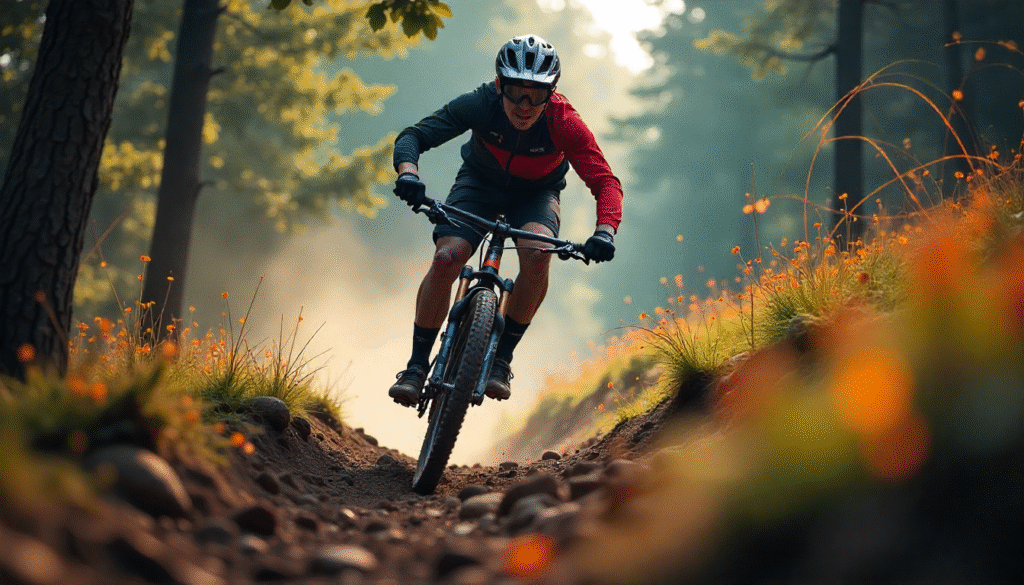
While everyone’s obsessing over their FTP—checking it compulsively like it’s some magic number that’ll unlock speed—elite mountain bikers are looking at something completely different. They’re examining exactly how they distribute power across the chaotic, violent, absolutely unpredictable demands of actual trail riding. Then systematically optimizing those specific energy signatures. This isn’t about suffering more, it’s about suffering precisely. Finding those exact moments where watts matter most and plugging the energy leaks that are killing your speed without you even realizing it’s happening.
Why This Game-Changing Thing Stays Hidden
Here’s what nobody wants to admit: most mountain bikers are either analyzing completely wrong data or—let’s be honest here—riding totally blind. Strava gives you average speed and elevation (cool, I guess?). Your Garmin shows heart rate zones. But neither one reveals those microscopic power surges, those 2-to-8-second explosive efforts that actually determine whether you clean that technical climb or end up doing the walk of shame.
Why does this approach stay so overlooked though?
- Road cycling analytics are basically useless for trails – The industry spent decades perfecting metrics for steady-state efforts. Threshold power, VO2 max intervals, time-trial pacing. Mountain biking demands something entirely different, this stochastic pattern of effort that looks completely chaotic on a power graph but actually contains hidden structure (if you know where to look). Most riders just slap road methodologies onto trail riding. It’s like using a Thomas Guide to navigate the ocean.
- There’s this whole cultural romanticization of “feel” – Riders pride themselves on intuition, flow state, reading terrain instinctively. And look—that’s not wrong exactly, but it’s definitely incomplete. Real talk: How many times have you finished a ride absolutely destroyed, wondering why that particular trail crushed you so badly? Without data that question never gets answered. You just assume you had an off day when reality might be your pacing strategy leaked 200 watts in the first sixty seconds.
- The technology only recently became accessible – Power meters that could survive trail abuse and didn’t cost more than your frame? That’s new. Even now most riders who invest in the hardware have no clue what to look for in the data goldmine they’re sitting on. I remember installing my first power meter in 2022 and staring at graphs like they were written in ancient Sumerian.
The Three Pillars That Actually Matter
Pillar 1: The Explosive Efficiency Audit
First pillar involves mapping power spikes with almost surgical precision—and this is where it gets interesting. During typical trail riding you’ll produce dozens of micro-efforts above 150% of your threshold. Rocketing out of bermed corners, punching over roots, accelerating through technical sections where momentum is literally everything.
Here’s what most riders completely miss though: it’s not whether you can produce these efforts. It’s how efficiently you recover between them.
How to implement:
- Record several representative rides with a power meter
- Analyze data with one specific filter: efforts lasting 3-10 seconds above 400 watts (adjust for fitness obviously)
- Count how many occurred and what triggered them—terrain features? Poor line choice?
- Examine your power in the 10 seconds after each spike
- Check if you’re recovering to 200 watts or staying pinned at 300
That difference multiplied across fifty micro-efforts? That’s why you’re cooked by mid-ride while your faster friend seems annoyingly fresh.
When did you last actually count how many explosive efforts your favorite trail demands? Most riders guess 20-30. Real number’s usually 70-100. Blew my mind when I first counted.
Pillar 2: Terrain-Specific Power Profiling
Second pillar completely shatters this assumption we all make—that fitness is universal across trail types. Elite riders discovered that the power profile for cleaning technical climbs has basically nothing in common with the power profile for fast flowing singletrack. Yet traditional training treats all “hard efforts” identically, which is insane when you think about it.
Create terrain-specific power profiles:
- Segment your rides by terrain type
- Isolate technical climbs, flow sections, rough descents requiring pedal strikes (those jarring ones that rattle your fillings)
- Include extended fire road grinds
- For each terrain type identify your critical power durations
- Technical climbs might demand repeated 8-second surges
- Flow trails might require sustained 90-second efforts right at threshold
Here’s the implementation secret though—don’t train these isolated. A 30-second hill repeat on the road won’t translate to technical climbing because it lacks the preceding fatigue pattern, the accumulated stress that makes trail riding so uniquely demanding. Instead create compound intervals mimicking actual trail demand. Maybe 5 minutes at tempo with six 8-second spikes embedded randomly throughout? Your body adapts to the specific stimulus not some generic suffering.
Pillar 3: Energy Allocation Strategy
Third pillar might be most counterintuitive: sometimes riding slower actually makes you faster overall—I know that sounds backwards but stay with me.
Through power analysis riders discover they’re torching matches on sections that barely matter while arriving completely depleted at race-winning technical features.
Key steps:
- Map your usual trails and calculate power-to-time ratios for each section
- Identify where you’re spending massive energy for minimal time gains
- Find sections where proper execution could save significantly more time
- Consciously ride certain sections easier than you could
- Save power reserves for exact moments that matter most
You might discover you’re spending 800 kilojoules to save 15 seconds on a climbing fire road then arriving too fatigued to clean the technical singletrack that follows (where proper execution could save 45 seconds). The math becomes brutal. You’re investing energy at a 4:1 loss ratio.
What if your problem isn’t that you’re not fit enough but that you’re spending your fitness in completely wrong places?
From Data to Dominance
This analytical approach sounds complex because it is complex, which is precisely why it works. Your competitors are still grinding junk miles hoping for improvement. You can be systematically engineering it.
The challenge? Knowing where to start, what protocols reveal actionable insights, which metrics actually matter versus which just create noise. That’s exactly why We created “Mountain Gains: The Ultimate MTB Training System.“
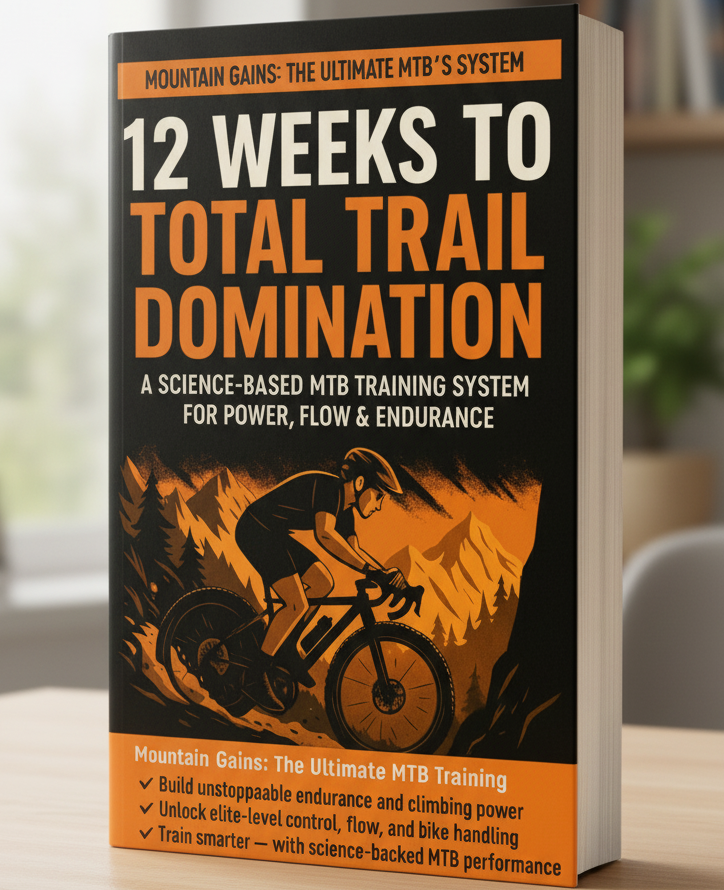
This comprehensive eBook transforms raw data into performance breakthroughs. What you get:
- Field-tested protocols for conducting your explosive efficiency audit
- Worksheet templates for building terrain-specific power profiles
- Ready-to-use analytic tools for identifying exact energy allocation leaks
- Test protocols that guide you through precise data collection revealing your unique limiters
- Metrics section that cuts through noise showing exactly which numbers matter for mountain bike speed
- Analytic worksheets that turn hours of ride data into clear action plans you can implement immediately
No guesswork, no generic training plans copied from road cycling. Just systematic trail-specific performance optimization.
Stop training blind, start training smart. Your faster self is hiding in the data, you just need the right system to find it.
You can also check our Full Mountain Biking Guide for more tips and info !





[…] If you want to go deeper into how ride metrics actually translate into speed gains, check out our guide on How Mountain Bikers Are Using Analytics to Get Faster. […]