The Best Fluffy Pancakes recipe you will fall in love with. Full of tips and tricks to help you make the best pancakes.


A ship leaving New York aimed at London — off by just one degree — doesn’t end up close. It ends up in Paris. 3,400 miles of ocean, and that single invisible deviation creates a 59-mile gap by the time land appears. Nobody on the boat felt it. Nobody panicked at departure. The error was too small to feel real.
That’s exactly what’s happening on your climbs.
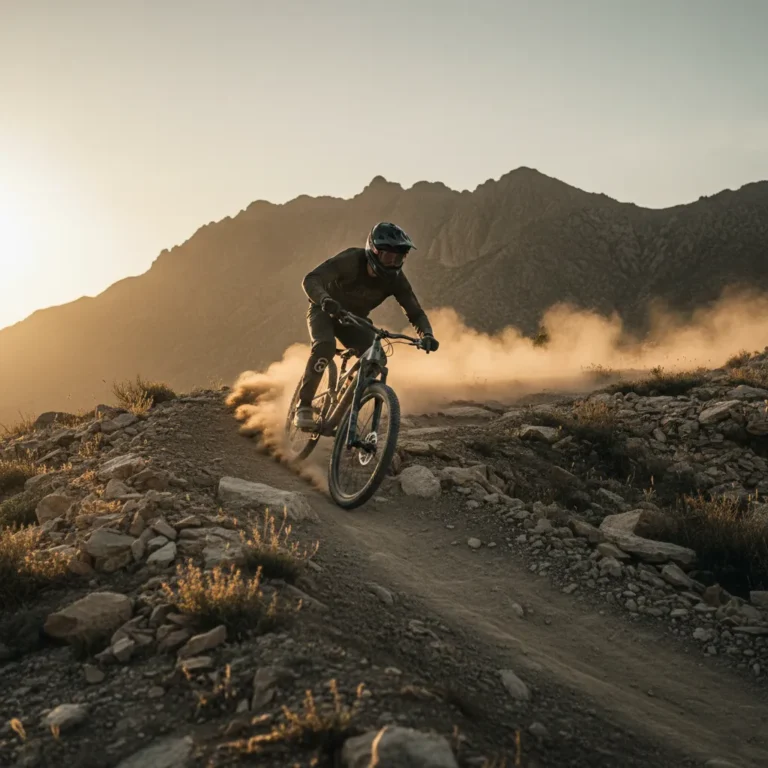
Riders grind themselves into the dirt chasing big fixes — new bikes, new programs, longer sufferfests on weekends. And look, I get it. When something isn’t working, the instinct is to do more of it, louder, harder, with better gear maybe. But the science — and honestly just watching fast riders on steep dirt — tells a quieter story. 1% improvements, stacked week over week, compound into a 37x performance gain over 12 months. Thirty-seven times. From tiny, almost embarrassing adjustments. The riders who float up climbs that wreck everyone else aren’t superhuman. They just shifted one degree earlier and let time handle the rest.
Here are 4 of those shifts. No fluff. Let’s go.
Shift #1: Stop Mashing — The Cadence Truth Your Legs Already Know (MTB Climbing Technique 101)
There’s this thing riders do on steep climbs. They slam into a big gear, stand up, and just… grind. It looks powerful. Feels committed. And it is — right up until the point where your quads start sending distress signals around minute 3 and you’re suddenly walking a line you swore you’d clean this time.
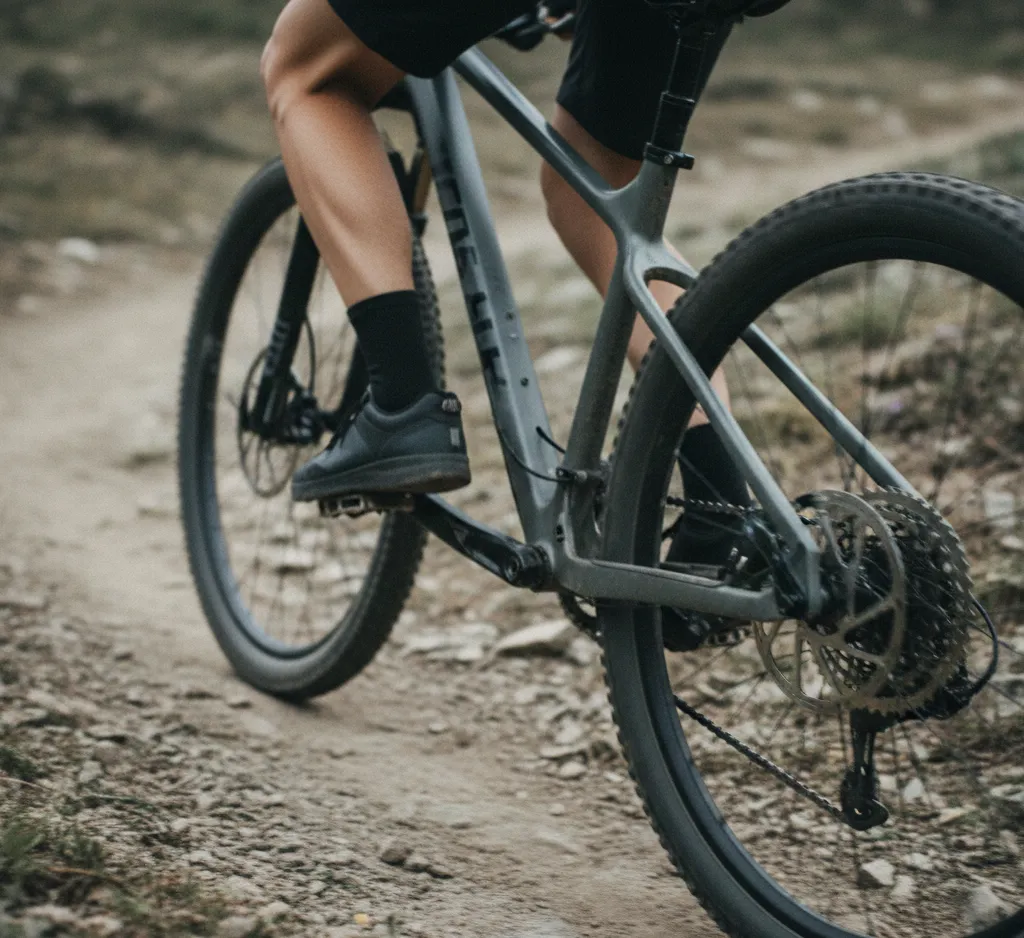
The one-degree shift here is almost insulting in how simple it sounds: drop the gear. Spin faster.
Research published in the Journal of Sports Sciences — not some bro-science forum, actual peer-reviewed work — found that climbing at 80–90 RPM instead of the typical 60–65 RPM most trail riders default to reduces muscle fatigue by up to 22% on sustained climbs. Twenty-two percent. That’s not marginal. That’s the difference between arriving at the top with something left and arriving on your hands and knees questioning your life choices.
What happens in practice though:
- Week 1: You feel slower. Weirdly spinny. Almost like you’re cheating somehow, but not in a good way
- Week 4: Your legs stop screaming first. Your lungs do, which is a different, more manageable kind of suffering
- Week 12: You’re passing people. People who left the trailhead looking fitter than you
Your cardiovascular system recovers between hard pushes. Your quads — once they’re cooked — don’t. One degree. Gear down, spin up, and let the engine you’re quietly building do the talking.
Shift #2: Exhale Before You Think You Need To — Breathing as an MTB Climbing Technique Weapon
Okay here’s one nobody talks about at the trailhead. When climbs bite — that first steep ramp, the one that always comes right after a false flat lulls you into false confidence — breathing goes reactive. Short. Chest-driven. Almost panicked, if you’re being real with yourself.
The shift: exhale first. Deliberately. Before the burn tells you to.
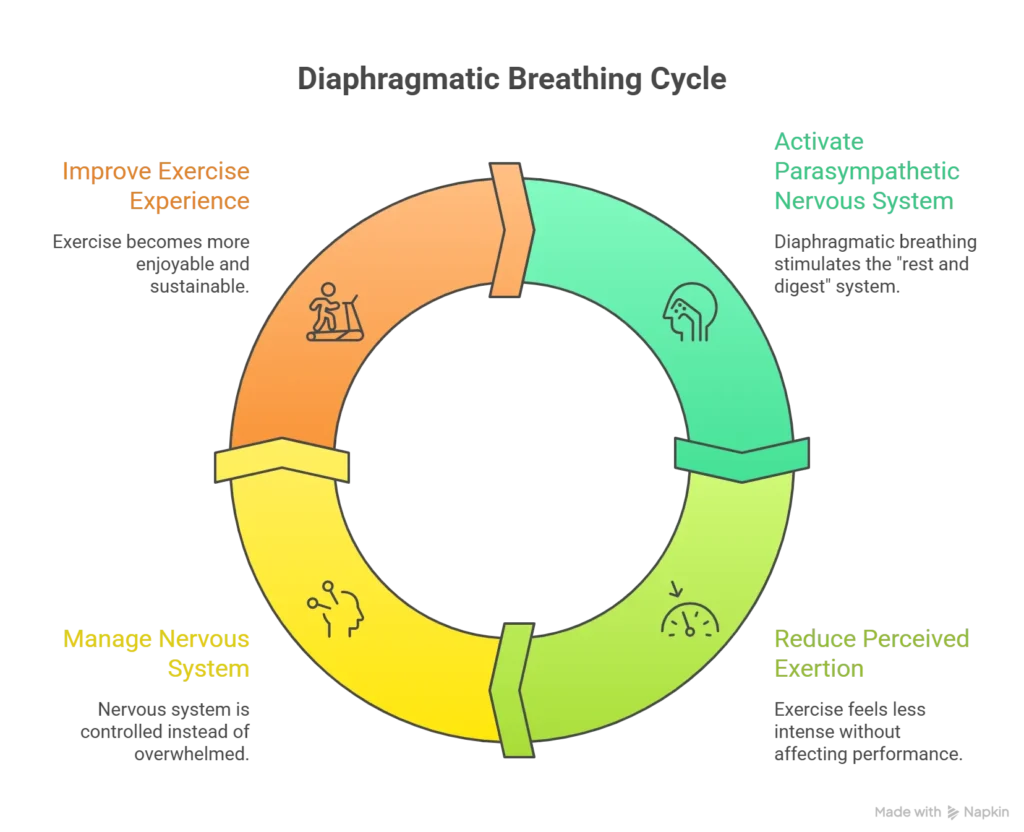
A 2019 study in Frontiers in Human Neuroscience — and this genuinely surprised me when I first read it — showed that controlled breathing patterns during high-intensity exercise dropped perceived exertion by 14% with zero change in actual power output. You’re working identically hard. You just feel like you aren’t. That’s not a trick. That’s your nervous system being managed instead of hijacked.
Diaphragmatic breathing (belly, not chest) activates your parasympathetic nervous system — the “rest and digest” side that your body desperately wants to access mid-climb but can’t find the door to when you’re gasping.
Try this on your next ride:
- Every 3rd pedal stroke, exhale fully and with intention
- Don’t force the inhale — your body already knows how to breathe in, it’s the out that needs coaching
- On the steepest 20% of any climb, slow the breath before you slow the legs
One breath pattern. Between controlled suffering and full chaos. That’s the gap.
Shift #3: Two Inches Forward Changes Everything — Position Is Your Secret MTB Climbing Technique
This one, honestly — this one used to frustrate me because it seemed too simple to be real. Riders wheel-spin. Front ends lift. They blame their tires, their suspension setup, their fitness. Rarely do they blame the 2 inches of saddle position they’ve never consciously thought about.
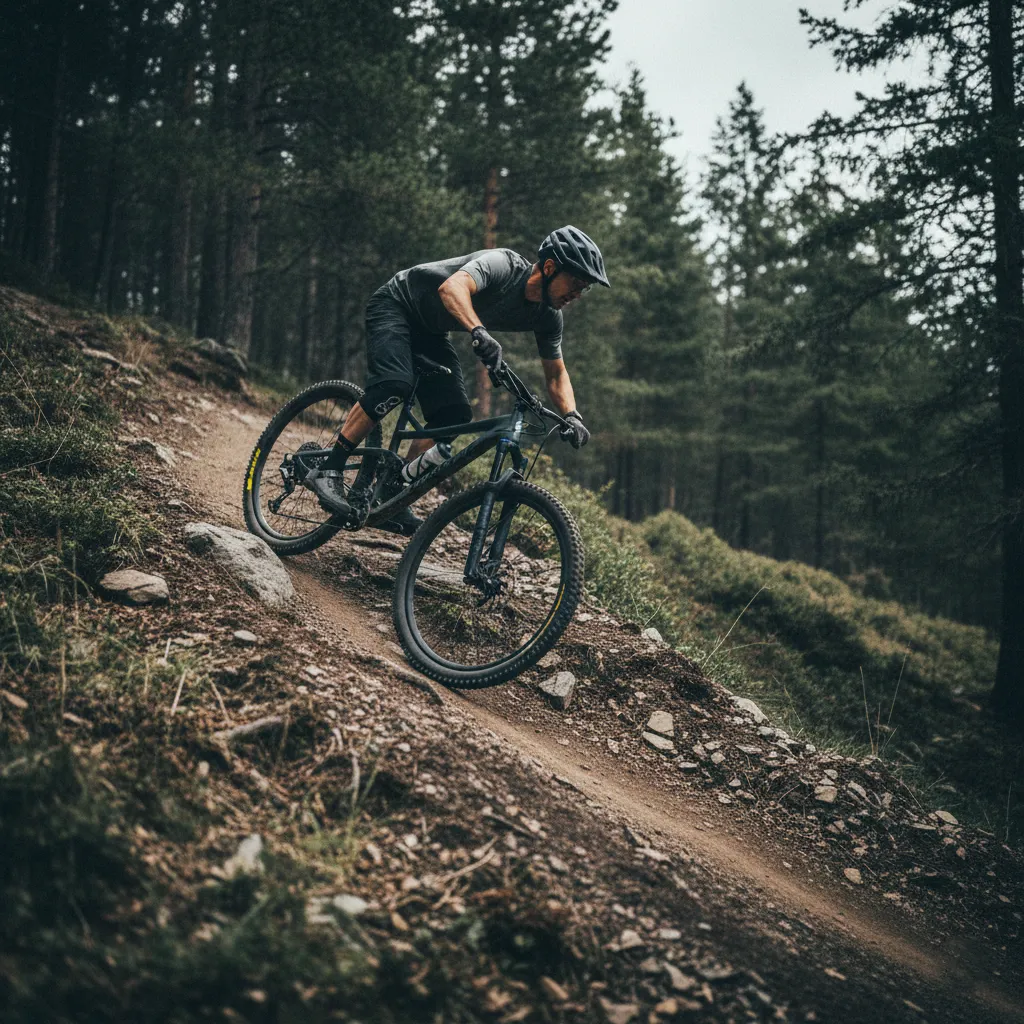
On anything above 10% gradient, sliding forward 2–3 inches on your saddle and dropping your chest toward the stem shifts your center of mass enough to — and this is what the research actually says — improve pedaling efficiency by up to 18%. That’s from a Sports Biomechanics study. 18% without touching your fitness at all. Just geometry. Just physics refusing to negotiate.
- Forward on saddle on steep pitches. Chest drops. Elbows stay soft, never locked
- Hands light — a death grip literally costs you watts, it’s not psychological
- Eyes 10–15 feet ahead, not glued to your front tire like it’s going to give you answers
Here’s the slightly counterintuitive part — or maybe it isn’t, depending how you think about it — you don’t get stronger by next month because you trained more. Sometimes you get stronger because your body finally learned to transfer force correctly. Position first. Always. Power is the reward for getting position right, not the replacement for it.
Shift #4: Structure Beats Motivation Every Single Time — Why Mountain Gains Exists
Motivation is a weather system. Some days it shows up. Most days — especially when work is crushing you and the trail is an hour away — it doesn’t. Riders who depend on motivation to drive their training plateau fast and burn out faster.
Structure compounds. Motivation spikes and fades.
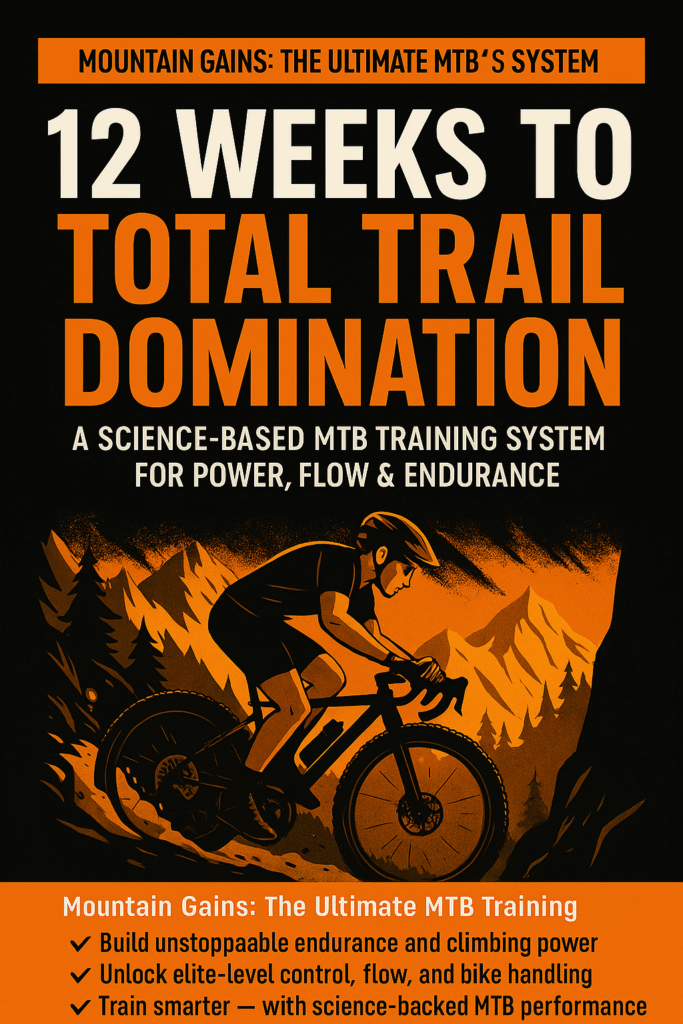
Mountain Gains: The Ultimate MTB Training System is a 12-week program built around exactly this reality. Three phases — Foundation, Build, Peak — each one feeding the next with specific weekly targets across endurance, strength, and mental performance. Not random hard sessions. An actual architecture.
What’s inside (and why it’s different from just “riding more”):
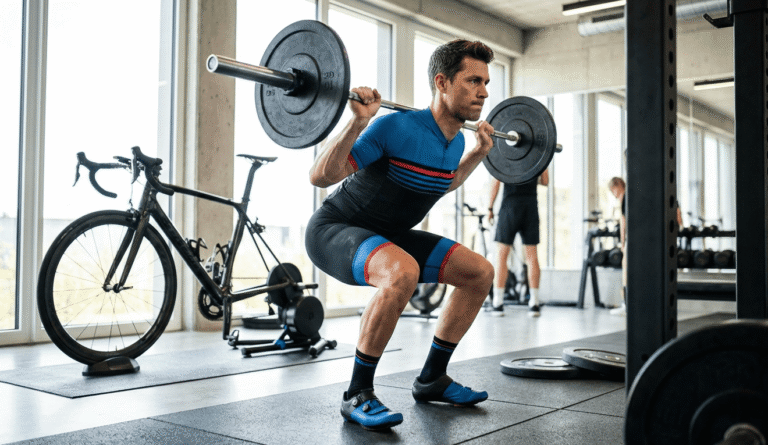
- Trail-specific strength work — gym and bodyweight sessions designed for MTB control and power on technical terrain, not generic fitness programming that has nothing to do with dirt
- Mental performance protocols — flow-state techniques, focus drills, and mindset habits that build confident, fearless riding (the stuff coaches charge extra for)
- Only 4–6 sessions per week — because most riders have jobs, families, and lives that don’t pause for training plans
- Complete recovery system — sleep, fueling, hydration protocols integrated into the program structure, not bolted on as an afterthought
- Performance tracking templates — weekly logs for power, endurance, and skill metrics. You see the gains accumulate. That visibility is underrated as a motivation tool
- Bridge Maintenance Plan — so the fitness you build doesn’t evaporate the second the season ends
Works for beginner to advanced riders — XC, enduro, trail. Minimal equipment. No coach required. Just consistency and a structure worth being consistent with.
Kendrick’s Story: When HIIT Cycling Meets an Actual Plan
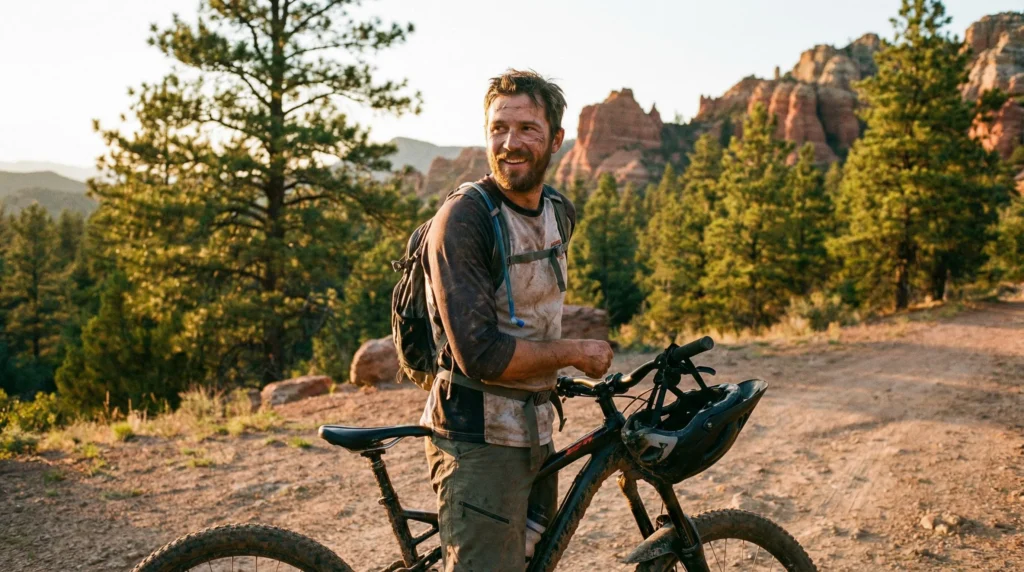
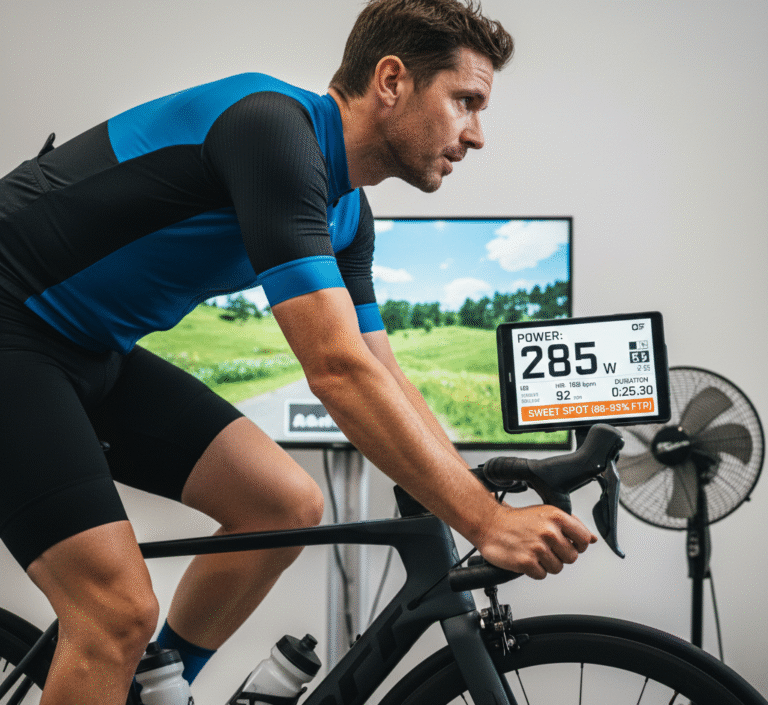
“I was doing HIIT cycling sessions for months on my own. Hard, sweaty, zero structure — just going hard because hard felt productive. When I mixed those sessions with the home training plan inside Mountain Gains and followed the weekly strategy, something just clicked. The HIIT work finally had a context. I knew when to push, when to back off, and how it was feeding my trail climbing specifically. By week 8 I was cleaning technical climbs I’d been dabbling off for two full seasons.” — Kendrick, Trail Rider, Colorado
He didn’t buy a new bike. He built a system. Subtle difference — massive outcome.
Your Degree Is Waiting. Pick One.
We’re not asking for a transformation. We’re asking for one degree — in cadence, breath, body position, or how you structure your weeks on the bike. Then we’re asking you to stay the course long enough for compounding to do what compounding always, quietly, relentlessly does.
We’ve watched riders go from struggling on moderate climbs to owning steep, punishing terrain — not because they suffered more, but because they stopped improvising and started building. Mountain biking rewards the structured and the consistent far more than just the brave.
Pick your shift. Apply it this week. Let it compound.
The climb is already there. Now so is your edge.