
The Best Fluffy Pancakes recipe you will fall in love with. Full of tips and tricks to help you make the best pancakes.


So you’ve been watching videos, right? Endless hours of riders absolutely sending it down rocky chutes, or maybe you’re more into those XC racers who somehow make suffering look elegant. You’ve compared bike specs until the numbers blur together—160mm travel versus 120mm, what even is a head tube angle anyway—and you’ve probably asked every rider at your local trailhead what discipline you should get into.
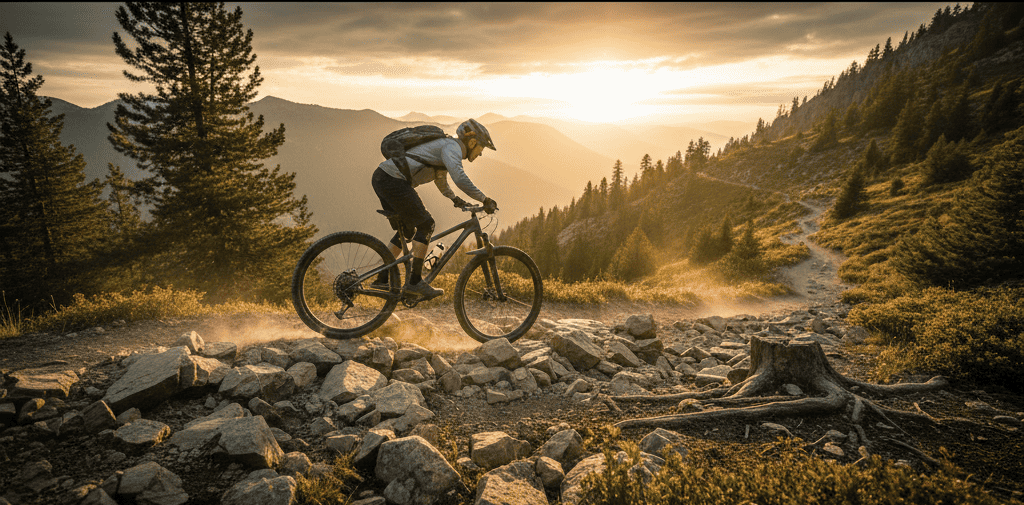
But here’s what literally no one talks about: picking between cross-country, trail, all-mountain or enduro isn’t really about the trails you want to ride or even the bike you dream about owning. It’s about whether your body’s energy systems—like, the actual cellular machinery that powers your muscles—matches what that discipline demands from you metabolically.
And once you understand this? Everything changes. I’m talking game-changer level stuff here.
Your Body Already Knows Which Discipline Is Yours
Most of us (myself included, for way too long) choose our mountain biking path based on what looks sick on Instagram or what our friends are riding. But exercise physiology—the actual science of how bodies work during exercise—tells a completely different story.
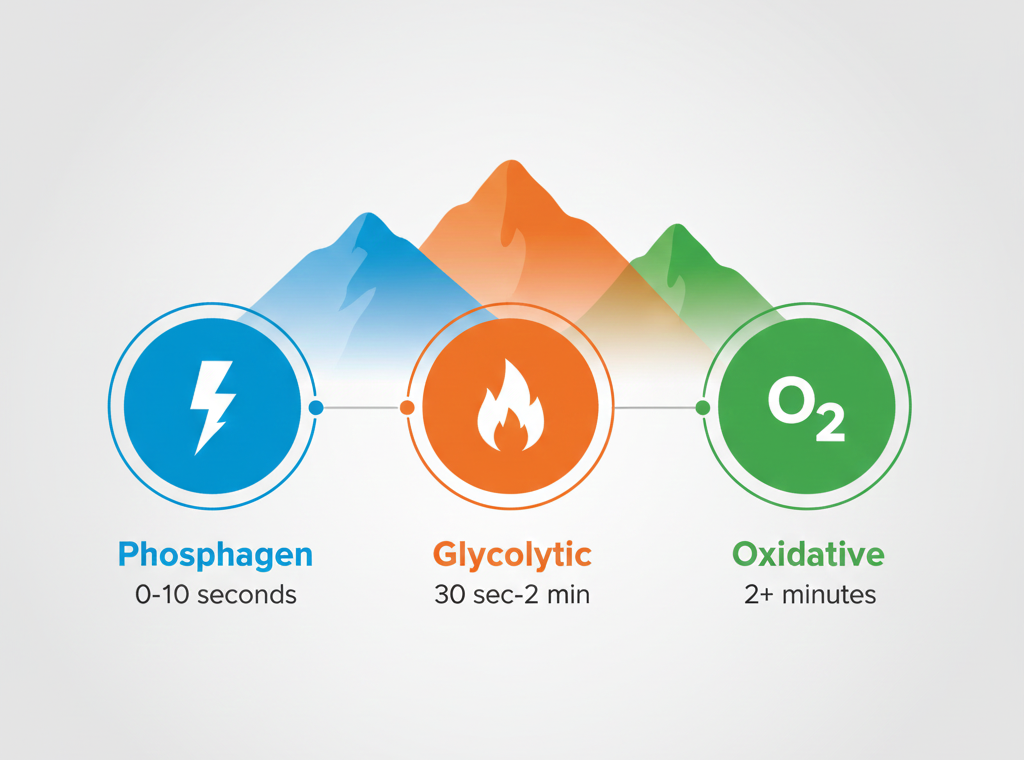
Your body runs on three energy systems: there’s the phosphagen system that fires for explosive stuff (0-10 seconds, think bursting out of a corner or clearing a big gap), then the glycolytic system for high-intensity efforts that burn (30 seconds to maybe 2 minutes of pain), and finally the oxidative system for sustained endurance, anything beyond 2 minutes where you’re just… grinding away.
Cross-country racing? That’s like 80-90% oxidative system work. You’re holding threshold power—around 85-95% of your max sustainable effort—for 90 minutes or more. Trail and all-mountain sit somewhere in the middle, maybe 60% oxidative and 40% glycolytic, mixing long climbs with those punchy technical sections that spike your heart rate. But enduro—enduro flips the whole script. You’re racing on descents that last 15-40 minutes, and yeah you pedal between stages, but those liaison climbs are basically just recovery. The race itself? That’s glycolytic and phosphagen dominance… explosive power through technical features, repeated max efforts, your legs screaming at you in the best possible way.
Sports science research shows that athletes naturally excel in sports that match their muscle fiber makeup and energy system strengths. It’s not even really a choice your conscious mind makes—your body just… knows.
Why This Matters More Than You Think
The really mind-blowing part? Your ratio of fast-twitch to slow-twitch muscle fibers is mostly genetic. Studies suggest around 45% of the variation in muscle fiber type comes from your parents, just handed down like eye color. Sure, mtb training can shift things within a range—you’re not completely locked in—but if you’ve got 70% slow-twitch fibers, you’re always going to struggle with the repeated explosive efforts enduro demands. And a rider who’s predominantly fast-twitch? That relentless threshold pace in XC isn’t just hard for them, it’s physiologically agonizing in a way that goes beyond “difficult.”
I remember this one ride last summer where I tried keeping up with a buddy who races XC. We climbed for 45 minutes straight, and he was chatting away, completely comfortable, while I was in this dark place mentally just counting pedal strokes. But then we hit this janky rock garden on the descent, and suddenly I came alive—everything clicked, I was reading the terrain, pumping through features—and he looked absolutely cooked. Same fitness level, same experience, totally different energy system dominance.
Cross-Country Isn’t “Just Climbing” and Enduro Isn’t “Just Descending”
Ask random riders to compare XC and enduro and you’ll get surface-level answers about climbing fitness versus technical skill. But metabolically? They’re different universes.
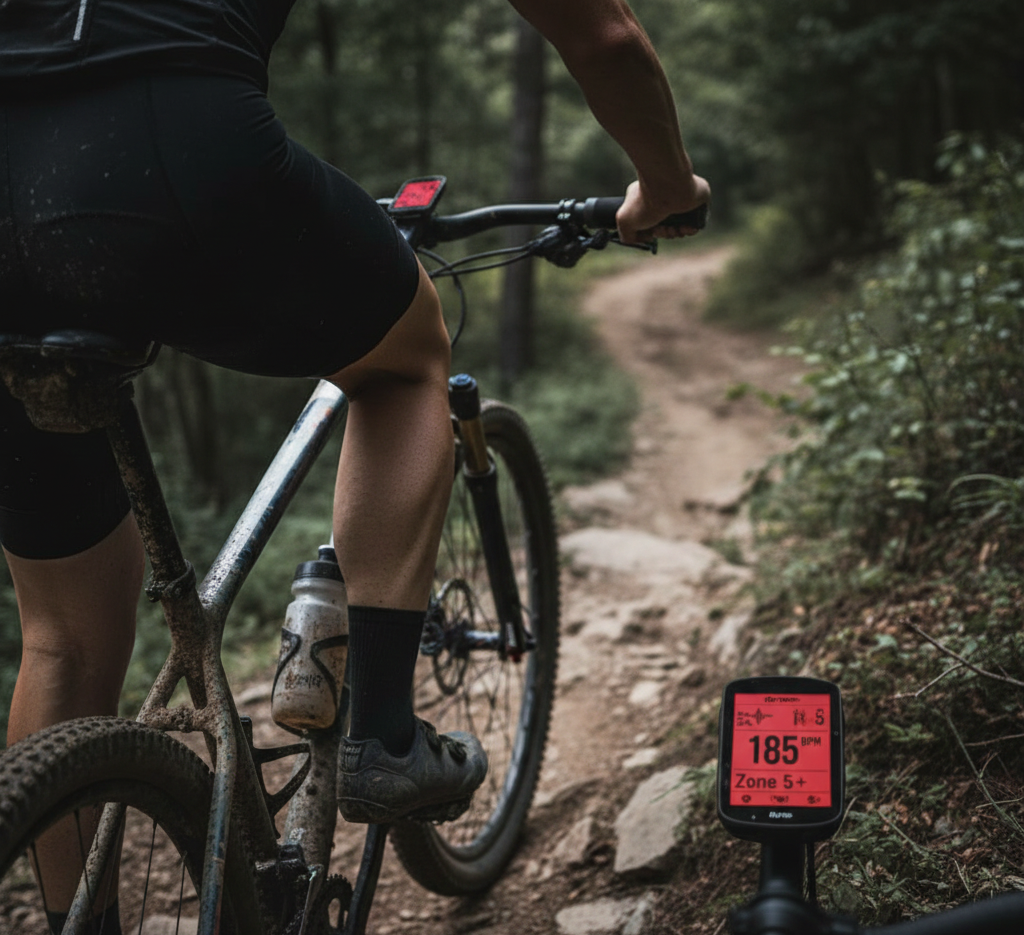
Cross-country operates in what cycling coaches call Zone 3-4 heart rate zones most of the time, with spikes into Zone 5 when someone attacks. Your body needs to be obscenely efficient at processing oxygen and clearing the metabolic waste products that make your legs burn—that threshold power has to be sustainable for the bulk of a 90-minute race.
Have you ever noticed that some riders can climb literally all day but look sluggish through technical features? Or someone who absolutely explodes through rock gardens but fades hard on sustained climbs? That’s not fitness in the traditional sense. That’s energy system dominance. Cycling coaches who do proper physiological assessments will tell you: riders with killer oxidative capacity often describe long efforts as feeling “smooth” or “controlled,” almost meditative. Meanwhile, riders with superior glycolytic and phosphagen systems say short intense bursts make them feel “alive”—they crave that intensity.
Enduro is the opposite metabolically. During a 5-minute race stage, you might spend 60% of the time in Zone 5—basically maximal effort—with repeated 3-10 second bursts of absolute maximum power for jumps, compressions, dodging that rock you didn’t see coming… then 20-40 second glycolytic burns through pedaling sections. Between stages? You’re climbing for 20-40 minutes, but that’s active recovery, not the race itself. The winner isn’t the person with the highest VO2 max—it’s whoever can access explosive power repeatedly without their neuromuscular system giving up across 4-6 stages.
The Metabolic Middle Ground (Or: Why Trail Riding Might Be Your Answer)
Trail and all-mountain disciplines are the beautiful messy middle—and honestly, probably the best place to start if you’re still figuring out your physiological profile. These disciplines need balanced development across all three energy systems. You’ll need oxidative capacity for 30-60 minute rides with sustained climbing, glycolytic power for punchy climbs that spike your heart rate, and phosphagen bursts for individual obstacles.
Research in cycling coach methodology suggests that well-rounded mtb training for trail riding produces athletes who can compete recreationally in both XC and enduro, even if they won’t reach elite levels in either without specialized training. Think of it like being bilingual—you’re fluent enough to enjoy both conversations.
But here’s the question that matters: which style of riding makes you forget to check your watch? When you’re climbing for 45 minutes, are you in this zen flow state, or are you counting down every minute? When you drop into a steep technical chute, do you feel exhilarated and completely present, or anxious and depleted?
Your subjective experience reveals your energy system preferences more honestly than any lab test ever could.
Why Nobody’s Talking About This (Spoiler: There’s No Money In It)
The mountain biking industry doesn’t benefit from you understanding metabolic matching. Bike brands want you to buy the latest enduro sled or XC race rocket based on marketing hype, not because it matches your physiology. Social media rewards insane enduro clips, not footage of someone efficiently grinding out a climb.
Plus, metabolic awareness requires self-knowledge that most new riders haven’t developed yet. You need experience across different riding styles to recognize your patterns. This is why experimenting early is so valuable—it’s research into your own body.
The fitness industry also creates confusion by suggesting any energy system can be dramatically improved with proper training. And yeah, that’s partially true—you can shift your capabilities within a range—but the research is super clear that genetic predisposition creates boundaries you can’t really cross. A natural enduro athlete might improve their oxidative capacity by 20-30% with dedicated training… but they’re unlikely to ever match the sustained threshold power of a genetically gifted XC racer.
Actually Doing Something With This Information
Start with honest self-assessment through varied riding. Spend a month deliberately seeking different types of efforts: join a local XC group ride and try holding threshold pace for 60+ minutes. Hit an enduro practice track and session short steep technical sections repeatedly. Do long trail rides that mix sustained climbs with playful descents.
Track not just your performance but your psychological state. Which efforts leave you energized versus completely depleted? Which feel like you’re working with your body versus fighting it?
Consider structured testing with a cycling coach who actually understands energy systems. A functional threshold power test reveals oxidative capacity. Repeated sprint tests show your phosphagen and glycolytic power. The ratio between these numbers provides ridiculous insight into your metabolic profile.
And finally—give yourself permission to choose the discipline that matches your body, even if it’s not the “cool” choice. If you have elite-level oxidative capacity, embracing XC racing isn’t settling… it’s recognizing where you can achieve actual excellence. If your neuromuscular system fires with explosive power, enduro racing is playing to your genetic strengths.
The riders who progress fastest and stay in mountain biking for decades are those who find the metabolic match that transforms training from punishment into expression.
Stop Overthinking and Start Pedaling
The secret’s out: your body’s energy system profile is the invisible hand guiding you toward your ideal mtb discipline. But awareness without action is just interesting trivia.
This week, commit to one metabolic discovery ride. If you’ve only ever ridden trail, join an XC group and hold threshold for an hour. If you’re an XC rider, session an enduro track. Pay attention not to whether you’re fast, but to how you feel. Does the effort style energize you or drain you? Does time expand or contract?
Your perfect mountain biking discipline isn’t waiting on a bike shop floor or in YouTube highlight reels… it’s encoded in your physiology. The riders who unlock this secret find where their body’s natural language matches what the terrain demands, where mtb training feels like uncovering potential rather than building it from scratch.
Stop choosing your mountain biking path based on geography, gear, or what gets the most likes. Listen to your metabolism—honor your energy systems—and ride the discipline that makes your body say “yes” at the cellular level.
The trails are waiting. Your body knows the way. Now go discover which discipline is written in your muscle fibers.
You can also check our Mountain Biking Guide for more tips and infos !




[…] more often than not.) Not sure which riding style benefits most from smart tech? Our comparison in From Cross-Country to Enduro: Which MTB Discipline Fits You? clears that […]