The Best Fluffy Pancakes recipe you will fall in love with. Full of tips and tricks to help you make the best pancakes.


You’re Not Alone in This Mess
Look, I get it. You’ve been down the rabbit hole — three browser tabs open at 2 AM, one about carb loading, another screaming about keto for endurance athletes, and a third trying to sell you some proprietary blend that promises to turn you into Nino Schurter overnight. And you’re just sitting there thinking… what the hell am I supposed to eat tomorrow?
Here’s what nobody tells you: the confusion isn’t your fault.
The MTB nutrition world is like trying to navigate a trail in the fog with seventeen different people shouting contradictory directions. One guru swears by fasted rides (something about mitochondrial adaptation or whatever). Your fastest riding buddy demolishes gas station gummy bears and still drops you on climbs. That Instagram influencer? Living off bone broth and collagen peptides, apparently.
Meanwhile, you’re planning a 3-day backcountry ride and you genuinely don’t know if you should pack 47 energy gels or just… I don’t know, a bag of peanut butter sandwiches?
I’ve been there. Day two of a bikepacking trip in Colorado — legs felt like they’d been filled with wet cement, head swimming, couldn’t figure out why I was so wrecked when I’d “eaten enough.” Spoiler: I hadn’t. Not even close.
You deserve better than guesswork. So let’s cut through the noise.
The Calorie Calculation Nightmare
Why Your Brain Hurts:
Because every calculator online spits out different numbers and none of them account for the fact that you’re not riding smooth pavement — you’re wrestling a mountain bike up 2,000 feet of technical singletrack while dodging roots and probably eating dirt at least once.
Here’s What Actually Works:
Stop overthinking the math. Seriously. Here’s your baseline for multi-day MTB missions:
Daily targets:
- Moderate riding (2-4 hours): 3,000-3,500 calories
- Hard days (4-6 hours, climbing): 3,800-4,500 calories
- Epic suffer-fests: 4,500-5,500+ calories
While riding:
- 60-90 grams of carbs every hour (240-360 calories/hour)
- Break it down: 30-50g carbs every 30-45 minutes
- Add 10-15g protein every few hours
Quick formula: Body weight (lbs) × 16-20 = daily calories for hard MTB days.
Real steps:
- Front-load breakfast — 800-1,000 calories, mix protein and carbs
- Fuel before you’re hungry (by the time you feel it, you’re already behind)
- Recovery meal within an hour of finishing
- Pack calorie-dense stuff: nut butter packets, trail mix, dried mango, dates
I learned this the hard way in Utah last fall — packed too light, day three turned into a zombie shuffle because I’d been running a deficit for 48 hours. Not fun.
Real Food vs. That Overpriced Gel Packet Debate
Why It’s Confusing:
Because half the MTB world acts like gels are toxic waste and the other half can’t survive without them. You’ve tried both approaches. Sometimes real food sits like a brick. Sometimes gels make your stomach want to revolt.
The Actual Answer:
You need both. Mountain biking isn’t steady-state road cycling. Your heart rate spikes randomly. Hands are busy. Your gut is getting bounced around.
Use sports nutrition (gels, chews, drink mixes) when:
- You’re on gnarly singletrack and literally cannot unwrap food
- Heart rate is redlining
- Your stomach feels sketchy (liquid carbs digest faster)
- Last hour when you need quick fuel but can’t face another solid bite
Use real food when:
- Cruising fire roads or stopped for a breather
- You need sustained energy for 5+ hour days
- Your appetite is good and digestion is cooperating
- You’re broke (let’s be honest, $3 per gel adds up)
What to pack:
Fast-acting: Gels (25-30g carbs), chews, carb drink mix
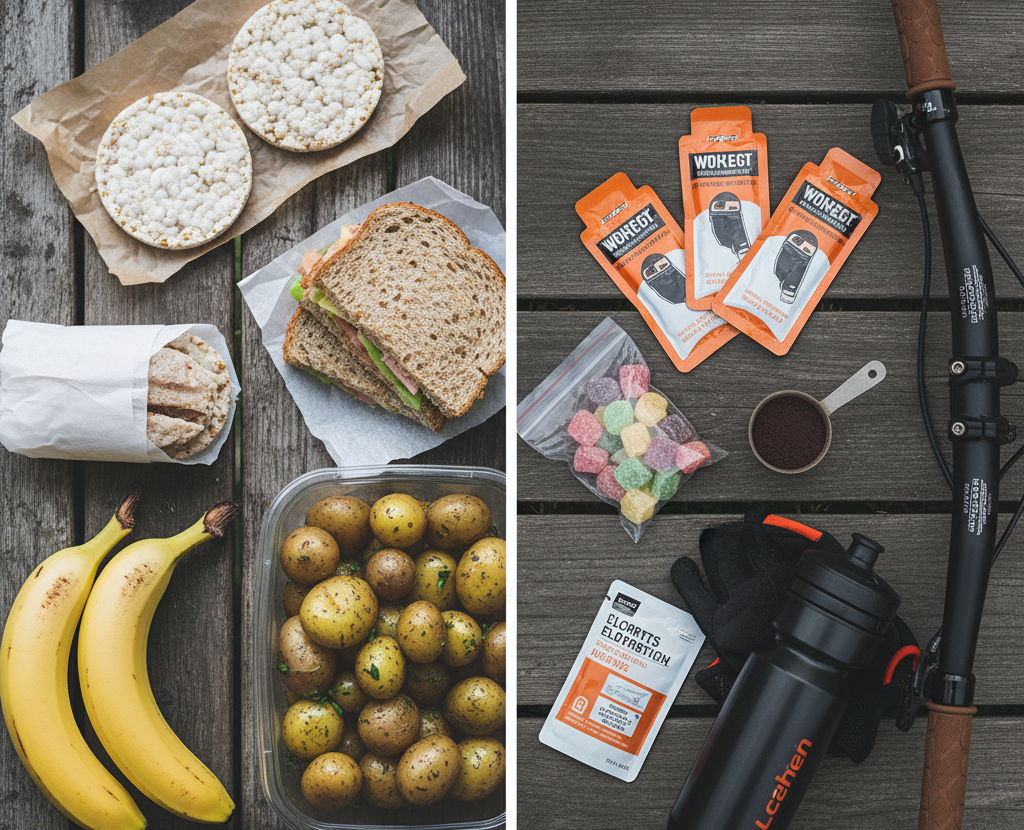
Sustained energy: Rice cakes with jam, PB sandwiches cut into quarters, boiled potatoes with salt, bananas, dates, fig bars
Recovery (post-ride): Chocolate milk (genuinely magic), turkey sandwich with fruit, protein shake with oats, whatever burrito you can find
Key thing: Test everything on training rides. Never debut new nutrition on a big adventure. I once tried a new gel flavor on day one of a stage race and spent hour three convinced my insides were staging a rebellion.
Hydration Is Somehow Rocket Science Now?
Why It Makes You Want to Scream:
“Drink before you’re thirsty” competes with “don’t overhydrate” and meanwhile you’re staring at seventeen different electrolyte products and you just… want to know how much water to bring.
The Simple Truth:
Off the bike:
- Drink half your body weight in ounces daily (160 lbs = 80 oz minimum)
- Add 16-20 oz for every hour you rode
- Pee color check: pale yellow is good
On the bike:
- 16-24 oz per hour for moderate riding
- 24-32 oz per hour if it’s hot/humid or you’re at altitude
- Add electrolytes for anything over 90 minutes
Electrolyte targets per hour:
- 500-700 mg sodium (prevents cramping)
- 100-200 mg potassium
- 50-100 mg magnesium
Actual steps:
- Pre-hydrate: chug 16-20 oz about 2 hours before
- Carry MORE water than you think
- Set a timer to sip every 15 minutes
- Map water resupply points beforehand
Budget hack: pinch of table salt in your bottle = DIY electrolytes.
Recovery Nutrition (Or Why Day Three Destroys You)
Day one feels amazing. Day two? Legs are weirdly heavy. Day three? You’re moving in slow motion.
Recovery nutrition is where multi-day trips are won or lost. Skip it on day one, suffer on day three.
Immediately after riding (within 30-60 min):
Aim for 3:1 carb-to-protein ratio — like 60g carbs with 20g protein. Liquid is easiest: chocolate milk, protein shake with banana, recovery drink mixes.
Full meal (within 2-3 hours):
Balanced plate: lean protein + complex carbs + vegetables. Aim for 0.25-0.4g protein per pound of body weight. A 160 lb rider needs roughly 40-64g protein.
Don’t skimp on carbs either — you’re refueling glycogen for tomorrow.
Before bed: Light protein snack — Greek yogurt, cottage cheese, casein shake.
Real steps:
- Pack recovery drink powder (lightweight)
- Plan dinners with quality protein ahead of time
- Sleep 7-9 hours minimum
- Foam roll or stretch lightly
Bonus: Tart cherry juice (reduces soreness), ginger or turmeric (anti-inflammatories), omega-3s from salmon or walnuts.
When Your Gut Betrays You Mid-Ride
You finally dial in your nutrition plan… then your stomach stages a full mutiny. Nausea. Cramping. Unscheduled bathroom emergencies. It’s miserable and totally derails your adventure.
The Fix:
Your gut needs training too. Your digestive system has to practice handling fuel while you’re crushing climbs.
Why gut issues happen:
- Blood flow redirects from digestion to working muscles
- High-fiber or high-fat foods sit heavy
- Dehydration shuts down digestion
- Stress and altitude make everything worse
How to train your gut:
- Practice race-day nutrition on every long training ride
- Start small, gradually increase fuel amounts
- Avoid high-fiber/high-fat foods 2-3 hours before riding
- Stay hydrated
Foods to avoid: Dairy (unless you tolerate it), high-fiber bars or beans, greasy food, too much caffeine
Gut-friendly options: White rice, white bread, ripe bananas, maple syrup, honey, boiled potatoes with salt, simple gels
Steps:
- Test ALL nutrition during hard training rides
- Keep a food log
- Last solid meal 2-3 hours before hard riding
- If nausea hits, slow down slightly
Your Next Move: Pair Nutrition with Smart Training
You’ve got the nutrition piece figured out. That’s huge. But proper fueling only gets you so far if your training is random or inconsistent or just… not built for MTB.
That’s where Mountain Gains: The Ultimate MTB Training System comes in.
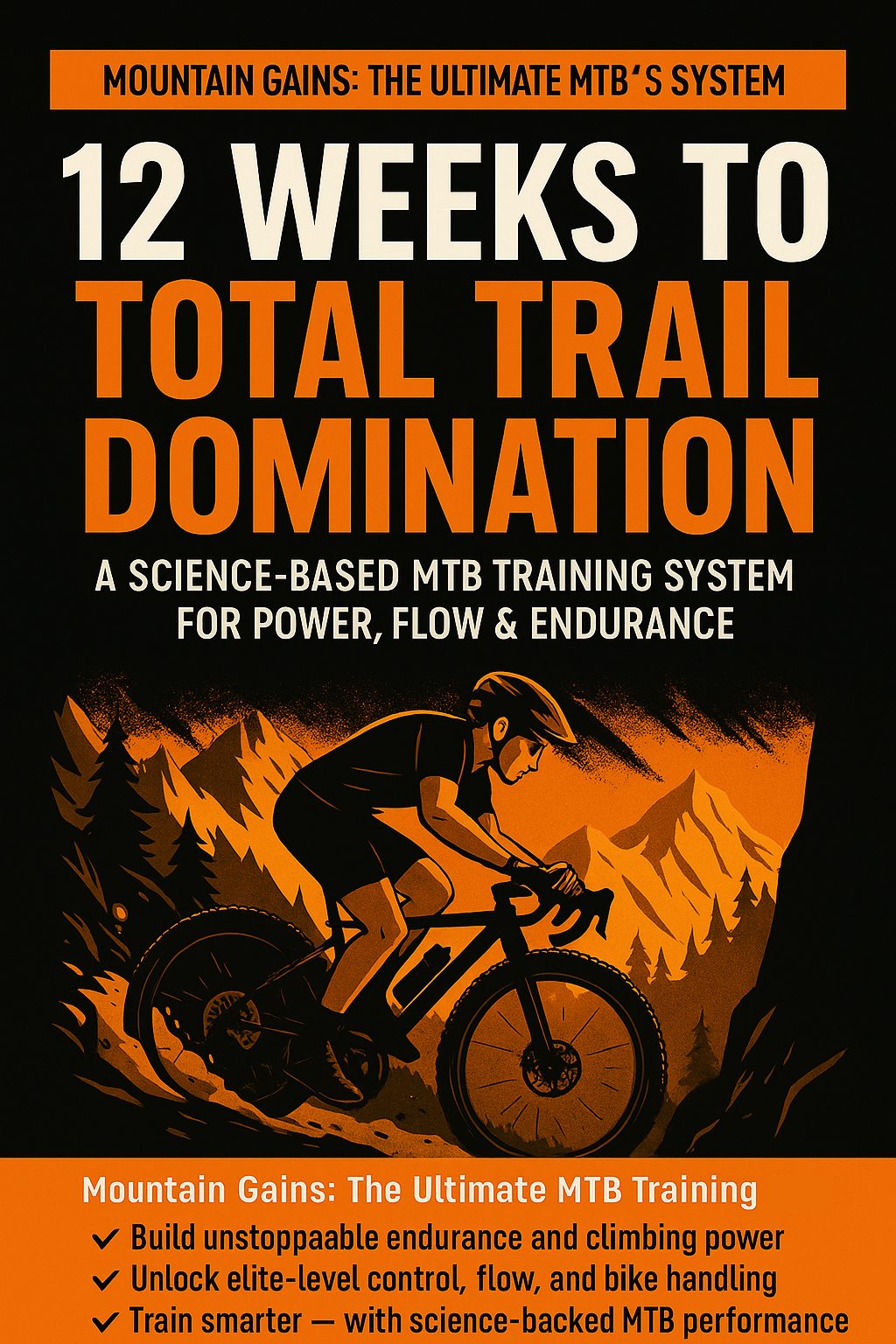
This isn’t some cookie-cutter “do more cardio” ebook. It’s a complete MTB-specific program for riders who want to:
✅ Build explosive power for technical climbs
✅ Increase endurance for back-to-back big days
✅ Prevent injuries with targeted strength work
✅ Recover faster between rides
✅ Ride with confidence on scary terrain
Inside Mountain Gains:
- Periodized training plans (beginner to advanced)
- MTB-specific strength workouts you can do at home
- Interval protocols to boost VO₂ max and lactate threshold
- Recovery strategies for multi-day trips
- Mental training for conquering fear on technical descents
Your nutrition is dialed. Now pair it with a training system that actually works for mountain bikers — not road cyclists, not runners, but mountain bikers.
👉 Get Mountain Gains: The Ultimate MTB Training System and stop wishing you were stronger. Multi-day adventures demand preparation. This is your roadmap.
See you out there. 🚵♂️