The Best Fluffy Pancakes recipe you will fall in love with. Full of tips and tricks to help you make the best pancakes.

Tubeless Tires for Road Bikes: Pros & Cons
Is going tubeless worth it for road cyclists?

There’s something you can’t see that’s making your decisions. I’m serious—every time you pump up those tubeless tires, every time you’re checking (or not checking, let’s be honest) the sealant, something invisible is pulling strings. And it’s not ghosts in the supernatural sense, though I’ll admit after my third roadside failure last summer I was ready to believe in anything that explained why my “superior” tubeless setup kept leaving me stranded while my buddy on clinchers sailed past.
No, these are worse than ghosts. They’re assumptions. Marketing myths. The stuff nobody talks about in the bike shop when they’re selling you on the tubeless dream.
The whole tubeless thing—it’s been marketed as this cycling revolution, right? Lower rolling resistance! Fewer punctures! Run lower pressures for that supple, pro-level ride quality! But underneath all that promise (and I mean way underneath, buried in forum arguments and Reddit threads at 2am), there’s what I’m calling the ghost in the machine. These invisible systems of belief that determine whether you end up loving tubeless or cursing it every weekend ride.
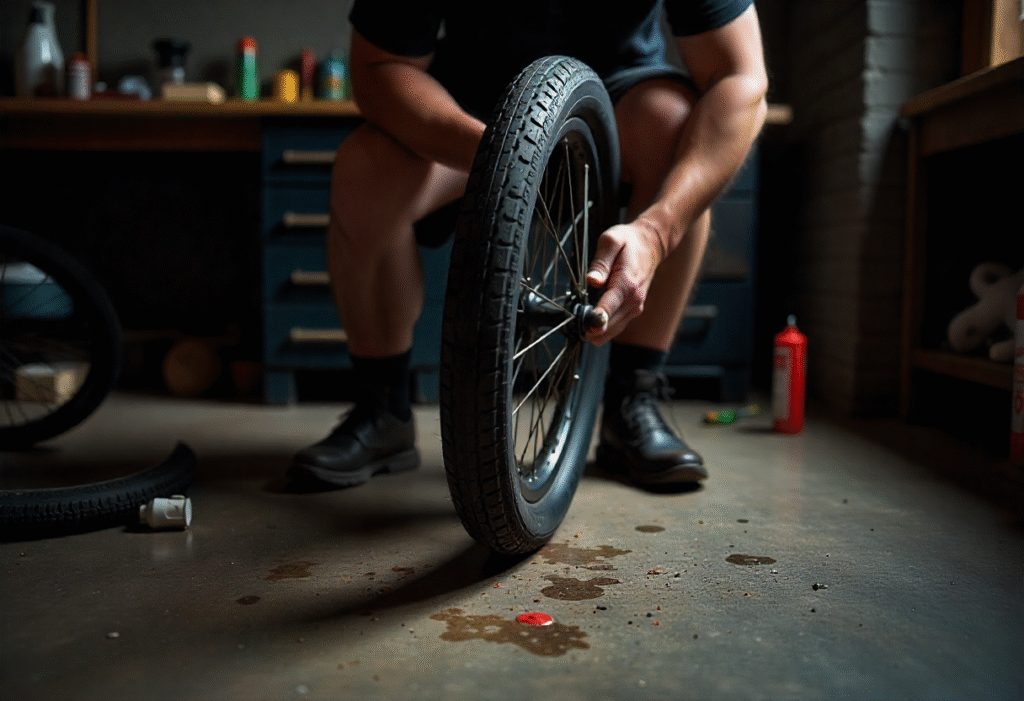
Two riders, identical setups, completely opposite experiences. Why? The ghosts.
Let me show you three of them. The big ones.
Ghost Number One: Sealant Lives Forever (Spoiler: It Really, Really Doesn’t)
Okay so this one—this is the ghost that gets almost everyone. The idea that you pour in sealant once, maybe during installation or when the shop sets you up, and then… you’re done? Just ride?
Yeah, no.
Here’s what actually happens, and I learned this the hard way on a century ride in July (it was 94 degrees, humidity making everything sticky, the kind of day where even your water bottles sweat). Sealant has a shelf life. Not like milk where you know it’s gone bad, but more insidious. Latex-based sealants—which is most of them—they dry out. 60 to 90 days depending on where you live and how hot it gets. Arizona riders? You might be looking at six weeks tops. Pacific Northwest with all that fog and drizzle, maybe you stretch it to four months.
But the ghost whispers: you don’t see a problem, there IS no problem.
Except inside your tire, the sealant’s turning into these crystallized boogers (there’s probably a technical term but that’s what they look like) clinging to the tire walls. And when you hit a thorn—just a small one, nothing dramatic—there’s not enough liquid sealant left to flow into the puncture. So you’re standing there, roadside, watching your tire deflate, thinking tubeless is garbage… when really? You just believed the ghost.
How to exorcise it: Treat sealant like you treat oil changes in your car—no seriously, put it on a calendar. Every eight weeks, maybe six if you’re riding in summer heat. Remove the valve core (get a valve core remover, they’re like $5), use a syringe to pull out what’s left, look at it (is it still liquid? chunky? gross?), and add fresh stuff.
It’s maintenance, yeah. But once you stop believing the “set it and forget it” lie, tubeless actually becomes reliable instead of this Russian roulette situation.
The Pressure Ghost: Or Why You’re Still Inflating Like It’s 2010
This one’s sneaky because it feels right. For decades—I mean decades—road cyclists pumped their tires to 100, 110, even 120 PSI. Rock hard. Fast. That firm, vibrating-through-your-handlebars feel that somehow meant you were serious about cycling.
And that ghost followed us straight into tubeless, whispering the same old story: more pressure = more speed.
Except… (and this is where it gets interesting), tubeless doesn’t play by those rules. The physics changed. Without an inner tube creating friction against the tire casing—which is a real thing, that friction loss—and with modern wider rims supporting wider tire profiles (28mm is basically standard now, 30mm isn’t weird), the optimal pressure drops. Way down. Like 60-80 PSI for most riders.
I know, I KNOW. It feels wrong. Soft almost.
But here’s what happens when you overinflate tubeless: you lose all the benefits you paid for. The tire can’t deform around road imperfections (goodbye comfort), and worse—worse—excessive pressure prevents the tire bead from seating properly in the rim. You get burping. That’s where air escapes past the bead during hard cornering, which is terrifying if it happens mid-turn, and yes, I’m speaking from experience on a fast descent near Malibu where I nearly—
Anyway. The ghost sabotages you while promising speed. Classic.
The exorcism: Throw out everything you think you know. Start at 60 PSI if you’re around 70kg on 28mm tires. Just try it. Do the thumb test—press firmly on the tire, you should be able to depress it slightly. Not a lot, just some give. Then adjust based on actual riding: maybe 65 for smooth asphalt, 55 for chip-seal torture roads. Write it down! Track it like data because the ghost loses all its power when you have your own evidence instead of accepting what “everyone knows.”
Ghost Three: Everything Works With Everything (The Universal Compatibility Lie)
Oh man, this ghost. This is the one that almost made me give up entirely.
The assumption—sold to us by marketing departments who don’t want to deal with complexity—is that any tubeless tire works with any tubeless-ready rim. Universal! Mix and match! Easy!
Except “tubeless-ready” is more like… a suggestion? A vibe? Tire bead diameters vary by manufacturer, by model sometimes. Rim profiles differ in width, in depth, in whether they’re hookless or hooked designs (and yes, that matters). Some combinations seat with a floor pump and patience. Others require a compressor, an air tank that sounds like a shotgun going off in your garage, plus prayer.
I once spent—and I timed this because I was getting progressively more angry—47 minutes trying to seat a Continental tire on a Zipp rim. Just pop-hiss-pop-hiss, sealant spraying everywhere (got some in my coffee, which was sitting nearby, learned THAT lesson). Meanwhile my neighbor seats the same tire on his ENVE rims in maybe 90 seconds.
Same tire. Different experience. Ghost at work.
The exorcism: Research your specific combo before buying. I mean really research—forums, Reddit’s r/cycling, manufacturer compatibility charts when they exist. Invest in a tubeless tank or compressor access (some shops will let you use theirs). Keep a list, like an actual spreadsheet, of what works with what. And accept—this is hard but necessary—that sometimes you need to return a tire not because it’s defective but because it’s just incompatible with your rim’s specific measurements.
“Tubeless-ready” is a category, not a guarantee. Once you see that, the ghost can’t touch you.
So… Is It Worth It?
Here’s the thing (and I’m circling back because this matters): asking “is tubeless worth it?” is itself a haunted question. It assumes one answer fits everyone when the reality is messier, more personal.
If you acknowledge sealant needs regular maintenance—like actually put it on your calendar, set phone reminders, whatever works—and if you abandon the old pressure dogma for actual testing and data collection, and if you carefully match components instead of grabbing whatever’s on sale… then yeah. Tubeless delivers. Real benefits. The ride quality is noticeably more supple, puncture protection actually works (when the sealant’s fresh), and running lower pressures gives you traction and comfort without risking pinch flats.
But if you’re still haunted? Checking sealant once a year “when you remember,” inflating to whatever number feels traditional, buying any tubeless tire because they’re all supposed to work together… then no. It becomes a source of roadside disasters and garage frustration and questioning your life choices.
The power—and I really believe this—the power is in naming the ghosts. Once you see them, they’re not mysterious anymore. They’re not forces of nature or bad luck. They’re just systems that need understanding.
The ghost in the machine only has power when it’s invisible.
Shine a light on these assumptions, and what looked like dark magic becomes simple mechanics. Tubeless doesn’t fail cyclists—unexamined beliefs do. See the ghosts clearly, and suddenly you’re the one controlling the machine, not the other way around.
And honestly? That feels pretty good. Now check out our Full Road Cycling Guide to get more info and tips !