
The Best Fluffy Pancakes recipe you will fall in love with. Full of tips and tricks to help you make the best pancakes.


Why Speed Matters in Nutrition for Cyclists
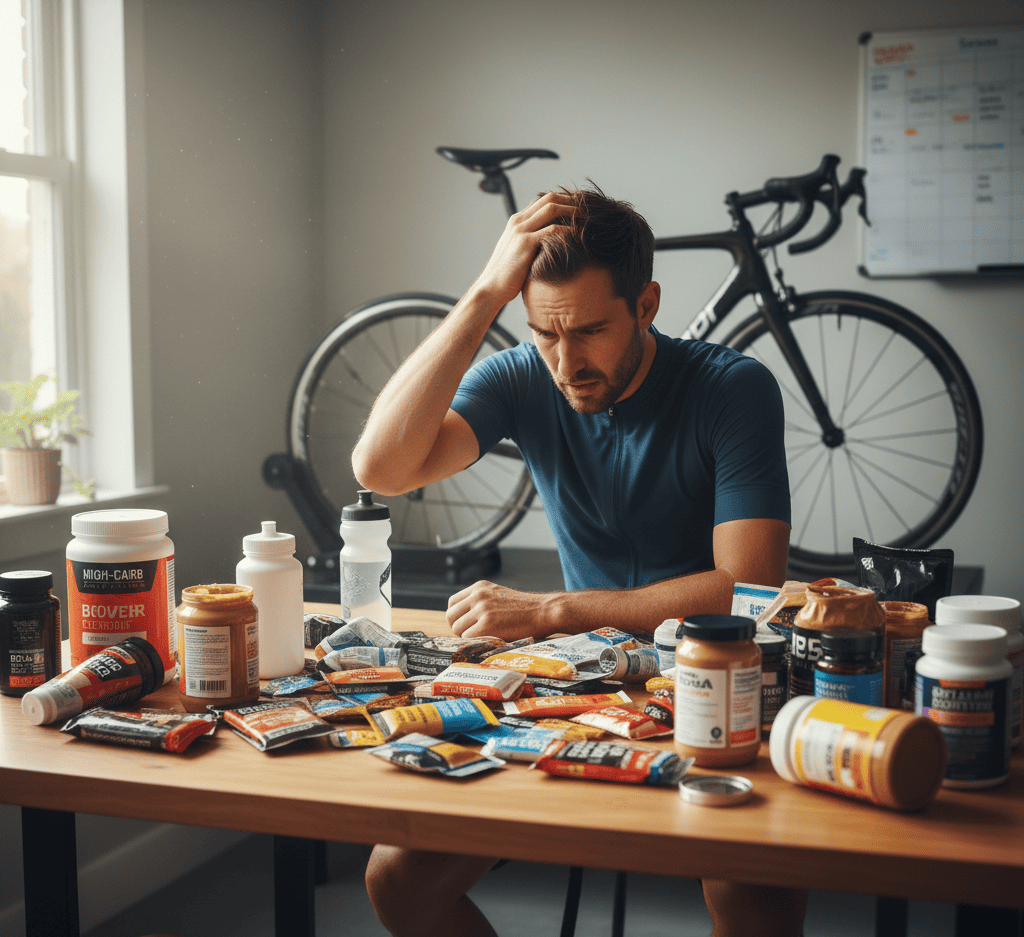
Look—every cyclist knows seconds count. But here’s what kills me: most riders waste months (sometimes an entire season, honestly) testing random nutrition protocols, bouncing between contradictory advice they found on some forum at 2am, and experiencing those soul-crushing bonks that make you question why you even ride.
The reality? Nutrition for cyclists follows predictable patterns. It’s not rocket science, though we treat it like some mysterious art form. Elite athletes don’t experiment endlessly—they grab proven frameworks and implement them fast. Like, immediately fast.
Here’s the thing about delayed nutrition optimization: it costs you races, sure, but also training adaptations and recovery time (the stuff nobody talks about at the coffee shop). A cyclist spinning their wheels on conflicting carb-loading advice? They’re losing 12-16 weeks of potential gains annually. That’s almost a third of your season… gone. Meanwhile—and this is what really gets me—athletes who accelerate their nutrition strategy see measurable performance improvements within 3-4 weeks.
This isn’t about shortcuts. I hate shortcuts. It’s about eliminating the noise (so much noise out there) and implementing what actually works—immediately.
Strategy 1: Front-Load Your Macronutrient Framework (Week 1)
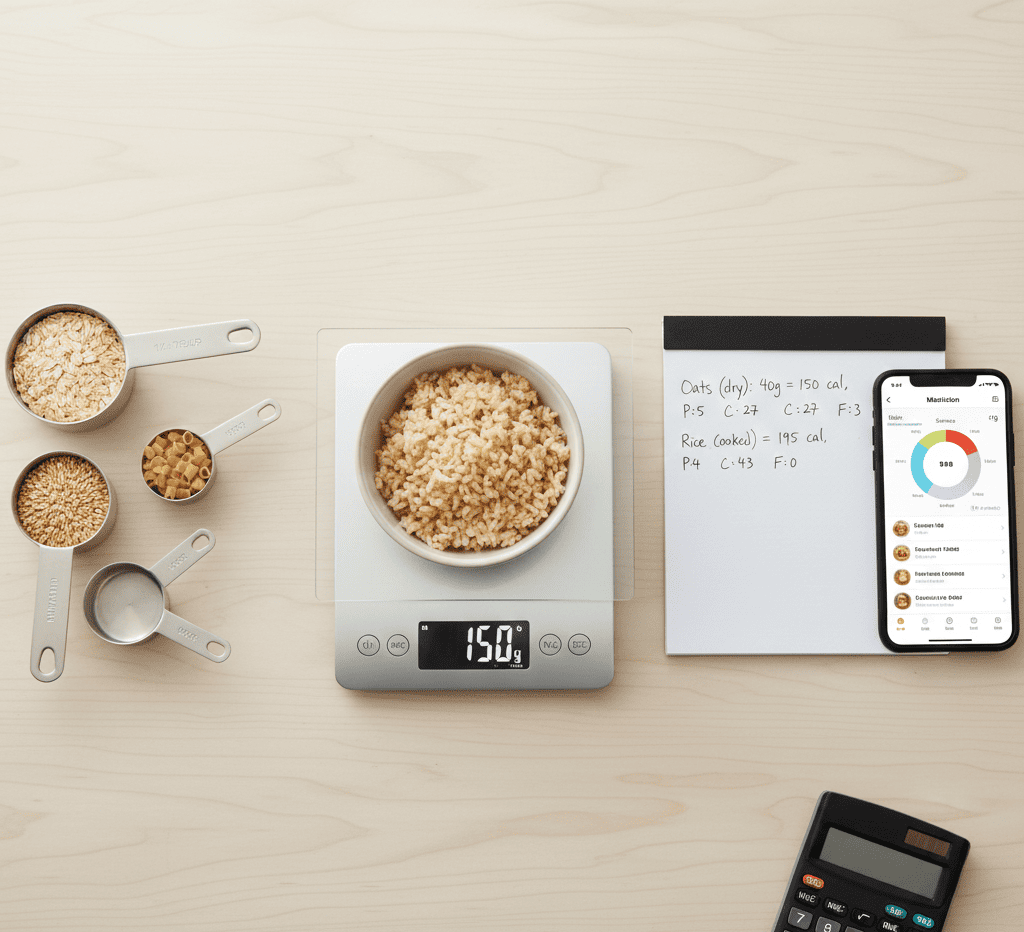
Most cyclists dabble with nutrition adjustments for months. Just… dabble. Stop doing that.
The Fast-Forward: Establish your complete macronutrient structure in the first seven days—not next month, not after your training plan “settles in.” Now. Calculate your training-specific needs immediately:
• 6-10g carbohydrates per kg bodyweight for moderate training (10-12 hours weekly)
• 7-12g/kg for heavy blocks (those weeks where you question your life choices)
• Protein stays consistent at 1.6-1.8g/kg
• Fat fills remaining calories at 20-30% of total intake
Implementation (and I mean actual implementation):
Day 1: log three typical training days
Day 2-3: calculate exact macros using your body weight and training load (use a calculator, your brain’s tired from training)
Day 4-7: hit those targets within 10% variance
Done. Seriously, that’s it.
Why It Works: Research shows—and this is fascinating—metabolic adaptation to increased carbohydrate availability occurs within 5-10 days of consistent intake. Your body upregulates glycogen storage capacity rapidly when you provide consistent fuel. It’s almost eager about it, if muscles could be eager. Waiting months to “find your balance” simply delays this adaptation, which is like… why would you do that?
Real-Life Experience
James (Category 2 road racer, solid guy) implemented his macro framework in one week. Previously? He’d spent eight months inconsistently adjusting his diet, trying this influencer’s plan, then that coach’s approach. Within three weeks of hitting precise targets, his FTP increased 15 watts and post-ride fatigue dropped noticeably—like, he could actually play with his kids after training. “I wasted half a season guessing,” he told me over coffee (he ordered a cappuccino, I remember because the foam had this perfect microfoam texture). “One week of calculation beat eight months of experimenting.”
Real-World Application:
Use a simple spreadsheet. Nothing fancy—Excel, Google Sheets, whatever.
- Column 1: body weight
- Column 2: training hours this week
- Column 3: carb range (multiply weight by 6-12 based on volume)
- Column 4: protein (weight × 1.7)
- Column 5: fat calories (remaining from total expenditure)
Execute immediately. Not tomorrow. Today.
Strategy 2: Master Race-Day Fueling in Two Training Rides
Standard advice suggests gradually testing nutrition over an entire season, right? Building up slowly, being cautious… Wasteful. Completely wasteful.
The Fast-Forward: Perfect your race-day fueling protocol in exactly two long training rides using the proven formula: 60-90g carbohydrates per hour from multiple transportable sources (glucose + fructose combination, which sounds fancy but really isn’t).
Implementation:
Ride 1 (Week 2): Test intake rate. Consume 60g/hour using 2:1 glucose-to-fructose ratio products—most commercial gels and drinks provide this, check the label though because some don’t. Monitor GI tolerance (your gut will tell you things), energy consistency, and mental clarity. That last one’s huge… when your brain goes foggy at mile 40, you know something’s wrong.
Ride 2 (Week 3): Increase to 75-90g/hour if tolerance allows. Dial in your upper limit. You now have your race formula. Two rides. That’s it.
Why It Works: Intestinal glucose transporters (SGLT1, if you want to sound smart at group rides) saturate at approximately 60g/hour when consuming single-carb sources. Adding fructose activates separate transporters (GLUT5), pushing absorption to 90-120g/hour. This physiological mechanism doesn’t require months to understand—your intestines don’t need a PhD. They just… work. It requires two rides to implement.
The 2:1 ratio isn’t negotiable biology (I mean, you can negotiate with it, but your gut will win). Your intestines don’t care about gradual testing. They transport what they’re designed to transport, like a conveyor belt that either works or doesn’t.
Real-World Application:
Purchase mixed-carb products containing both maltodextrin/glucose AND fructose. Set a timer for every 15 minutes—your bike computer, phone, whatever. Consume 15-22g each interval (depending on your 60-90g/hour target). Track tolerance in a note somewhere. Adjust total volume, not ratio. Implement in your next event, not three events from now.
Strategy 3: Compress Periodized Nutrition into 4-Week Blocks
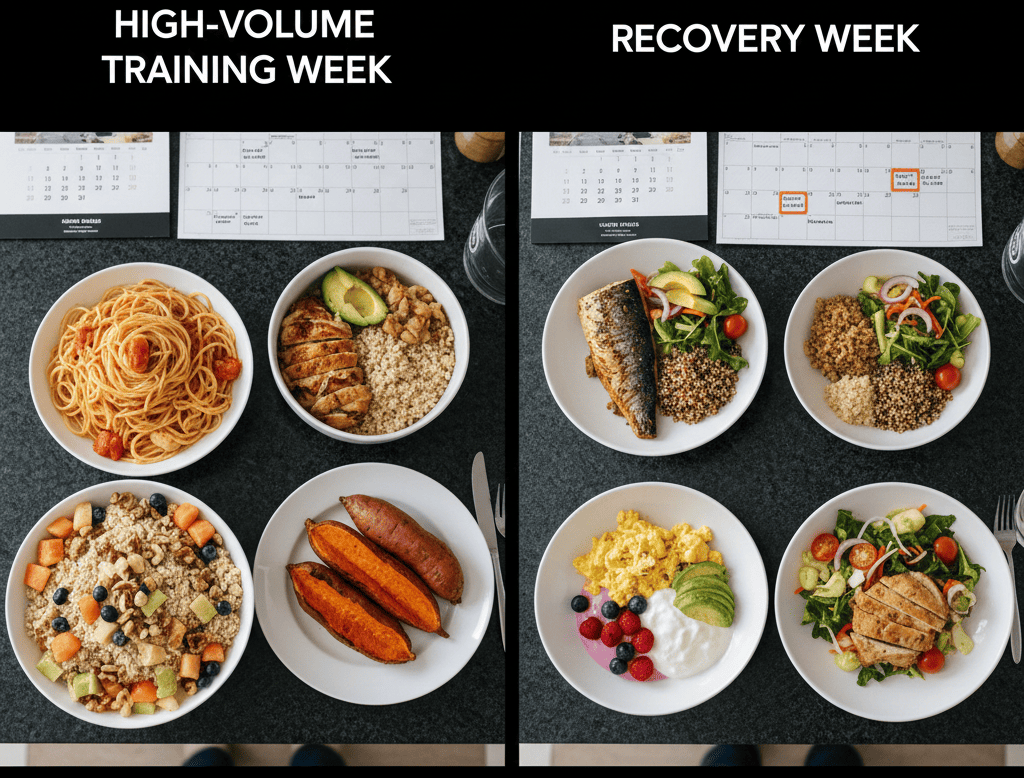
Nutritional periodization typically follows vague seasonal guidelines—”eat more in winter, less in summer” kind of stuff. Inefficient and honestly kind of lazy advice.
The Fast-Forward: Align your nutrition for cyclists precisely with 4-week training blocks (assuming you’re following structured training, which… you should be).
Here’s the breakdown:
• High-volume base phase: maximize carb intake at 10-12g/kg
• Recovery week: reduce to maintenance (5-6g/kg)—yes, that’s a big drop
• Intensity phase: maintain moderate-high carbs (8-10g/kg) with increased meal frequency around hard sessions
Implementation: Match your macro calculator to your training plan’s structure—they should talk to each other, basically. Every four weeks, adjust carbohydrate intake by 2-4g/kg based on training volume changes. Protein remains stable (it’s your anchor, don’t mess with it). Reassess weekly training stress score (TSS) and modify accordingly.
Why It Works: Glycogen supercompensation—that magical thing where your muscles store more fuel—occurs within 24-48 hours of increased carbohydrate intake following depletion. You don’t need gradual transitions like you’re introducing a new food to a toddler. Your muscles respond to fuel availability within days. Training stimulus plus adequate carbohydrate equals adaptation. Missing either component delays gains, which is like trying to drive with the parking brake on.
Real-World Application:
- Week 1-3 of training block: consume upper range carbs (10-12g/kg for high volume)
- Week 4 (recovery): drop to 5-6g/kg—embrace the rest
- New block starts Week 5: return to upper range
Your body adapts in days, not months. Stop overthinking periodization (I know you are)—implement it in defined blocks. It’s like LEGO instructions, just follow them.
Strategy 4: Automate Recovery Nutrition Immediately
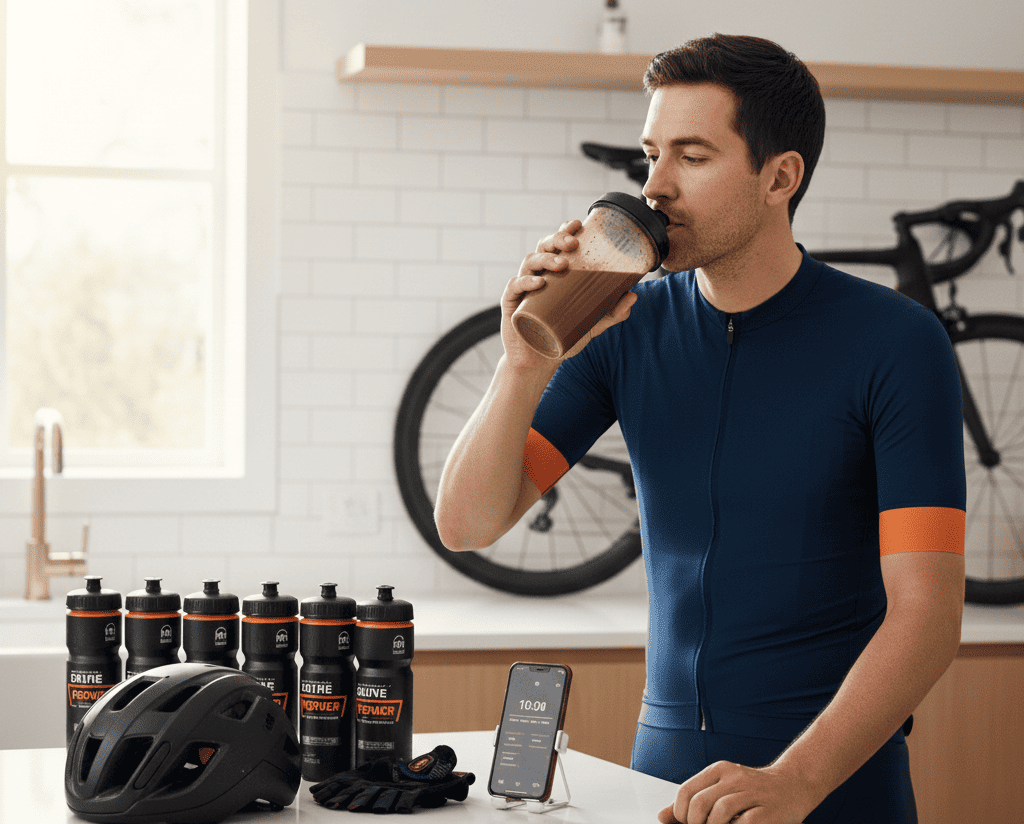
Post-ride nutrition confusion creates weeks of suboptimal recovery—I see this constantly. People finish a hard ride, shower, scroll Instagram for 30 minutes, then think about food. No. Eliminate the variable entirely.
The Fast-Forward: Implement the non-negotiable recovery window protocol from your next ride—literally the next one: consume 1.0-1.2g/kg carbohydrates plus 0.3-0.4g/kg protein within 30 minutes post-ride. Repeat carbohydrate dose 2 hours later. Recovery optimized. Done.
Implementation: Prepare recovery nutrition before every ride—this is crucial, your post-ride brain is mush.
Chocolate milk (500ml) provides approximately:
- 50g carbs
- 18g protein
For a 70kg rider—nearly perfect ratios
Alternatively, use recovery drink powder meeting the 3:1 to 4:1 carb-to-protein ratio (check the tub). Consume immediately upon finishing—like, bike still ticking from heat, immediate. Set a 2-hour timer for your second carb dose.
Why It Works: Muscle glycogen synthesis rates peak immediately post-exercise when glucose transporters (GLUT4) remain elevated at the muscle surface without insulin requirement—it’s this brief window where your muscles are basically begging for fuel. This window lasts approximately 30-60 minutes before returning to baseline. Delaying intake reduces synthesis rates by 45-50%. The science is settled—early intake wins. Always.
Post-Ride Protein Explained
Additionally (and this is cool): protein consumed immediately post-exercise maximizes muscle protein synthesis rates, supporting both recovery AND adaptation to training stress. Combined carb-protein intake triggers optimal hormonal response—insulin plus growth factors—for recovery. It’s like hitting two birds with one stone, except less violent and more metabolic.
Real-World Application:
Create a standing recovery nutrition system—systemize it so your tired brain doesn’t have to think:
• Keep recovery drinks in your car (back seat, always stocked)
• Prepare bottles before rides
• Ensure chocolate milk availability at home (I keep three cartons minimum)
Remove all decision-making. Automation eliminates delays… and delays eliminate gains. Execute this protocol after every ride exceeding 90 minutes or containing high intensity.
Why These Strategies Work When Others Fail
Traditional nutrition advice spreads adjustments across months, encouraging gradual experimentation like you’re conducting a clinical trial on yourself. This approach fails because—and here’s the key insight—it confuses adaptation timelines with decision-making timelines. They’re not the same thing!
Physiological adaptation is fast:
- Glycogen storage capacity increases within days
- Intestinal transporters upregulate within 1-2 weeks
- Muscle protein synthesis responds immediately to nutrient availability
The delays come from indecision, not biology. Your body’s ready… you’re just overthinking it.
These four strategies eliminate unnecessary testing phases (which honestly just breed more confusion). They implement proven mechanisms immediately. Nutrition for cyclists isn’t complex—it’s specific. The science provides clear targets, like a GPS telling you exactly where to go. Your job is execution, not endless experimentation or waiting for the “perfect moment.”
Implement Now: Your Next 30 Days
Week 1: Calculate and implement your complete macro framework (no excuses)
Week 2: Test 60g/hour race fueling protocol on long ride
Week 3: Test 75-90g/hour protocol and finalize race-day approach
Week 4: Establish automated recovery nutrition system
Within one month—30 days, four weeks, whatever you want to call it—you’ll have complete nutritional infrastructure that most cyclists take a year to build. The competitive advantage isn’t theoretical or abstract—it’s measurable in watts, recovery speed, and race results. Numbers on the power meter don’t lie.
Take Action: Fuel Your Performance Starting Today
You now have the framework. The blueprint. The map. The question isn’t whether these strategies work—the science confirms they do, repeatedly, across multiple studies and thousands of athletes. The question is whether you’ll implement them immediately or waste another season experimenting, tinkering, “finding what works for you” (which often means doing nothing).
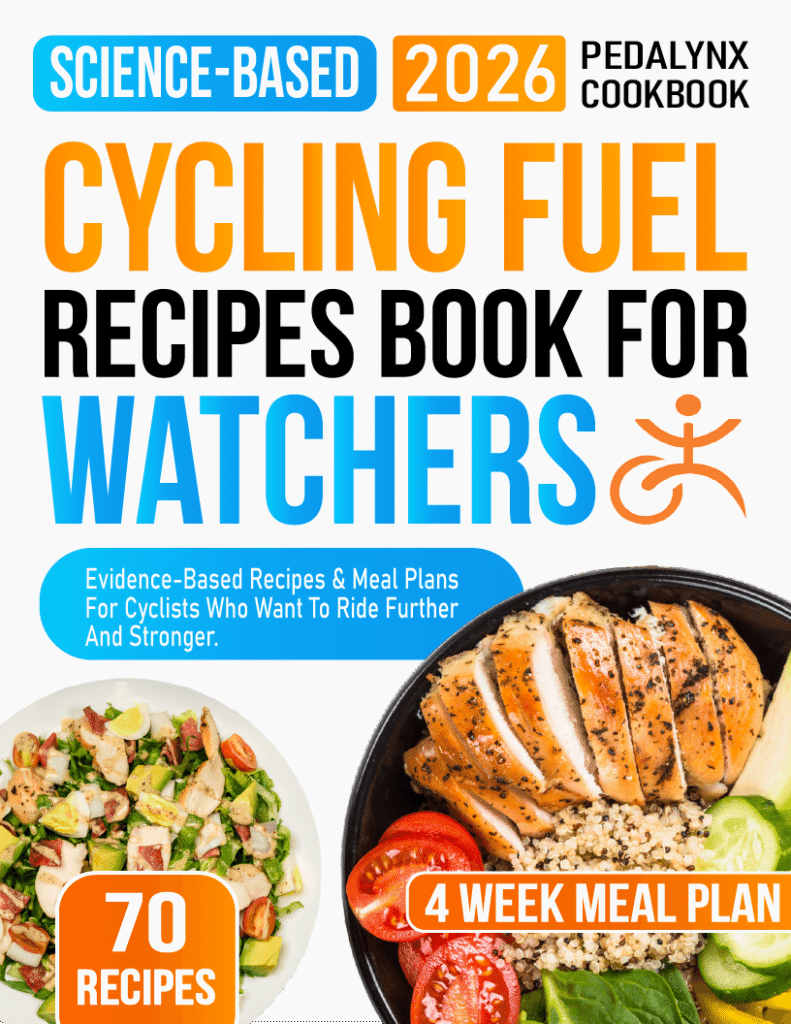
Get our ebook “Cycling Fuel Recipes for Watchers“ and get 70+ performance-optimized recipes matching these exact macronutrient ratios, pre-calculated for different body weights and training loads. It has :
✅ 4-Week Structured Nutrition Plan – Base, Build, Peak, Taper & Recovery phases
✅ 70+ Cyclist-Specific Recipes with stunning photos and nutritional breakdowns
✅ 4 Weekly Grocery Lists – Organized shopping made simple
✅ Science-Based Fueling Strategies – Carb-loading, recovery windows, electrolyte balance
✅ Pre & Post-Ride Meal Guidance – Know exactly what to eat when
✅ Quick Prep Recipes – Most meals ready in under 30 minutes
✅ Lifestyle Tracking Tools – Adapt for weight loss, endurance, or muscle gain goals
Perfect For:
- Road cyclists, mountain bikers, gravel riders – all disciplines
- Beginners learning nutrition basics to advanced athletes optimizing performance
- Busy cyclists who need efficient meal prep solutions
- Anyone tired of bonking or energy crashes during rides
Every recipe includes timing protocols, preparation speed rankings (because who has time?), and specific applications—pre-ride, during-ride, recovery. Stop calculating. Start cooking. Accelerate your performance today, not next month when motivation fades.
The riders who win aren’t necessarily more talented—sometimes they’re just average folks with great execution. They’re better fueled, and they figured it out faster. Your competition is implementing these strategies right now, probably while you’re reading this. What are you waiting for? Permission? You have it. Go.