The Best Fluffy Pancakes recipe you will fall in love with. Full of tips and tricks to help you make the best pancakes.


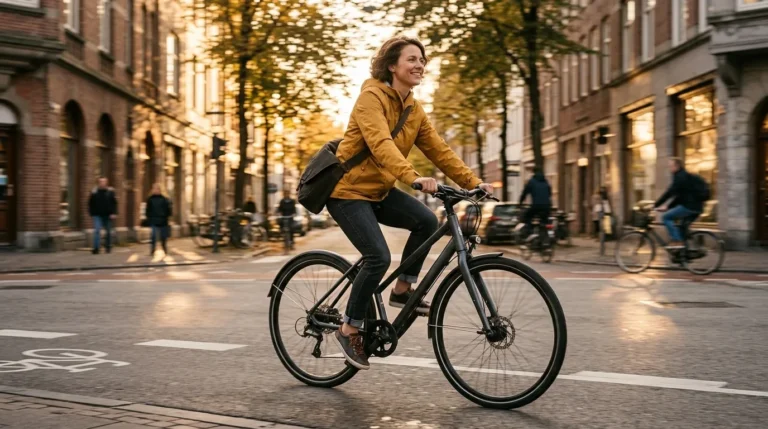
Okay so here’s the thing nobody says out loud at the coffee shop when someone rolls up on an e-bike: everyone kind of assumes they’re being lazy. Like — the motor’s doing it, right? You’re just sitting there. And look, we get it. That assumption feels intuitive. It sounds right. But it’s also completely, embarrassingly wrong, and the data has been sitting in plain sight for years while the fitness world collectively looked the other way.
This isn’t a feel-good piece designed to make e-bike owners feel validated. It’s about what’s actually happening to your body when you commute on one — and why the “cheating” narrative might be one of the most counterproductive ideas in modern urban health.
1. Your Heart Rate Doesn’t Care About the Motor
Here’s something we find genuinely fascinating — and a little funny, honestly. The heart doesn’t read product specs. It doesn’t know there’s a 250W motor sitting in the rear hub. All it knows is: legs are moving, lungs are working, keep pumping.
A 2019 study in Transportation Research Interdisciplinary Perspectives tracked e-bike commuters and found their heart rates landed consistently between 75–93% of maximum — that’s solidly inside aerobic training territory. Traditional cyclists pushed slightly higher peaks, sure. But — and this is the part that gets glossed over — e-bike riders commuted 3.9 times per week on average, versus 2.8 times for regular cyclists. They went more often. They went farther. Because it didn’t wreck them.
| Activity | Avg. Heart Rate (% Max) | Weekly Frequency | Weekly Active Mins |
|---|---|---|---|
| Traditional bike commute | 85–95% | 2.8x/week | ~110 min |
| E-bike commute | 75–93% | 3.9x/week | ~160 min |
| Gym cardio session | 70–85% | 2.1x/week | ~90 min |
The WHO says 150 minutes of moderate aerobic movement per week is the baseline for cardiovascular health. E-bike commuters in multiple peer-reviewed studies consistently hit — sometimes blow past — that number. Without scheduling a workout. Without changing into gym clothes at 6am.
That’s not nothing. That’s actually kind of everything.
2. Consistency Is the Whole Game (And Nobody Talks About It)
We’ve been conditioned — by gyms, by fitness culture, by that one friend who does triathlons — to equate suffering with progress. More pain, more gain. Arrive drenched, or it didn’t count. But that logic has a fatal flaw: people quit.
Think about the last time you started something intense and then… didn’t. A program. A membership. A morning run streak that lasted eleven days. The body doesn’t accumulate fitness from things you stopped doing.
Exercise science has a term for what e-bikes enable — incidental physical activity. Movement that’s woven into your day rather than bolted onto it. And studies keep showing it produces comparable cardiovascular adaptations to structured training, with dramatically better long-term adherence rates. Because it’s not optional. You still have to get to work.
This is actually the core argument behind the bike-to-work health benefits we’ve covered extensively — and the e-bike is the single biggest unlock for people who want those benefits but have always found traditional cycling either too punishing or too sweaty to sustain professionally.
A University of Basel study followed participants for four weeks — e-bikers and traditional cyclists both. Both groups improved their VO₂ max (the real marker of cardiovascular fitness, more honest than “how tired I feel”). The gap between them? Almost negligible. The e-bike group reported significantly higher enjoyment. Higher enjoyment means they kept going after the study ended.
Honestly — isn’t that the whole point?
3. The Calorie Numbers Are Quietly Impressive
Let’s just put them on the table.
- Low assist e-biking: ~390–450 calories/hour
- Mid assist e-biking: ~280–340 calories/hour
- Brisk walking: ~220–280 calories/hour
- Sitting in a car: ~60–80 calories/hour
Even maxed-out on motor assist, you’re burning 3 to 5 times more energy than you would behind a steering wheel. For a 30-minute commute each way, that’s easily 200–350 extra calories daily — roughly 1,000–1,750 calories a week, just getting to the office like a normal person.
The assist doesn’t eliminate your effort. It redistributes it — lets you sustain a higher output across more kilometres without blowing your quads on the first hill. It’s less like an elevator and more like a really good pair of running shoes. The shoes don’t run for you. They just make the run survivable enough that you actually finish it.
Getting the bike setup right matters too — we break that down in our guide on how to choose the right bike for your daily commute, because the geometry, weight, and assist level all affect how much of that caloric output you’re actually generating.
4. Charlotte Showed Up Every Single Day
Charlotte, 38, project manager, Bristol. Switched from driving to e-bike in January — partly for the environment, partly because her doctor had started using phrases she didn’t love at her annual checkup.
After 8 weeks: down 6 lbs, resting heart rate dropped 4 BPM, and — the thing she keeps mentioning — she hadn’t missed a single day. Not one. “I used to try regular cycling and I’d arrive at work a mess,” she told us. “Sweaty, tired, already stressed. The e-bike changed the whole equation. I actually look forward to it now.”
That last part. She looks forward to it. That’s the metric no fitness tracker captures, and it might be the most important one.
We’ve written a full breakdown on cycling to work without the sweat problem — and the e-bike is, without question, the most effective solution in that piece.
5. Your Muscles Are Working. Like, Actually Working.
This one surprises people. There’s this mental image of an e-bike rider just… coasting. Legs barely moving. But electromyography studies — EMG, which measures actual muscle electrical activity — tell a different story.
A 2021 study in the European Journal of Applied Physiology found e-bike riders activating their quadriceps, glutes, and calves at 60–80% of the levels seen in traditional cycling, even at high assist. Drop the assist down and the difference shrinks to under 15%. You are producing force. Every. Pedal. Stroke.
Core engagement, lower back stabilization, grip strength over longer rides — it all adds up. The motor is taking the edge off. It is not doing the work.
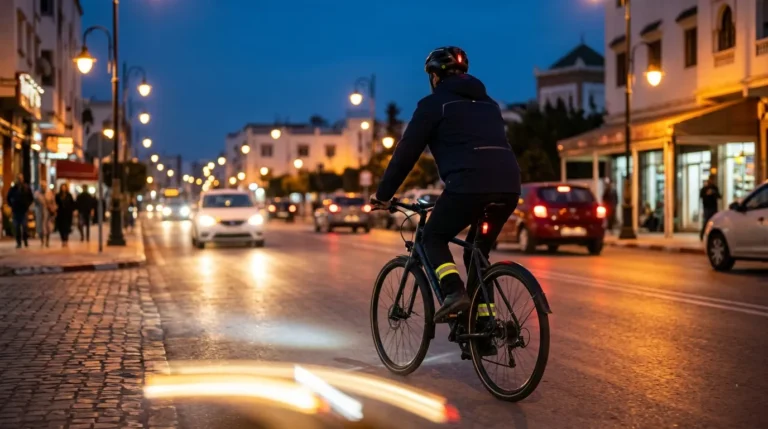
And if you’re pairing all of this with the right setup — helmet, pack, clothing — our commuter cycling gear guide covers what actually matters versus what’s just marketing noise.
The Full Picture
| Metric | E-Bike Commute | Traditional Bike | Walking | Gym Cardio |
|---|---|---|---|---|
| Weekly active mins | ~160 | ~110 | ~120 | ~90 |
| Calories/hour | 280–450 | 400–600 | 220–280 | 300–500 |
| VO₂ Max gains | Moderate–High | High | Low–Moderate | Moderate–High |
| Long-term adherence | Very High | Moderate | High | Low |
Stop Waiting to Feel Like You’ve “Earned” It
Here’s the thing — and maybe this lands differently depending on where you’re at with exercise — fitness isn’t a performance. You don’t have to look like you suffered for it to count. The body doesn’t award extra points for misery.
Start with 3 commutes a week. Wear a heart rate monitor for two weeks and actually look at the data. Watch what happens to your resting heart rate over a month. Notice whether your energy levels shift. Notice whether you start craving the ride.
The motor isn’t cheating. It’s the reason you’ll lace up tomorrow instead of driving again. And six months from now, that difference is going to be written into your body in ways that can’t be argued with.
Sources: Transportation Research Interdisciplinary Perspectives (2019); University of Basel (2015); European Journal of Applied Physiology (2021); WHO Global Physical Activity Guidelines.