The Best Fluffy Pancakes recipe you will fall in love with. Full of tips and tricks to help you make the best pancakes.


Look, we’ll be honest — the first time one of us clipped into a smart trainer and watched the resistance automatically spike as a virtual Alpe d’Huez climb appeared on screen, it felt equal parts ridiculous and revolutionary. Like, is this real life or a video game? Turns out: both. And that moment kind of sums up where smart cycling technology is right now — straddling the line between “this is unnecessary” and “I can never go back.”
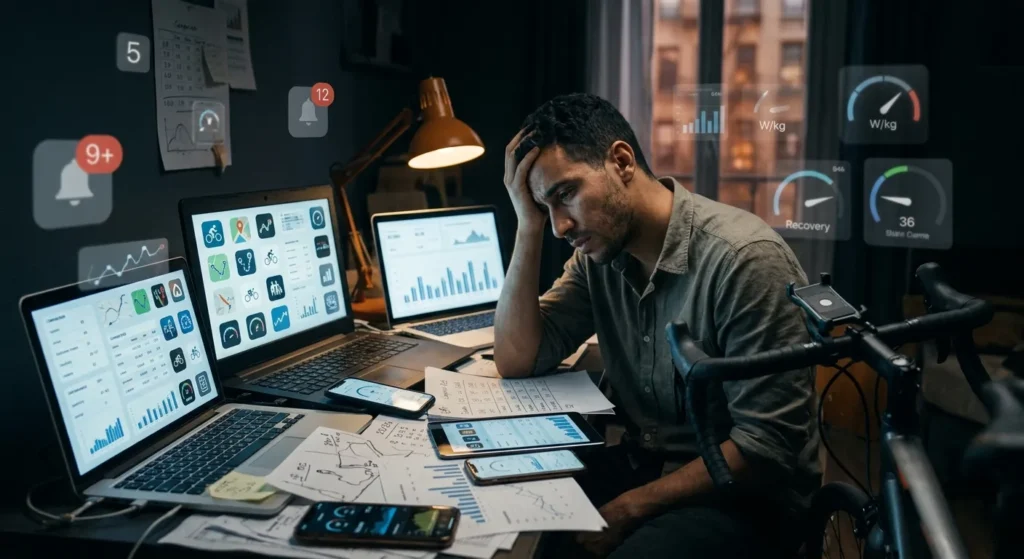
This isn’t a gear roundup dressed up in tech language. We’ve actually used most of this stuff, argued about what’s worth the money, and watched riders completely transform their training (and their commutes) with the right tools in place. So here’s the full picture — category by category, no padding.
What Is Smart Cycling Technology (And Why Should You Care)?
Smart cycling technology is basically any connected, sensor-driven, or AI-powered device built to make your riding smarter — safer, faster, more efficient, or just way less stressful. That covers hardware bolted to the bike, wearables on your body, and software humming in the background syncing everything together.
The pitch is simple: data you can actually act on, in real time.
But here’s the thing most people miss — it’s not just about performance. It’s also about safety. It’s about not getting hit by a car you never heard coming. It’s about your bike still being where you parked it when you get back. Smart cycling tech solves problems that, frankly, older gear never even tried to address.
Category 1: Safety and Awareness Systems — The Stuff That Actually Matters First
Start here. Always. Before you spend a single dollar on a power meter or an electronic groupset, make sure you’re covered on the safety side of things.
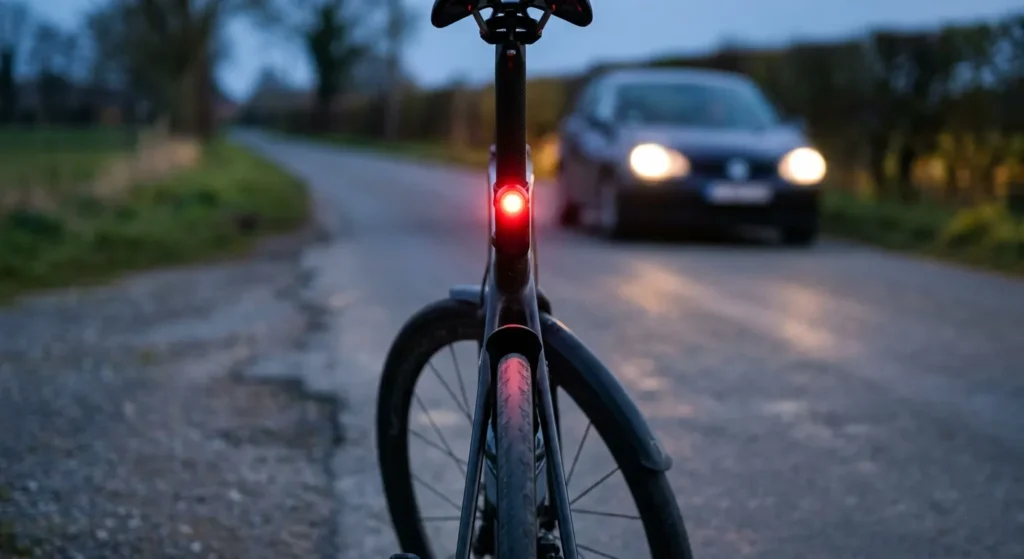
- Smart Lights — Not your average blinky. These adjust brightness automatically based on ambient light conditions, activate as brake lights when you decelerate, and some (Garmin Varia being the big one) integrate directly with your head unit. Runtime ranges from 2 to 15 hours depending on mode — which honestly is a wide spread, so read the specs carefully before a long night ride.
- Radar Systems — The Garmin Varia RTL515 detects vehicles approaching from up to 140 meters behind you. One of us uses this on every single road ride now. It’s hard to explain how much calmer you feel when your computer shows “clear behind” on a fast descent. Life-changing is probably too strong… actually, no, it’s not.
- Smart Helmets — Livall, Lumos, and a few others have built helmets with integrated rear LEDs, turn signals triggered by handlebar remotes, and crash-detection systems that auto-alert emergency contacts. Some pack Bluetooth speakers and microphones in, which sounds gimmicky until you’re navigating city traffic hands-free.
- GPS Trackers & Anti-Theft Devices — Hide an Apple AirTag or a dedicated tracker (Monimoto, Invoxia, and others) inside your seatpost or frame. Real-time location, geo-fencing alerts if the bike moves without you. If you’ve ever had a bike stolen — and one of us has — this feels less like a feature and more like a basic requirement.
- Airbag Vests — Hövding and Helite make wearable airbags that deploy in 0.1 seconds on crash detection. Still niche, a bit bulky, price point isn’t accessible for everyone. But for urban commuters on chaotic streets? Worth knowing they exist.
Category 2: Performance Tracking and Optimization — Where Smart Cycling Tech Gets Serious
This is where most of the cycling tech budget goes, and where — if you actually use the data — most of the gains come from.
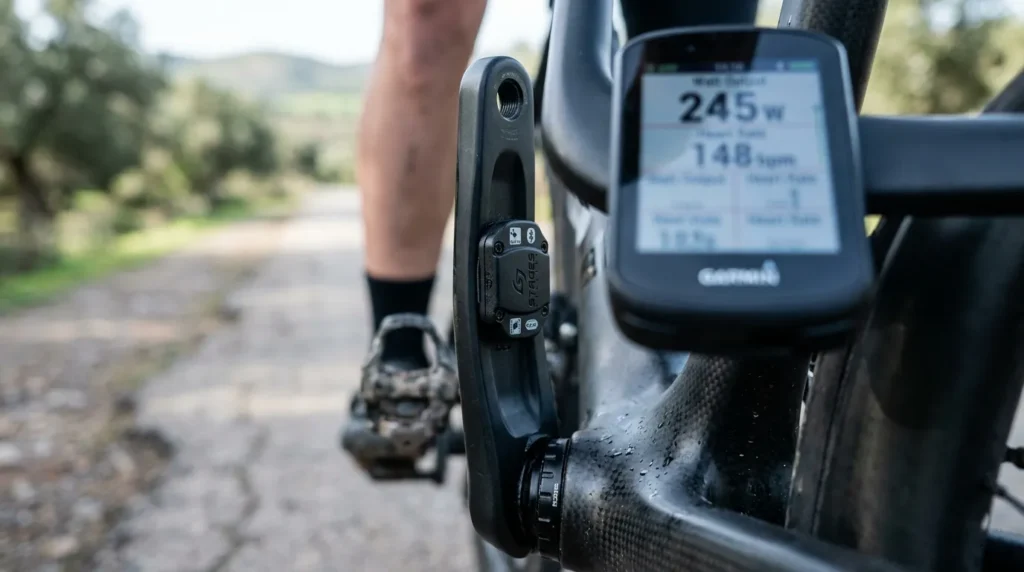
Power Meters are still the single most transformative training tool you can put on a bike. Crank-based options from Stages and 4iiii, pedal-based from Garmin Rally and Favero Assioma, hub-based from PowerTap — they all measure your watts in real time, giving you an objective, repeatable number that heart rate simply can’t match (heart rate drifts, lags, responds to heat and caffeine and bad sleep). Entry-level units start around $300–$400. Dual-sided setups can run $1,200 or more. Worth it. Probably the best investment in cycling performance that isn’t a lighter bike.
Advanced GPS Cycling Computers — Garmin Edge, Wahoo ELEMNT, Hammerhead Karoo 2. Modern units track 40+ data fields simultaneously, offer turn-by-turn navigation, sync to Strava and TrainingPeaks automatically, and increasingly offer on-device training guidance. The Karoo 2 in particular has been making noise in 2024-2025 with its Android-based interface and live segment updates. Prices range from $200 for entry-level to $650+ for flagship models.
Heart Rate Monitors and Cadence Sensors — foundational, cheap, and still essential. Chest straps deliver ±1 bpm accuracy, wrist-optical sensors are more convenient but slightly less precise. A cadence sensor clips onto your crank arm and costs under $30. No excuse not to have these.
Smart Trainers — this is where indoor riding stopped being punishment. Direct-drive trainers like the Wahoo KICKR and Tacx NEO simulate gradient changes, automatically adjust resistance to match virtual terrain, and pair with platforms like Zwift and TrainerRoad for genuinely immersive structured workouts.
Full Breakdown
We’ve gone deep on this — our full breakdown of AI-powered smart trainers covers the main platforms, what the resistance simulation actually feels like, and which trainers are worth the premium. Read that before buying. And if you want a structured plan to actually use with your smart trainer — something that builds real fitness instead of just logged kilometers — our Indoor Gains home cycling plan is built exactly for that.
Category 3: Navigation and Communication
Here’s a question we get a lot: why buy a dedicated GPS computer when your phone does navigation already?
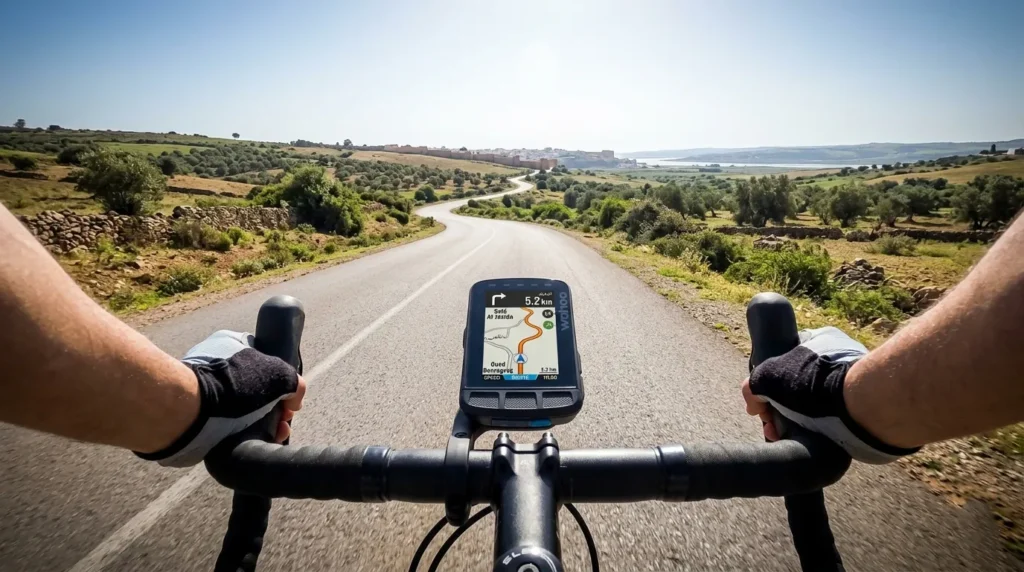
Fair question. Short answer — battery life, durability, and sensor compatibility. A Garmin Edge or Wahoo ELEMNT runs 10 to 20 hours on a charge. Your phone? Maybe 3 to 5 hours with screen on and GPS active, less in cold weather. Dedicated computers are built waterproof, read clearly in direct sunlight (phones are often awful in bright light), and connect to ANT+ sensors that Bluetooth-only phones can’t touch.
- Head-Up Displays (HUDs) — Everysight Raptor-style glasses that project speed, power, and nav data into your line of sight. Currently in the $400–$700 range, still a bit niche, but the concept is sound. Five years from now these might be standard.
- Bike-to-Bike Communication — Cardo and Sena make intercom systems connecting up to 15 riders with range hitting 1–2 km. For group road rides, guided tours, or just keeping tabs on your riding partner on a busy route — genuinely useful, not just a toy.
- Smartphone Apps as Data Hubs — Strava, Garmin Connect, Wahoo Fitness, RideWithGPS. These pull everything together. Your ride auto-syncs within seconds of finishing. Your coach sees your power data before you’ve even unlocked your phone. The ecosystem, when it works, is seamless.
Category 4: Electronic Shifting, E-Bikes, and Comfort Systems
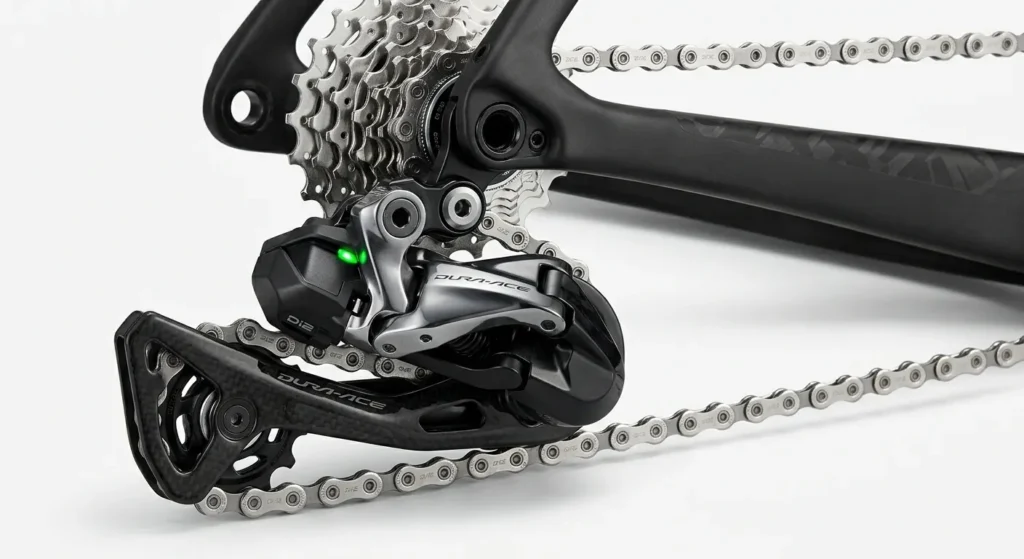
Electronic shifting — Shimano Di2, SRAM eTap AXS, Campagnolo EPS — is one of those things that feels unnecessary until you use it. Then cable-pull shifting feels like operating a fax machine. Shifts happen in under 200 milliseconds, adjustments happen at the bar, and battery life typically clears 1,000 km per charge. No cable stretch. No mis-shifts under load. Just clean, precise gear changes every single time.
Smart suspension is a mountain bike thing primarily — RockShox Flight Attendant and Fox Live Valve read terrain 1,000 times per second and adjust automatically. If you’re on a trail bike doing varied terrain, the difference in flow is immediately noticeable.
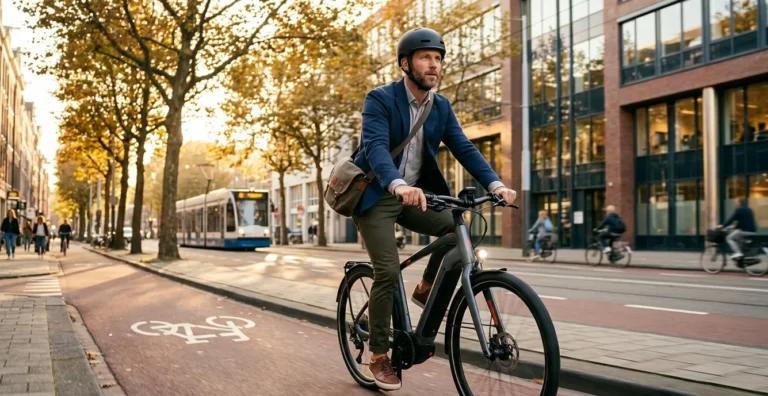
E-bikes with integrated smart features (Specialized Turbo, Trek Allant+, Riese & Müller) now come standard with smartphone connectivity, motor tuning via app, GPS theft alerts, and intelligent range prediction. Top-tier systems deliver up to 100 km of assist range per charge. Are they “real” cycling? That debate is tired. They get people riding who otherwise wouldn’t, and they make long commutes viable. That’s enough.
Smart locks — Hexlox, Litelok Core, and app-connected padlocks — offer tamper alarms and keyless Bluetooth entry. Some alert your phone within 3 seconds of someone touching the bike.
Where Smart Cycling Technology Actually Moves the Needle
Let’s cut to what really changes.
On safety:
- Rear radar gives you 2–5 extra seconds of reaction time when a vehicle approaches — and at 40 km/h, that’s not nothing, that’s everything
- Smart lights increase low-light visibility measurably — some independent road-safety research puts it as high as 2.4x improvement
- Crash-detection helmets alert contacts without you having to do anything, which is the entire point
On performance:
- Power meter training removes guesswork entirely — no more “I think I was pushing hard enough”
- Athletes training with structured power data consistently improve FTP faster than those using perceived effort, full stop
- We’ve broken down exactly how AI tools are changing this in our post on road cycling AI tools — particularly how modern platforms convert raw ride data into coaching insights that actually adapt to you
On navigation:
- Turn-by-turn GPS means you stop stopping — one of the underrated drags on a long ride is the constant phone-checking
- Apps like RideWithGPS and Komoot now surface low-traffic, rider-rated alternatives to your usual routes automatically
AI Coaching: The Layer That Changes Everything
Okay — this is where it gets genuinely exciting. Or overwhelming, depending on your relationship with data.
AI coaching platforms — Xert, TrainerRoad, Wahoo SYSTM, and newer entrants — analyze your power output, heart rate trends, recovery scores, sleep quality, and more to build and continuously adjust training plans. Not static plans. Adaptive ones that shift based on whether you’re responding to load or quietly accumulating fatigue.
We’ve spent real time evaluating what separates platforms that actually adapt from ones that just slap a generic 12-week plan in a fancy interface. That breakdown lives in our AI coaches for road cycling guide — it’s worth reading before committing to a subscription.
The short version: if you’re training with any kind of goal, AI coaching tools at this point outperform static plans for most riders. The gap keeps widening.
Building Your Setup: What to Buy First, Based on Who You Are
Beginner / Casual Rider — budget around $400 or less:
- Smart rear light with radar (~$50–$80)
- Entry-level GPS computer (~$150–$200)
- Chest strap heart rate monitor (~$50–$80)
Commuter:
- Smart front + rear lights (~$100–$150)
- GPS or app-based tracker for the frame (~$60–$100)
- Smart lock (~$50–$120)
- Navigation app subscription (free to ~$40/year)
Enthusiast / Amateur Racer:
- Power meter — single-sided at minimum (~$350–$700)
- Premium GPS computer (~$350–$600)
- Direct-drive smart trainer for structured indoor sessions (~$700–$1,200)
- Radar system + HRM + cadence (~$250–$350 combined)
One thing to check before buying anything: device compatibility. Most quality gear now supports both ANT+ and Bluetooth, which means they’ll communicate with any modern GPS computer or smartphone. Older head units sometimes don’t play nice with newer sensors — verify before you checkout.
The Future of Smart Cycling Technology (Near-Term, Not Science Fiction)
Things coming in the next 3–5 years that are already in various stages of development:
- AI route optimization that factors in your current fitness, live traffic, weather conditions, and elevation preference — simultaneously, not sequentially
- AR cycling visors projecting navigation and performance overlays onto your field of view (Everysight-style, several others in prototype)
- Full sensor fusion — one platform combining power, aerodynamics, biomechanics, and environmental data. It exists in fragments right now. Integration is coming.
- Predictive crash prevention using machine learning to flag dangerous riding behavior patterns before incidents occur
- Unified e-bike ecosystems where motor, suspension, shifting, and navigation communicate as a single intelligent system — not four separate apps
The hardware foundation is largely already there. The intelligence layer — the software — is closing the gap fast.
FAQ: Smart Cycling Technology
Bottom Line
Smart cycling technology isn’t a luxury tier for riders with deep pockets and too much time. It’s practical. Most of it solves real problems — getting hit from behind, training without structure, navigating unfamiliar routes, coming back to find an empty rack.
Start with safety. Layer in performance tracking. Add AI coaching when you’re ready to stop guessing and start building. We’ve put together resources at every stage — from AI smart trainers to our indoor training plan to a full deep-dive on road cycling AI tools — so you don’t have to figure all this out alone.
Smarter rides are available to you right now. The gear exists. Go get it.